Tag: Financial Automation

Quote-to-Cash in NetSuite, a Q&A with Adnan Patel

A Q&A for finance, RevOps, and systems leaders on simplifying quote-to-cash in NetSuite, embedding revenue infrastructure, and making finance a true growth partner.

TL;DR
- Quote-to-cash breaks when sales and finance operate on disconnected systems.
- NetSuite customers need a single, connected view of revenue, not more tools.
- Embedded revenue infrastructure handles complex subscriptions, usage, and consumption without replicating data.
- When revenue stays connected, finance moves from cleanup to strategic growth.


Continuous is entering its next phase of growth in the NetSuite ecosystem, and leading that charge is Adnan Patel, General Manager of the NetSuite business. With years of experience helping companies modernize financial operations and connect NetSuite to the broader revenue lifecycle, Adnan brings both deep technical expertise and a practical vision for what’s next. As pricing models evolve and intelligent systems reshape how sales and finance work together, he is focused on helping NetSuite customers simplify quote-to-cash, fix what’s broken, and make finance a true growth partner. 

We sat down with him to talk about what drew him to Continuous, how the company is simplifying revenue infrastructure and outcomes for clients, and what’s ahead for Continuous’ NetSuite business.

Can you share a bit about your experience in the NetSuite ecosystem and what drew you to this space originally?

My background has always been rooted in helping companies use technology to solve complex business problems. Early in my career, I worked with enterprise CRM systems like Siebel, helping global organizations drive success with their implementations. Over time, I realized that many companies, especially outside the Fortune 500, needed the same caliber of expertise but with solutions that better fit their size and speed (faster). That’s what led me to NetSuite. I was drawn to its promise of “one system, no limits,” a platform that unifies CRM, ERP, and financials in a single application. That vision of end-to-end connection is what first brought me in, and it’s what has kept me engaged in this ecosystem ever since. Most recently, I led the global NetSuite practice at Crowe, where I was responsible for building and scaling a 100-person team delivering NetSuite implementations and revenue operations services for multinational companies.

What made joining Continuous the right next step for you, and how do you define your role as General Manager?

For me, Continuous represents the next evolution of what companies like ours have been trying to solve for years: the friction between CRM and ERP, between how companies sell and how they account for that revenue. Having implemented countless quote-to-cash processes using Salesforce and NetSuite, I’ve seen firsthand how complex billing and revenue models slow down transformation. Continuous’ approach, which simplifies that complexity while keeping data connected and consistent, made immediate sense to me as both a technologist and consultant. As General Manager, my role is to expand our NetSuite business, build strategic partnerships, and ensure that every customer and partner in the ecosystem understands the value Continuous brings. It’s about driving awareness, scale, and consistency in how companies adopt this new model of connected revenue operations.

How do you describe Continuous to someone new to the brand?

I describe Continuous as the engine that powers sales growth and modern revenue operations. It’s built to handle the hardest part of quote-to-cash – the complex math behind subscriptions, usage, and consumption billing – so companies don’t have to. Rather than trying to replace CRM or ERP systems, Continuous strengthens them. It reads the contract data and usage activity, performs the complex and high-volume calculations, and passes the rated charges to NetSuite or Salesforce for billing and revenue recognition. It’s simple in concept but powerful in impact because it lets companies sell however they want without breaking their systems or creating new silos.

From your perspective, what makes Continuous different from other players in the Salesforce and NetSuite space?

Continuous takes an approach we call Embedded Revenue Infrastructure, and what we mean by that is an engine that operates within your existing systems to do the complex work of processing billing data and revenue calculation. Unlike stand alone billing tools that replicate data or sit outside your core architecture, Continuous embeds directly into your CRM and ERP environment. It’s headless, API-first, and designed to scale. That means it can calculate at volume, support any mix of pricing or monetization models, and pass clean, auditable data back to NetSuite for invoicing and revenue recognition. It’s a new kind of infrastructure, lightweight but deeply embedded, that gives companies both flexibility and control.

The NetSuite market is evolving quickly. What changes are you seeing in how customers approach revenue operations?

Customers are getting much more strategic about monetization. For years, the challenge was shifting to subscription or usage-based models. Now the focus is on operationalizing those models effectively and efficiently, whether that’s within the systems they already rely on or through a hybrid of new and existing tools. Success today comes from creating a single, connected view of revenue that aligns sales and finance without forcing teams to change how they work. That’s where Continuous really shines.

Continuous talks a lot about “fixing quote-to-cash” and making finance strategic. What does that mean to you in the context of the NetSuite business?

Fixing quote-to-cash means eliminating the gaps that create friction between how a company sells and how it books and recognizes revenue. For finance teams, that’s about more than automation—it’s about visibility. When the sales and billing data stay connected, finance no longer has to manually reconcile spreadsheets or patch over disconnected systems. They can see, in real time, which pricing models are performing, what’s driving margin, and where to optimize. That’s what makes finance truly strategic. It moves from reporting results to shaping them.

What types of customers or challenges are you most eager to take on?

We’re focused on helping growth-minded companies, those that are either expanding globally, introducing new billing models, or looking to bring order to complex revenue streams. That includes high-tech, SaaS, and services companies, but also industries like wholesale distribution and manufacturing that are embracing recurring or consumption-based pricing. Anywhere there’s complexity in how revenue is earned, billed, or recognized, Continuous adds clarity.

You’re coming in at a time of significant momentum. What are your top priorities in your first few months leading the NetSuite business?

My first priority is awareness. The NetSuite ecosystem is full of strong partners and customers who need exactly what Continuous offers, they just may not know who to turn to yet. Once that awareness builds, everything else follows: market penetration, partnerships, and customer growth. I’m also focused on building a world-class partner network that shares our approach to thoughtful, customer-first delivery. Whether a company works with our professional services team or one of our partners, they should have the same consistent experience: a smooth implementation, faster time to value, and long-term scalability.

For companies looking to modernize their revenue stack, where should they start? What advice would you give to finance or RevOps leaders who are feeling the pain of disconnected systems?

Start with strategy, not software. Too often, companies jump straight to buying tools without clearly defining their monetization strategy – how they want to charge, what models their customers expect, and what data needs to flow across the process. Quote-to-cash is one continuous motion, not a set of disconnected steps. Once you understand your pricing and revenue strategy, then you can determine the right systems and structure to support it. That’s where Continuous helps bridge the gap.

Looking ahead, what excites you most about the next 12 months for Continuous and the customers you’ll serve?

I’m excited about where the market is heading. AI-driven services and hybrid pricing models are pushing companies to think differently about how they sell and monetize their offerings. That creates enormous opportunity but also complexity. Continuous is uniquely positioned to help companies manage that complexity in a scalable, intelligent way. And beyond technology, what excites me most is the chance to work with a team that helped define this space—people who saw the problems firsthand and built something better.

Finally, tell us something personal. What do you do for fun outside of work?

I love to cook and travel, and I’m a big basketball fan. My kids all played growing up, so that became a big part of our lives. I also like to build things, whether that’s software tools, Legos, or even advising other startups focused on solving some really interesting problems. There’s something satisfying about taking something complex, working through it piece by piece, and seeing it come to life, which honestly isn’t that different from what we do at Continuous.

____________________________________________________________________________

As Continuous moves into its next chapter of growth, Adnan is helping shape what that story looks like for NetSuite customers. His focus is clear: simplify complexity, empower finance, and bring sales and finance together around a single, connected view of revenue. It’s a vision that mirrors Continuous itself, practical, forward-looking, and built to help companies fix quote-to-cash and grow smarter with every evolution of their business.
Is Your Business ARM Ready? 5 [NEW] Questions to Ask Before Making the Leap

Revenue Cloud Advanced

A readiness guide for Salesforce and NetSuite leaders on what Revenue Cloud Advanced (ARM) exposes, why it’s a reimplementation, and how to prepare without rebuilding twice.

TL;DR
- Revenue Cloud Advanced (ARM) is a full reimplementation that exposes every weakness in your quote-to-cash foundation.
- Poor product catalogs, unreliable usage data, and manual lifecycle events break customer trust and slow revenue.
- ARM amplifies fragmentation between Salesforce and NetSuite instead of fixing it.
- Teams that clean up and standardize first adopt ARM faster—without rebuilding twice.


The Reality Check: RCA/ARM Isn’t an Upgrade — It’s a Reimplementation

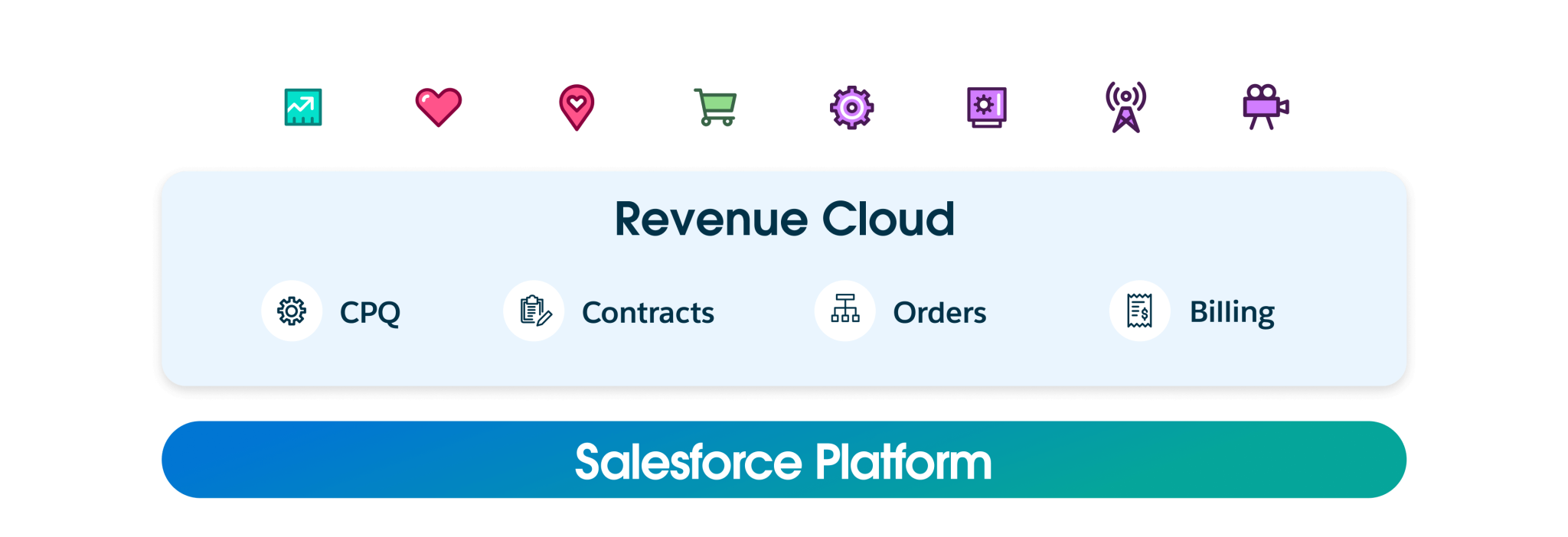
Salesforce’s Revenue Cloud Advanced (RCA), now Agentforce Revenue Management (ARM) modernizes Salesforce’s revenue engine and fundamentally changes how Salesforce and NetSuite must work together across pricing, orders, usage, and revenue events. RCA/ARM is built on a modern, component-based architecture designed to support complex pricing, contracts, and order orchestration across the full quote-to-cash lifecycle.

For companies already running complex quote-to-cash processes, this isn’t a version update. It’s a full reimplementation. One that will expose every inefficiency, integration gap, and data weakness in your current architecture.

At Continuous, we help companies enter this new era Revenue Ready, modernizing their revenue stack without the cost or disruption of a rebuild. We fix quote-to-cash for Salesforce and NetSuite enterprises so they can extend their existing systems into the future, instead of starting over.


What We’re Seeing in the Market: Success Meets Operational Reality

At Continuous, we work with companies that are deep into CPQ and Billing, and five patterns consistently emerge.

1. Your Customer Experience Shouldn’t Depend on Support Tickets

Most customers can’t see their usage, credit balances, or contract details, so they open support tickets for basic questions. This reactive model frustrates users, burdens internal teams, and erodes trust, especially in usage-based models where real-time visibility is expected.

2. When SKUs Don’t Map to Value, Trust Breaks Down

Workarounds that helped get CPQ live or bring a new product to market, like placeholder SKUs or loosely defined product hierarchies create quoting confusion and billing disconnects. The result? Customers are unsure of what they purchased or why they were charged.

3. Governance Gaps and Swivel-Chair Handoffs Create a Loop of Rework and Risk

What began as flexible CPQ configuration has evolved into a patchwork of overrides, manual workarounds, and uncontrolled customizations.  Even after deals are signed, corrections are often required before revenue can be recognized. The outcome: delayed deals, inconsistent data, and ongoing rework across Sales, RevOps, and Finance.

4. Unstructured or Manual Consumption Data

As businesses move toward monetizing usage, the supporting data often isn’t ready. Usage data may be captured inconsistently, defined differently across products, or manually tracked in spreadsheets, if it’s tracked at all. Sales teams miss upsell signals, Finance can’t reconcile revenue, and customers lack visibility, limiting both growth and trust.

5. Fragmented, Disconnected Lifecycle Events Derail Growth

Renewals, amendments, and cancellations are often managed through manual workarounds or outside systems (i.e spreadsheets, net-new quotes, or support tickets). This leads to duplicate records, conflicting contract data, customer confusion, and unreliable revenue and renewal reporting.

____________________________________________________________________________

If these issues sound familiar, you’re not alone. They’re exactly what RCA/ARM will expose, and amplify, if left unaddressed.

That’s why readiness matters. Before you start your RCA/ARM reimplementation, ask yourself these five questions to see whether your foundation is ready for the new architecture.

Is Your Business RCA/ARM Ready?

RCA/ARM assumes a strong foundation, but that’s where many teams struggle. Before diving in, ask yourself:

  1. Is our product catalog standardized and enforceable?
  2. Do our SKUs map to value — for us and our customers?
  3. Is our usage data reliable and available in real time?
  4. Are renewals, amendments, and cancellations governed and aligned?
  5. Can Sales, Finance, and Customers all see the same thing?

Without that foundation, even the best RCA/ARM implementation can fall short of expectations.


How Continuous Helps You Get Revenue Ready

At Continuous, we help Salesforce and NetSuite enterprises prepare for RCA/ARM by fixing what’s underneath, the quote-to-cash foundations that everything depends on.

Continuous enables Salesforce customers to modernize their revenue stack, Revenue Cloud or ARM, without the cost or disruption of a rebuild. We extend Salesforce with flexible pricing, rating, and ERP-ready billing logic that works across both current and next-generation architectures.

With Continuous, teams can:

  • Add modern pricing, usage, and credit models directly within Salesforce — no new platform required.
  • Connect Salesforce quoting and billing to NetSuite or other ERPs with real-time data flow and reconciliation.
  • Evaluate ARM readiness and move on their own timeline — adopting RCA/ARM when they’re ready, without business disruption.

Continuous runs natively across Salesforce and NetSuite, giving you an embedded revenue infrastructure that’s built for the RCA/ARM era.


Final Word

RCA/ARM is changing how Salesforce handles revenue, but it doesn’t have to change everything about how you operate. Companies that clean up now and build the right foundation will move faster, scale smarter, and avoid the pain of rebuilding twice.

Continuous fixed quote-to-cash for companies running Salesforce and NetSuite, so you can enter the RCA/ARM era confident, connected, and Revenue Ready.

Learn how Continuous fixed quote-to-cash in Salesforce and NetSuite. Request a demo today or reach out for a RCA/ARM readiness audit. 


This blog is an update to Part 3 of the RCA Series originally published in April 2025. View all three posts from the series here:

Revenue Cloud Advanced (RCA/ARM): What’s New, What’s Next, and How to Get Ready

An inside look at how Salesforce and NetSuite teams are modernizing revenue architecture and preparing for Revenue Cloud Advanced without forcing a rebuild.

TL;DR
- Revenue Cloud Advanced (ARM) delivers powerful flexibility, but shifts more architectural responsibility to your team.
- Treating ARM as a lift-and-shift amplifies existing quote-to-cash problems.
- Many teams modernize Revenue Cloud today while evaluating ARM readiness.
- Continuous helps teams add modern pricing and ERP integration now, then transition to ARM when the timing is right.


Salesforce’s next-generation revenue platform, Revenue Cloud Advanced (RCA), now Agentforce Revenue Management (ARM)—marks a major step forward from Salesforce Revenue Cloud.

RCA (now ARM) is built on a modern, component-based architecture designed to support complex pricing, contracts, and order orchestration across the full quote-to-cash lifecycle.

Unlike traditional Salesforce products that evolve on a fixed release schedule, RCA (ARM) is advancing rapidly with releases every few weeks to meet customer demand. New components and capabilities roll out at a rapid pace, expanding what’s possible for revenue operations teams.

For many organizations, the opportunity is exciting, but also complex. ARM’s flexibility introduces new design considerations for how pricing, quoting, amendments, invoicing , and ERP processes fit together.

What Salesforce Is Building with RCA/ARM

RCA/ARM builds on lessons learned from Salesforce Revenue Cloud. Revenue Cloud was like buying a boxed LEGO set—it came with clear instructions and all the right pieces to build a defined outcome. Done well, you could end up with something impressive, like the Millennium Falcon. But if you tried to build something different, you often had to improvise, and the result could be unstable or overly customized as the product evolved.

RCA changes that model. It’s more like being handed a bucket of LEGO bricks—you can build almost anything, but it requires more planning, design skill, and time to get it right. ARM’s component-based architecture introduces new services for advanced pricing, contracts, and order orchestration, giving teams far more flexibility and scalability, but also more architectural responsibility.

Many organizations see that flexibility as the future, but they also recognize the value of bringing their existing Salesforce CPQ environment back closer to standard. Continuous helps them do exactly that—simplifying the foundation while introducing capabilities legacy Revenue Cloud doesn’t natively handle well, such as ramps, usage-based pricing and rating, credit balance or digital wallet management, and a cleaner, automated handoff to ERP systems like NetSuite.

This approach buys organizations time to evaluate ARM’s growing capabilities while continuing to roll out new functionality today. With Continuous in place, they gain a modernized, maintainable architecture now and a clear path to ARM when the timing makes sense.

What This Means for Salesforce Revenue Cloud Customers

If you’re already using Salesforce Revenue Cloud, you don’t need to start over to modernize.  Your current implementation can evolve—supporting new pricing models, consumption scenarios, and ERP integration today while preparing for ARM tomorrow.

We’re working with companies of all sizes that are evaluating whether to adopt RCA (ARM) now or extend their existing Salesforce setup with Continuous. For many, enhancing legacy Revenue Cloud first delivers faster wins and creates a smoother on-ramp for a future migration.

Common goals include:

  • Introducing advanced pricing logic, ramps, and usage-based models
  • Managing prepaid credits and drawdowns directly in Salesforce
  • Automating data flows and journal entries into NetSuite or other ERPs

This approach lets teams innovate without risk—modernizing now while keeping every option open later.

How Continuous Helps

Continuous enables Salesforce customers to modernize their revenue stack—legacy Revenue Cloud (Salesforce CPQ) or RCA/ARM—without the cost or disruption of a rebuild.  We extend Salesforce with flexible pricing, rating, and ERP-ready billing logic that works across both current and next-generation architectures.

With Continuous, teams can:

  • Add modern pricing, usage, and credit models directly within Salesforce
  • Connect Salesforce quoting and billing to NetSuite or other ERPs
  • Evaluate RCA/ARM readiness and move on their own timeline

Our team includes the former Head of Product for Salesforce Revenue Cloud, so we understand both systems from the inside. We know how they differ, how Salesforce’s component architecture works, and what it takes to bridge between them.

Planning Your Path Forward

Whether you’re evaluating ARM now or simply planning ahead, the right next step is an RCA/ARM readiness review.

Continuous helps you:

  1. Assess how your current pricing and quoting logic aligns with ARM’s component model
  2. Identify what can be reused, extended, or decoupled

Build a modernization plan that fits your business—not a vendor timeline

The Bottom Line

RCA/ARM is both a huge opportunity and a massive shift in Salesforce’s revenue ecosystem—more flexible, faster-moving, and built for the future.  The key is knowing how to harness that innovation without introducing risk.

At Continuous, we fixed quote-to-cash in Salesforce and NetSuite so your business is revenue ready, no matter where you are on your journey. We help companies bring Salesforce CPQ back to standard, add the advanced capabilities needed today, and move confidently toward RCA/ARM when the time is right.Interested in learning more about the Shift to RCA? Check out our recent article: Is Your Business RCA-Ready? Five Questions to Ask Before Making the Leap  Or, contact us to schedule a Salesforce RCA/ARM readiness session.

Recap: The Signals That Power Smart Selling l Dreamforce 2025

Usage and Prepayments

A Dreamforce 2025 recap on how AI, connected data, and usage signals are reshaping quote-to-cash, pricing, and customer growth.

TL;DR
- AI is shifting monetization from licenses and inputs to outcomes and measurable value.
- Usage data and connected systems are the foundation for fair, flexible pricing models.
- Unified product, contract, and financial data enable real-time insight and faster decisions.
- New KPIs like consumption cohorts and overage revenue better reflect customer value.
- Companies that design for flexibility will lead as quote-to-consumption replaces quote-to-cash.


At Dreamforce 2025, leaders from Continuous, FULLPRESS, and Dynatrace gathered to explore how AI and unified data are reshaping the quote-to-cash journey — powering smarter pricing, faster decisions, and measurable customer value. Moderated by Danielle Adams of Continuous, the discussion unpacked how organizations are moving from static subscription models to flexible, outcome-based monetization and what it takes to operationalize that change inside today’s systems.

Artificial intelligence isn’t just improving workflows and automating tasks, it’s fundamentally changing how we define value. The focus is moving from inputs, like licenses or API calls, to outcomes — the measurable benefits customers achieve, explained Banks.

Instead of “buy X seats,” it’s now “pay for Y results.” Companies are moving toward outcome-based models where pricing reflects real usage and delivered value. AI makes this possible because it allows precise measurement of engagement, case resolutions, or predictive impact — metrics that were hard to quantify before.

And with that comes flexibility — launching AI-powered capabilities as add-ons, usage credits, or pilot programs. It’s changing pricing from static tiers to dynamic, evolving frameworks that adapt as customers adopt.

Keenan Wojnicz (FULLPRESS) agreed. “We used to debate what a fair price was,” he said. “Now, fairness is in the outcome. When you tie usage directly to customer value, pricing becomes objective, not guesswork.”


Tools like Salesforce Revenue Cloud (now called Salesforce Agentforce Revenue Management) and Continuous’ AI-driven platform make that possible, connecting product telemetry to go-to-market data for a real-time view of performance. The result: smarter pricing, clearer ROI, and stronger customer relationships.

Artificial intelligence isn’t just improving workflows and automating tasks, it’s fundamentally changing how we define value. The focus is moving from inputs, like licenses or API calls, to outcomes — the measurable benefits customers achieve, explained Banks.

Instead of “buy X seats,” it’s now “pay for Y results.” Companies are moving toward outcome-based models where pricing reflects real usage and delivered value. AI makes this possible because it allows precise measurement of engagement, case resolutions, or predictive impact — metrics that were hard to quantify before.

And with that comes flexibility — launching AI-powered capabilities as add-ons, usage credits, or pilot programs. It’s changing pricing from static tiers to dynamic, evolving frameworks that adapt as customers adopt.

“Now, fairness is in the outcome. When you tie usage directly to customer value, pricing becomes objective, not guesswork.”

Connected Data: The Engine of Modern Monetization

If AI is the brain of smart selling, connected data is its bloodstream. Chitrang Patel (Dynatrace) described how his company unified usage data scattered across systems. “AI doesn’t work without unified data,” he said. “Once we connected everything, we could correlate product usage, training, and outcomes — and act on it.”


Continuous played a pivotal role, helping Dynatrace move from overnight batch processing to real-time insight. “What took six hours now happens in minutes,” Patel said. “That agility lets us make decisions and serve customers faster.”


Banks underscored the importance of incremental progress: “Start simple — daily or hourly reporting — then evolve toward real time. Once people see insights, they’ll want more.” Transparency also emerged as a differentiator. Dynatrace now shares consumption data directly with customers — a move Patel said “builds trust and drives proactive engagement.”

“What took six hours now happens in minutes. “That agility lets us make decisions and serve customers faster.”

- Chitrang Patel, Dynatrace

New Metrics for a Usage-Driven World

Traditional KPIs like ARR and MRR no longer tell the whole story. “Boards want to know how much growth comes through usage,” said Wojnicz. “Cohort analysis and on-demand revenue tracking paint a clearer picture than static bookings.”


Patel added, “Overage revenue — customers exceeding their commitments — has become a key indicator of adoption.” Banks (Continuous) explained that uniting financial and product data changes the game: “When usage, billing, and revenue recognition live in one system, finance can move from defense to offense.”


‘Traditional metrics like ARR and MRR don’t tell the whole story anymore. Companies are introducing new KPIs—on-demand revenue, overage ratios, consumption cohorts—that actually track how value is realized, not just sold.”

Flexibility and the Future of Quote-to-Consumption

As the session closed, Adams asked each panelist for one piece of advice for leaders navigating this shift.


“Define your North Star AI strategy,” said Wojnicz. “Know what data you’ll need and make sure your systems can deliver it.”


“Focus on customer experience,” said Patel. “Be transparent with usage and help customers realize value — that’s how you build trust.”


And Banks reminded attendees to “Design for flexibility. Pricing will change; your systems must evolve with it. Those who adapt fastest will lead.”


The conversation ended with a shared vision of the future as quote-to-consumption driven, with continuous data flow as the fuel for smart selling. “The entire customer lifecycle—selling, onboarding, renewal—is blending into one continuous loop of insight and action that will drive customer value and growth together.” said Banks

 “And that loop only works if data is unified. When telemetry, contracts, and finance data all live together, AI can finally operate on the full picture.” added Wojnicz.

As Adams summed up:  “When data is unified and AI is embedded across the lifecycle, every day becomes a selling day.” What happens in Salesforce flows cleanly into NetSuite, without surprises.

“When data is unified and AI is embedded across the lifecycle, every day becomes a selling day.” – Danielle Adams, Continuous

The Continuous Advantage

Salesforce and NetSuite weren’t built to handle complex quote-to-cash — especially when usage, credits, or hybrid deals enter the mix. The result: manual workarounds, disconnected tools, and teams buried in spreadsheets.

Continuous fixes that.


Built natively on Salesforce and NetSuite, Continuous automates the entire quote-to-cash lifecycle — from quoting and pricing to billing, revenue recognition, and usage visibility. Sales can configure any deal type directly in Salesforce, while finance bills and reconciles automatically in NetSuite.


By embedding automation and usage intelligence inside the systems teams already use, Continuous eliminates integration friction, speeds time to revenue, and gives companies a single, trusted view of every customer.

Continuous delivers what those systems can’t — modern quote-to-cash, out of the box.

Want to see how it works?

Schedule a personalized demo today and see exactly how Continuous transforms your capabilities, enhances data consistency, and delivers immediate value.

Continuous and FULLPRESS Partner to Accelerate Salesforce Revenue Cloud Advanced Deployments

Continuous and FULLPRESS Partner

For Salesforce and RevOps teams, this announcement explains how Continuous and FULLPRESS partner to accelerate Revenue Cloud Advanced deployments while supporting usage-based and complex pricing.

TL;DR
- Continuous partnered with FULLPRESS to support enterprise Salesforce Revenue Cloud Advanced deployments.
- Together they enable usage-based, prepaid, and hybrid pricing models natively in Salesforce.
- Continuous embeds pricing, usage, and credit logic in Salesforce while keeping finance workflows in ERP systems like NetSuite.
- The partnership helps customers avoid standalone billing systems while scaling complex revenue models.

Continuous, the embedded revenue platform purpose-built for Salesforce and NetSuite, has partnered with FULLPRESS, a Salesforce consultancy focused exclusively on Revenue Cloud Advanced (RCA). Together, we’re helping customers operationalize complex pricing models—usage-based billing, prepaid credits, subscriptions, and more—natively in Salesforce while ensuring finance teams maintain visibility and control in their ERP.

“Salesforce Revenue Cloud Advanced is a major leap forward for RevOps teams,” said Sean Joyce, Co-founder and Head of Alliances at Continuous. “FULLPRESS is helping customers get the most out of RCA—and Continuous fits naturally into that story. We embed pricing, usage, and credit logic inside Salesforce, while still allowing finance teams to manage financials in their system of record. It’s about making Salesforce even stronger in the enterprise.”

Why This Partnership Matters

FULLPRESS has emerged as a leading partner in the RCA ecosystem, helping customers implement scalable, flexible quote-to-cash processes entirely within Salesforce. Their approach closely aligns with Salesforce’s long-term product vision—and Continuous is proud to complement that vision with embedded revenue infrastructure.

“We’re deeply aligned with Salesforce’s vision for Revenue Cloud,” said Joe Taylor, CEO and Co-Founder of FULLPRESS. “RCA brings a huge amount of power to the sales process. Continuous allows us to take that one step further—helping customers operationalize complex pricing models like usage and credits, without disrupting finance workflows. It’s the kind of flexibility enterprise teams expect.”

What We Enable Together

By combining the RCA deployment expertise of FULLPRESS with the embedded revenue capabilities of Continuous, we make it easier for Salesforce customers to:

  • Quote any pricing model directly in Salesforce, including usage-based, hybrid, and prepaid credits
  • Track credits and balances in real time using native Salesforce logic
  • Process high volumes of usage data and automate pricing and rating
  • Deliver bill-ready data to ERP systems like NetSuite for invoicing and revenue recognition
  • Avoid the complexity of introducing standalone billing systems or duplicating product catalogs

“We’ve designed our approach to make RCA deployments enterprise-ready,” said Keenan Wojnicz, Co-Founder and Chief Architect at FULLPRESS. “With Continuous, we’re able to support advanced pricing and usage scenarios inside Salesforce while keeping financial controls where they belong—in ERP. That’s a huge win for our customers.”

Supporting Salesforce’s Vision—With Operational Flexibility

Continuous and FULLPRESS share a belief in the power of Salesforce to drive end-to-end revenue operations. But we also understand the reality: many enterprise finance teams rely on ERPs like NetSuite for critical financial workflows. By embedding revenue infrastructure into Salesforce and integrating cleanly with ERP, we give sales, RevOps, and finance teams a shared foundation—without forcing compromises.

“This is what modern revenue architecture looks like,” said Sean Joyce. “Sales and finance can finally work in sync, with no need to rip and replace what’s already working. Continuous makes that possible—FULLPRESS makes it real.”

Learn More

If you’re deploying Salesforce Revenue Cloud Advanced and want to support advanced pricing and billing models without complexity, let’s talk. 

🔗 Explore Continuous for Salesforce Revenue Cloud
🔗 Visit FULLPRESS
🔗 Salesforce Revenue Cloud Advanced Overview


Continuous and AscribeIT Partner to Streamline Revenue Operations for Salesforce and NetSuite

Continuous and AscribeIT Partner

For Salesforce and NetSuite teams, this announcement explains how Continuous and AscribeIT partner to streamline revenue operations and support advanced pricing without standalone billing systems.

TL;DR
- Continuous and AscribeIT partnered to help enterprises modernize revenue operations.
- The collaboration supports usage-based, prepaid, and hybrid pricing models.
- Customers benefit from embedded monetization inside Salesforce and NetSuite.
- The partnership combines implementation expertise with scalable revenue infrastructure.

Continuous, the first embedded pricing and revenue solution purpose-built for Salesforce and NetSuite, is excited to announce a strategic partnership with AscribeIT, specialists in CPQ, billing automation, early adopters of outcome-based pricing, and revenue operations excellence. This collaboration empowers enterprises to efficiently deploy and optimize advanced pricing and monetization models directly within their CRM and ERP environments, eliminating the typical headaches of standalone billing systems.

Better Together

Companies today face increasing pressure to deploy sophisticated monetization strategies—including hybrid subscription plans, usage-based pricing, and innovative credit management models. However, traditional billing solutions often complicate rather than streamline these processes, creating unnecessary friction between Sales, Finance, and IT teams.

Continuous seamlessly integrates powerful pricing, rating, and credit management capabilities directly into Salesforce and NetSuite, allowing businesses to leverage their existing systems without costly integrations or silos. AscribeIT uses Continuous as a complement to core applications by providing expert implementation and strategic guidance around Salesforce solutions like Revenue Cloud Advanced, ensuring smooth adoption and rapid operational improvements.

Together, Continuous and AscribeIT enable customers to:

  • Rapidly deploy and scale innovative pricing strategies directly within Salesforce and ERP solutions including NetSuite, Intacct, and others
  • Align sales, finance, and IT processes into a single, cohesive ecosystem.
  • Automate and simplify revenue operations, significantly reducing manual effort and error rates.

A Collaborative Approach to Revenue Operations

AscribeIT brings deep expertise in configuring and optimizing CPQ and billing solutions, helping customers align technology with business processes effectively. Continuous enhances these implementations by embedding sophisticated rating and monetization capabilities directly into Salesforce and NetSuite, eliminating the limitations of traditional standalone billing systems. This approach enables specific use cases including prepaid credit management, advanced usage-based billing scenarios, consumption-based pricing models, and hybrid monetization strategies.

Perspectives from Our Leadership

“We’re excited to partner with AscribeIT,” said Sean Joyce, Co-founder and Head of Alliances at Continuous. “Their proven expertise in CPQ and billing automation perfectly complements our embedded monetization approach. Together, we’re making complex revenue operations simpler and more efficient, allowing enterprises to quickly implement innovative pricing strategies.”

“Continuous solves a critical challenge for our customers by providing robust, real-time pricing and rating capabilities directly inside their existing systems,” said Avinash Boyana, Partner Alliance Director at AscribeIT. “Our combined solutions simplify and accelerate complex monetization scenarios, enabling our customers to streamline operations and rapidly scale their revenue strategies.”

Looking Ahead

This strategic partnership between Continuous and AscribeIT positions both companies to deliver immediate and sustainable value to customers aiming to modernize their revenue operations. By combining best-in-class embedded revenue technology with expert implementation services, customers can confidently transition to sophisticated monetization models while maintaining seamless operational alignment.

To explore how Continuous and AscribeIT can streamline your revenue operations, please contact us or visit our partnership page for more information.


About Continuous

Continuous provides the first embedded pricing and revenue platform specifically designed to enhance Salesforce and NetSuite, enabling enterprises to quickly launch and scale complex usage, credit, and hybrid monetization models without standalone billing systems. By leveraging existing CRM and ERP investments, Continuous delivers unmatched flexibility, scalability, and speed to market. Learn more.

About AscribeIT

AscribeIT has a combined experience of more than 30 years delivering RevOps solutions across all market segments, being the ultimate choice to transform revenue operations. Learn more.