Author: Danielle Adams

Is Your Business ARM Ready? 5 [NEW] Questions to Ask Before Making the Leap

Revenue Cloud Advanced

Is Your Business ARM Ready? 5 [NEW] Questions to Ask Before Making the Leap

What Salesforce and NetSuite enterprises need to know before starting their RCA/ARM reimplementation.


The Reality Check: RCA/ARM Isn’t an Upgrade — It’s a Reimplementation

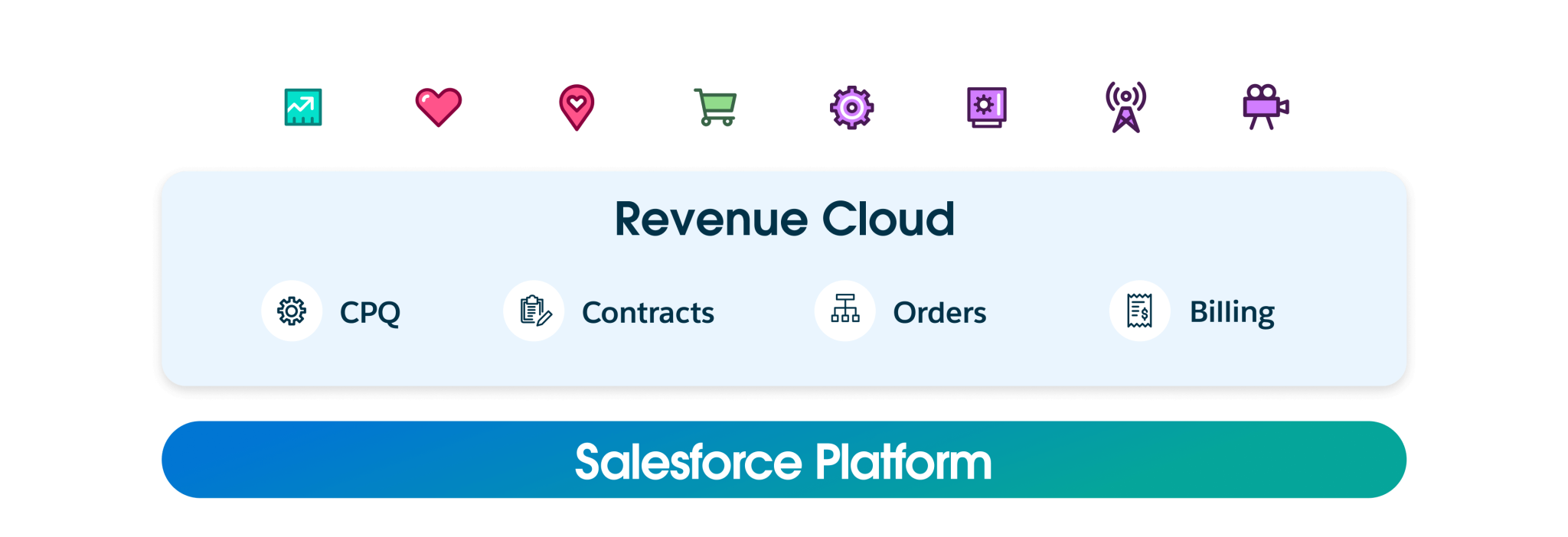
Salesforce’s Revenue Cloud Advanced (RCA), now Agentforce Revenue Management (ARM) modernizes Salesforce’s revenue engine and fundamentally changes how Salesforce and NetSuite must work together across pricing, orders, usage, and revenue events. RCA/ARM is built on a modern, component-based architecture designed to support complex pricing, contracts, and order orchestration across the full quote-to-cash lifecycle.

For companies already running complex quote-to-cash processes, this isn’t a version update. It’s a full reimplementation. One that will expose every inefficiency, integration gap, and data weakness in your current architecture.

At Continuous, we help companies enter this new era Revenue Ready, modernizing their revenue stack without the cost or disruption of a rebuild. We fix quote-to-cash for Salesforce and NetSuite enterprises so they can extend their existing systems into the future, instead of starting over.


What We’re Seeing in the Market: Success Meets Operational Reality

At Continuous, we work with companies that are deep into CPQ and Billing, and five patterns consistently emerge.

1. Your Customer Experience Shouldn’t Depend on Support Tickets

Most customers can’t see their usage, credit balances, or contract details, so they open support tickets for basic questions. This reactive model frustrates users, burdens internal teams, and erodes trust, especially in usage-based models where real-time visibility is expected.

2. When SKUs Don’t Map to Value, Trust Breaks Down

Workarounds that helped get CPQ live or bring a new product to market, like placeholder SKUs or loosely defined product hierarchies create quoting confusion and billing disconnects. The result? Customers are unsure of what they purchased or why they were charged.

3. Governance Gaps and Swivel-Chair Handoffs Create a Loop of Rework and Risk

What began as flexible CPQ configuration has evolved into a patchwork of overrides, manual workarounds, and uncontrolled customizations.  Even after deals are signed, corrections are often required before revenue can be recognized. The outcome: delayed deals, inconsistent data, and ongoing rework across Sales, RevOps, and Finance.

4. Unstructured or Manual Consumption Data

As businesses move toward monetizing usage, the supporting data often isn’t ready. Usage data may be captured inconsistently, defined differently across products, or manually tracked in spreadsheets, if it’s tracked at all. Sales teams miss upsell signals, Finance can’t reconcile revenue, and customers lack visibility, limiting both growth and trust.

5. Fragmented, Disconnected Lifecycle Events Derail Growth

Renewals, amendments, and cancellations are often managed through manual workarounds or outside systems (i.e spreadsheets, net-new quotes, or support tickets). This leads to duplicate records, conflicting contract data, customer confusion, and unreliable revenue and renewal reporting.

____________________________________________________________________________

If these issues sound familiar, you’re not alone. They’re exactly what RCA/ARM will expose, and amplify, if left unaddressed.

That’s why readiness matters. Before you start your RCA/ARM reimplementation, ask yourself these five questions to see whether your foundation is ready for the new architecture.

Is Your Business RCA/ARM Ready?

RCA/ARM assumes a strong foundation, but that’s where many teams struggle. Before diving in, ask yourself:

  1. Is our product catalog standardized and enforceable?
  2. Do our SKUs map to value — for us and our customers?
  3. Is our usage data reliable and available in real time?
  4. Are renewals, amendments, and cancellations governed and aligned?
  5. Can Sales, Finance, and Customers all see the same thing?

Without that foundation, even the best RCA/ARM implementation can fall short of expectations.


How Continuous Helps You Get Revenue Ready

At Continuous, we help Salesforce and NetSuite enterprises prepare for RCA/ARM by fixing what’s underneath, the quote-to-cash foundations that everything depends on.

Continuous enables Salesforce customers to modernize their revenue stack, Revenue Cloud or ARM, without the cost or disruption of a rebuild. We extend Salesforce with flexible pricing, rating, and ERP-ready billing logic that works across both current and next-generation architectures.

With Continuous, teams can:

  • Add modern pricing, usage, and credit models directly within Salesforce — no new platform required.
  • Connect Salesforce quoting and billing to NetSuite or other ERPs with real-time data flow and reconciliation.
  • Evaluate ARM readiness and move on their own timeline — adopting RCA/ARM when they’re ready, without business disruption.

Continuous runs natively across Salesforce and NetSuite, giving you an embedded revenue infrastructure that’s built for the RCA/ARM era.


Final Word

RCA/ARM is changing how Salesforce handles revenue, but it doesn’t have to change everything about how you operate. Companies that clean up now and build the right foundation will move faster, scale smarter, and avoid the pain of rebuilding twice.

Continuous fixed quote-to-cash for companies running Salesforce and NetSuite, so you can enter the RCA/ARM era confident, connected, and Revenue Ready.

Learn how Continuous fixed quote-to-cash in Salesforce and NetSuite. Request a demo today or reach out for a RCA/ARM readiness audit. 


This blog is an update to Part 3 of the RCA Series originally published in April 2025. View all three posts from the series here:
How to Survive (and Win) Your Revenue Cloud Advanced Implementation


Let’s Be Honest: RCA/ARM Isn’t an Upgrade — It’s a Reimplementation

Revenue Cloud Advanced (RCA), now Agentforce Revenue Management (ARM), isn’t just the next version of Salesforce CPQ & Billing.  It represents an entirely different product approach, and is a total paradigm shift. 

RCA/ARM introduces a new, event-driven foundation built for hybrid, usage-based, and consumption pricing. It’s powerful, but it’s not plug-and-play, it needs the right skills and developers to achieve its full potential. If you treat it like a “lift-and-shift,” you’ll just move your old quote-to-cash problems into a more complex architecture.

Do it right, and you’ll come out revenue ready, with a scalable, modern foundation that actually works. Do it wrong, and you’ll be managing chaos in a system that’s supposed to make things easier.

RCA/ARM ≠ CPQ

Let’s be clear: RCA/ARM isn’t CPQ 2.0. 

  • It’s event-driven. Every revenue event triggers automation, rating, and reconciliation — in real time.
  • It’s headless. RCA/ARM is designed for machine-to-machine transactions, not seat-based licensing.
  • It’s developer-heavy by design. The flexibility is incredible, but it requires architects who can design across CRM and ERP.

Think of it this way: Salesforce just handed you the best toolset in the world. But it’s still on you to design the house.  This is where you need your master carpenters, people who know how to build end-to-end on Salesforce and NetSuite.

Four Crucial Steps before Starting RCA

The companies getting this right are using their RCA/ARM reimplementation to fix quote-to-cash issues now, not replicate them.

  1. Clean up CPQ first: Don’t drag legacy workarounds into a modern architecture. RCA/ARM is different, don’t put the CD player in a 2025 car. Start by removing unnecessary custom complexity, returning to sustainable configurations, and stabilizing your current CPQ environment.  This affords you time and control, not just a temporary fix.
  2. Plan for what’s next, not what’s now.: RCA/ARM is built for consumption, flexibility, and automation. Architect beyond your current product catalog and pricing logic.

    Do you have any upcoming initiatives or roadmap items that should be taken into consideration at this time?
    • New product launches or pricing packages
    • Usage-based or hybrid monetization
    • Digital wallets and prepaid credits
    • Ramp and milestone-based deals
    • Self-service or PLG motion
    • Channel or partner expansion
    • AI and predictive revenue intelligence

  3. Build the right team: To get RCA/ARM right, you need people who understand both Salesforce’s event-driven, API-first architecture and the business logic that actually runs quote-to-cash.  Here’s the truth: RCA/ARM skills are not CPQ skills. CPQ is rules and workflows. RCA/ARM is events, automation, and real-time data flows.

    Most teams can’t afford the years it takes to build both skill sets while the business keeps shipping new pricing models. That’s where Continuous changes the game.

    We bring RCA/ARM expertise, deep CPQ mastery, and industry-specific insight to design pricing, packaging, usage, and revenue flows that actually work. While others are still learning Salesforce’s new model, we’re already executing it at scale.

    Pair Continuous with the right internal stakeholders and you don’t just implement RCA/ARM, you build a modern revenue architecture grounded in real experience, not guesswork.

    Your winning team blends:
    • Architects who design across Salesforce, NetSuite, and connected data flows
    • RevOps + Finance leaders who align pricing, process, compliance, and controls
    • Developers/engineers who implement event-driven logic, integrations, and usage instrumentation
    • Data owners who define, model, and reconcile usage and event flows
    • Process + change leaders who drive adoption and measurable outcomes

      RCA/ARM success depends on collaboration, not configuration. The teams who win treat it as a cross-functional design effort that unites Sales, Finance, and Operations around a shared revenue architecture.

  4. Choose the right foundation: The winners are embedding revenue infrastructure inside their systems of record.

    The connection between your CRM, ERP, customer systems, and product should all work together without duplicate data sources. When done right, usage and consumption data should be usable in real-time, across all systems and processes. 

    Sound too good to be true?  See how ACI learning put this into action

How Continuous Helps You Get Revenue Ready

Revenue models have been evolving for decades and so have the associated tools. This next generation of Salesforce architecture is designed to unlock so much more. At the risk of sounding like a broken record, I will state again, this is not lift and shift…you need a bridge to the future. 

Continuous enables Salesforce customers to modernize their revenue stack, Revenue Cloud or ARM, while maintaining day-to-day operations and modernizing.  We extend Salesforce with flexible pricing, rating, and ERP-ready billing logic that works across both current and next-generation architectures.

With Continuous, teams can:

  • Assess your options
  • Clean up CPQ and reduce risk for the next path you choose
  • Add modern pricing, usage, and credit models directly within Salesforce. No new platform required.
  • Connect Salesforce quoting and billing to NetSuite or other ERPs with real-time data flow and reconciliation.
  • Evaluate ARM readiness and move on their own timeline — adopting RCA/ARM when they’re ready, without business disruption.

Continuous builds the foundation you’ll need for RCA/ARM, while delivering value now. When you go live, your architecture, processes, and people are already ready.

Final Word

RCA/ARM is rewriting Salesforce’s revenue architecture. This isn’t just another release, it’s your chance to get back to out-of-the-box, simplify and modernize for good.

Maximize the systems your teams operate within and create a future-proof infrastructure to power your business. Embedded revenue infrastructure is the revenue fabric that will directly stitch together  Salesforce and NetSuite. We’ve fixed quote-to-cash, and we make sure your business stays revenue ready for whatever comes next.

→ Learn how Continuous fixed quote-to-cash in Salesforce and NetSuite. Request a demo today or reach out for a RCA/ARM readiness audit. 

Revenue Cloud Advanced (RCA/ARM): What’s New, What’s Next, and How to Get Ready


An inside look at how enterprises are getting revenue ready for the next generation of Salesforce architecture.

Salesforce’s next-generation revenue platform, Revenue Cloud Advanced (RCA), now Agentforce Revenue Management (ARM)—marks a major step forward from Salesforce Revenue Cloud.

RCA (now ARM) is built on a modern, component-based architecture designed to support complex pricing, contracts, and order orchestration across the full quote-to-cash lifecycle.

Unlike traditional Salesforce products that evolve on a fixed release schedule, RCA (ARM) is advancing rapidly with releases every few weeks to meet customer demand. New components and capabilities roll out at a rapid pace, expanding what’s possible for revenue operations teams.

For many organizations, the opportunity is exciting, but also complex. ARM’s flexibility introduces new design considerations for how pricing, quoting, amendments, invoicing , and ERP processes fit together.

What Salesforce Is Building with RCA/ARM

RCA/ARM builds on lessons learned from Salesforce Revenue Cloud. Revenue Cloud was like buying a boxed LEGO set—it came with clear instructions and all the right pieces to build a defined outcome. Done well, you could end up with something impressive, like the Millennium Falcon. But if you tried to build something different, you often had to improvise, and the result could be unstable or overly customized as the product evolved.

RCA changes that model. It’s more like being handed a bucket of LEGO bricks—you can build almost anything, but it requires more planning, design skill, and time to get it right. ARM’s component-based architecture introduces new services for advanced pricing, contracts, and order orchestration, giving teams far more flexibility and scalability, but also more architectural responsibility.

Many organizations see that flexibility as the future, but they also recognize the value of bringing their existing Salesforce CPQ environment back closer to standard. Continuous helps them do exactly that—simplifying the foundation while introducing capabilities legacy Revenue Cloud doesn’t natively handle well, such as ramps, usage-based pricing and rating, credit balance or digital wallet management, and a cleaner, automated handoff to ERP systems like NetSuite.

This approach buys organizations time to evaluate ARM’s growing capabilities while continuing to roll out new functionality today. With Continuous in place, they gain a modernized, maintainable architecture now and a clear path to ARM when the timing makes sense.

What This Means for Salesforce Revenue Cloud Customers

If you’re already using Salesforce Revenue Cloud, you don’t need to start over to modernize.  Your current implementation can evolve—supporting new pricing models, consumption scenarios, and ERP integration today while preparing for ARM tomorrow.

We’re working with companies of all sizes that are evaluating whether to adopt RCA (ARM) now or extend their existing Salesforce setup with Continuous. For many, enhancing legacy Revenue Cloud first delivers faster wins and creates a smoother on-ramp for a future migration.

Common goals include:

  • Introducing advanced pricing logic, ramps, and usage-based models
  • Managing prepaid credits and drawdowns directly in Salesforce
  • Automating data flows and journal entries into NetSuite or other ERPs

This approach lets teams innovate without risk—modernizing now while keeping every option open later.

How Continuous Helps

Continuous enables Salesforce customers to modernize their revenue stack—legacy Revenue Cloud (Salesforce CPQ) or RCA/ARM—without the cost or disruption of a rebuild.  We extend Salesforce with flexible pricing, rating, and ERP-ready billing logic that works across both current and next-generation architectures.

With Continuous, teams can:

  • Add modern pricing, usage, and credit models directly within Salesforce
  • Connect Salesforce quoting and billing to NetSuite or other ERPs
  • Evaluate RCA/ARM readiness and move on their own timeline

Our team includes the former Head of Product for Salesforce Revenue Cloud, so we understand both systems from the inside. We know how they differ, how Salesforce’s component architecture works, and what it takes to bridge between them.

Planning Your Path Forward

Whether you’re evaluating ARM now or simply planning ahead, the right next step is an RCA/ARM readiness review.

Continuous helps you:

  1. Assess how your current pricing and quoting logic aligns with ARM’s component model
  2. Identify what can be reused, extended, or decoupled

Build a modernization plan that fits your business—not a vendor timeline

The Bottom Line

RCA/ARM is both a huge opportunity and a massive shift in Salesforce’s revenue ecosystem—more flexible, faster-moving, and built for the future.  The key is knowing how to harness that innovation without introducing risk.

At Continuous, we fixed quote-to-cash in Salesforce and NetSuite so your business is revenue ready, no matter where you are on your journey. We help companies bring Salesforce CPQ back to standard, add the advanced capabilities needed today, and move confidently toward RCA/ARM when the time is right.Interested in learning more about the Shift to RCA? Check out our recent article: Is Your Business RCA-Ready? Five Questions to Ask Before Making the Leap  Or, contact us to schedule a Salesforce RCA/ARM readiness session.