Category: Quote-to-Cash

Ramps and Swaps 101: Easy Math, Hard Execution, Real Cost

Continuous Insights_Ramps & Swaps 101

Why the Math Is Easy, the Execution Isn’t, and Both Are Costing SaaS Companies More Than They Realize

For CFOs, CROs, and RevOps leaders at mid-market SaaS companies: learn why ramps and swaps cause bookings, billings, and revenue to diverge in Salesforce and NetSuite — creating margin leakage, RPO reporting gaps, and a finance team reconciling numbers that should never have drifted.


Ramps and swaps are two of the most common contract structures in B2B SaaS — but two of the most reliably painful to execute. A ramp is a multi-year deal where the price increases each year: for example, a customer commits to $20,000 in year one, $25,000 in year two, $30,000 in year three. A swap is a mid-contract product exchange: a customer returns the unused portion of what they bought and applies the credit toward something different. Both are standard. Both are expected. And both have a way of breaking things that shouldn’t break.

Consider this scenario. A customer calls their account manager. They’ve been on Product A for six months and want to upgrade to Product B. They expect a credit for what’s left on their current contract. It seems straightforward. The account manager agrees. They go to build the quote.

However, in most mid-market SaaS companies, what actually happens is more complicated than a three-day delay. The account manager calls finance, who is buried in month-end close. But even when the number comes back, it may not be what anyone expected. The implementation, training, or support services bundled into the original deal — discounted or included at no cost — were still allocated a portion of the contract revenue at the time of booking. The account manager never knew. They see what the customer paid, estimate the remaining value, and build the quote on a number that was never accurate to begin with. Add in the days that have elapsed since the swap request came in, and the proration has shifted too. The number is wrong twice over. The customer is frustrated. The deal is delayed. And everyone involved is doing work that, in a properly architected system, no human should have to do at all.

This is the ramps and swaps problem. Not a math problem. Not a people problem. A systems problem — one that most companies quietly absorb by building a RevOps team whose real job, underneath the title, is cleaning up the accounting side effects of deals the systems were never designed to handle.  What sales sees on an opportunity and what finance is actually recognizing in NetSuite are separated by seven records. That’s not a gap. That’s where margin goes to die.

Why Do Ramps and Swaps Leave Sales Flying Blind and Finance Cleaning Up the Mess?

To understand why this breaks, you have to understand what happens to a deal after it closes.

When an opportunity closes in Salesforce, the booking reflects what was sold: the price on the quote, the products on the order. That’s the number sales owns. It’s clean, it’s simple, and it’s already out of date by the time the deal reaches NetSuite.

In NetSuite, two things happen that Salesforce will never see. The first is allocation. When a deal includes a software license and a professional services engagement — even if the implementation was “free” — the revenue has to be distributed across both components based on their standalone value, not what the invoice says. A deal booked as $50,000 for software and zero for services might become $30,000 for software and $20,000 for services once NetSuite applies allocation. The invoice wasn’t wrong. The revenue treatment just reflects the economic reality of what was delivered.

The second is recognition timing. A ramp deal — $20,000 in year one, $25,000 in year two, $30,000 in year three for the same product — can’t be recognized as billed. The total contract value has to be spread evenly, because you’re delivering the same thing each year. So you recognize $25,000 annually regardless of what the invoice says. Year one generates an unbilled receivable. Year three generates deferred revenue. None of this is visible in Salesforce.

The portion of that total contract value not yet recognized is what’s known as Remaining Performance Obligation, or RPO. For a three-year ramp deal, RPO represents the revenue the business is committed to deliver but hasn’t yet earned. It’s a number that matters enormously to investors and auditors, and one that’s almost impossible to report accurately when ramp deals aren’t configured correctly in NetSuite from the start.

“The post-allocation financial picture that lives in NetSuite never makes its way back to Salesforce. In 99% of cases, only the most sophisticated organizations manage to close that gap — and they’ve had to build it themselves.”

So when the account manager goes to quote a swap, they’re working from the Salesforce number — what was originally booked. The actual remaining recognized value is a different number, sitting in NetSuite, accessible only to someone who knows where to look and has time to pull it. The gap between those two numbers is where margin goes to disappear. Sales closes the deal with the wrong credit. Finance inherits the mess: reconciling recognition patterns the sales rep never knew existed, after a deal that can no longer be unwound.

What Does It Really Cost When Ramps and Swaps Go Wrong?

The most immediate cost is margin leakage — and it’s more common than most finance teams realize. When a customer wants to swap products and the account manager calculates their credit as $25,000 because that’s what six months of a $50,000 contract looks like on paper, but the actual remaining recognized value is $15,000 because of how allocation was applied, the business has two choices. Get finance involved, slow the deal down, and try to explain to the customer why they’re getting less credit than expected. Or just give them the $25,000, close the deal, and eat the $10,000 difference. And it’s worth being clear about what’s actually happening here. The rep isn’t cutting corners — they’re working with the only number available to them. When systems aren’t architected to surface the real revenue position, over-crediting isn’t a training problem or a process failure. It’s the predictable outcome of asking people to make financial decisions without financial data. The rep trades margin for a fast quote. The customer gets their answer. The business absorbs a loss it didn’t know it was taking.

Most companies, most of the time, take the path of least resistance. They don’t have a process that makes the right answer easily available, so they default to the wrong one. Across PE-backed SaaS companies, it’s common to see 1 to 3 percent of ARR effectively donated this way each year — purely because swap credits are based on invoice math instead of recognized revenue. That’s not a rounding error.

“When a swap credit should be $15,000 but the sales rep can only see the invoiced number, companies are often cornered into issuing $25,000 and eating the $10,000 difference. It happens constantly. It’s not an edge case. It’s the hidden cost of two systems that don’t talk to each other.”

Beyond the immediate margin hit, the reporting consequences compound over time. When a customer’s recognized revenue drops mid-contract because a swap was executed at the wrong value, it shows up in the CFO’s monthly report as an unexplained ARR decrease. Weeks after the fact. Long after anyone could have done anything about it. Revenue forecasts drift. ARR reporting reflects bookings rather than recognized revenue. The gap between what the CRO thinks the business is doing and what the CFO knows it’s doing widens with every quarter.

For PE-backed companies, the stakes are higher still. Covenant compliance, investor reporting, and the credibility of the management team all depend on financial numbers that reconcile, including RPO, which investors increasingly scrutinize as a forward indicator of revenue health. When they don’t, the conversation shifts long before the board asks a question. Executives are defending numbers instead of discussing growth. The CRO and CFO are reconciling versions of reality instead of aligning on what’s next. By the time someone asks why bookings, billings, and revenue don’t line up, the credibility cost has already been paid.

Why Can’t Your Systems Handle Ramps and Swaps Automatically?

Because the revenue position that matters sits seven records deep in a system the sales team never touches. A deal moves through a chain: opportunity in Salesforce, order line in Salesforce, sales order in NetSuite, sales order line in NetSuite, revenue element, recognition plan, journal entries over time. By the time allocation has been applied and recognition has begun, the number that’s relevant for a swap or a ramp reconciliation is buried at the end of that chain. No existing tool has been built to traverse it automatically and send the answer back.

To get that number back to the person quoting the deal, someone has to manually bridge the gap. Call finance. Run a report. Export a spreadsheet. In organizations that have tried to build this themselves, it typically means a sales ops person who has a standing relationship with someone on the revenue team and knows to call before month-end when the queue is manageable. That’s not a process. That’s a workaround with a name badge.

The reason no one has solved this systematically is that it requires being native to both systems simultaneously — not integrated with them or synced to them on a schedule, but genuinely embedded in the data layer of both Salesforce and NetSuite. Most tools live on one side of that boundary. The revenue data lives on the other.

“Most quote-to-cash stacks stop caring about revenue the moment the invoice goes out. Everything after that gets handed to finance and forgotten. To take the final answer on that revenue element and tie it seven records back to the opportunity in Salesforce — and have a system send that answer back automatically — No one had built that yet. Until now. That’s what Continuous solved.”

How Does Continuous Solve the Ramps and Swaps Problem?

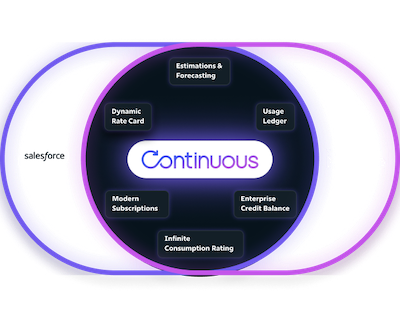
Continuous operates at the architectural boundary between Salesforce and NetSuite, embedded in both systems’ transaction and revenue layers, not bolted on through middleware or nightly syncs. It tracks the full lifecycle of a deal from opportunity through allocation, recognition, and journal entry, keeping the revenue position accurate in real time across both systems.

For swaps, that means the account manager sees the actual remaining recognized value before they build the quote. Not invoice math. Not a CPQ estimate. The number pulled directly from post-allocation accounting. Credits reflect financial reality, finance doesn’t get a phone call, and margin doesn’t quietly erode.

More importantly, the system enforces alignment. Revenue logic is embedded directly in the quoting flow, so sales cannot issue credits that exceed what has actually been earned. The gap between bookings and recognized value closes before it ever becomes a reporting problem.

For ramps, Continuous structures recognition correctly from the start and recalculates automatically when a contract changes. Allocation, deferred revenue, and billing schedules stay aligned without manual intervention. No surprises when a ramp year turns over, no reconciliation required when a customer modifies mid-term.

The same infrastructure governs amendments, credits, true-ups, and hybrid pricing models, absorbing commercial flexibility into system design rather than leaving finance to reconcile it after the fact.

On the reporting side, bookings, billings, and revenue reconcile structurally. The CRO and CFO operate from the same source of truth. ARR reflects recognized reality. Mid-contract changes surface in forecasts immediately, not six weeks later.

Continuous isn’t another billing tool. It’s embedded revenue infrastructure built to close the seven-record gap automatically — so ramps and swaps execute cleanly, accurately, and without hidden margin loss

Ready to learn more? See how Continuous ensures your revenue position is always accurate, in both systems, in real time.

Frequently Asked Questions (for FAQ section)

What are ramps and swaps in SaaS contracts?

A ramp is a multi-year contract structure where the price increases by a pre-negotiated amount each year. For example, a customer might pay $20,000 in year one, $25,000 in year two, and $30,000 in year three for the same product. A swap is a mid-contract product exchange where a customer returns the unused portion of an existing product and applies the remaining credit toward a different one. Both are common in B2B SaaS and both create significant complexity when it comes to revenue recognition and billing.

Why do ramps and swaps cause problems in NetSuite?

NetSuite applies revenue allocation and recognition rules that change the financial value of a product after a deal closes. A ramp deal that bills at different amounts each year must be recognized evenly across the contract term under ASC 606. A bundled deal with a free implementation must allocate value across each component based on standalone selling price. These adjustments happen entirely in NetSuite and are never reflected back in Salesforce, creating a disconnect between what sales knows and what finance knows.

What is the difference between bookings, billings, and revenue recognition?

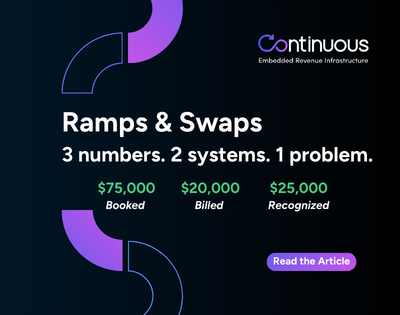
Bookings are the total value of deals closed, typically recorded in your CRM on the day the contract is signed. Billings are the amounts actually invoiced to customers, which may follow a different schedule. Revenue recognition is the amount recorded as earned revenue under ASC 606, which depends on when and how value is delivered. For a ramp deal, all three numbers can be different in the same year: you might book $75,000, bill $20,000, and recognize $25,000. Understanding the difference is critical for accurate ARR reporting and financial forecasting.

How does revenue allocation affect swap credits?

When a deal includes multiple products or services, NetSuite allocates revenue across each component based on standalone selling price, regardless of how the invoice was structured. This means the recognized value of a product can be materially different from what appears on the quote. When a customer goes to swap that product, the credit they are owed should be based on the remaining recognized value, not the invoiced amount. If sales quotes the swap using the invoiced figure, the company may issue a larger credit than it has actually earned, resulting in direct margin leakage.

Why does ARR drop when a customer swaps products?

ARR can drop after a swap when the new ARR secured in the replacement product is less than the recognized ARR being retired from the original product. This often happens because the account manager is quoting based on the Salesforce booking value rather than the actual remaining recognized revenue position in NetSuite. The difference between those two numbers can be significant, and without visibility into the real revenue position, sales teams routinely offer more credit than the business has earned.

How can software companies automate ramps and swaps?

Automating ramps and swaps requires closing the data loop between your CRM and your ERP. The recognized revenue position for each product needs to flow back into Salesforce automatically so account managers have the right number before they quote. This means being native to both systems, tracking the full chain from opportunity through revenue element and recognition plan, and updating the revenue position in Salesforce as it changes over time. Continuous is built to do exactly this, eliminating the manual handoffs between sales and finance that slow deals down and introduce errors.

What is Remaining Performance Obligation and how do ramps affect it?

Remaining Performance Obligation, or RPO, is the total contract revenue a company is obligated to recognize in the future but has not yet earned. Under ASC 606, it represents the value of work still to be delivered on existing contracts. For ramp deals, RPO can be significant: a three-year ramp with $75,000 in total contract value has $50,000 in RPO at the end of year one. If ramp deals aren’t configured correctly in NetSuite — with even recognition across the full contract term — RPO will be understated, misrepresenting the company’s forward revenue position to investors, auditors, and the board.
Quote-to-Cash Conversations: Navigating CPQ EOS + What Comes Next

Salesforce CPQ and Continuous

A recap for RevOps, Sales Ops, Finance, and Product leaders on CPQ end of sale, ARM readiness, and how to plan next steps without disrupting revenue.

TL;DR
- Salesforce CPQ end of sale does not require immediate migration, but it does require intentional planning. CPQ remains supported, giving teams a meaningful window to prepare.
- There is no direct upgrade path from CPQ to ARM. Revenue Cloud Advanced is a reimplementation with a different architecture, fewer guardrails, and greater operational responsibility.
- Most organizations succeed by modernizing in phases, extending CPQ where it makes sense while avoiding disruption to quoting, billing, and revenue workflows.
- Fragmenting quote-to-cash systems to “test” usage or consumption pricing often creates long-term reconciliation, reporting, and data integrity issues.
- Teams that plan now gain flexibility later, moving faster and with less risk when change becomes necessary.


In early 2025, Salesforce announced that CPQ would be end-of-sale. The news immediately raised questions across RevOps, Sales, and Product teams about what comes next.

As many companies approach the end of the fiscal year, that question still looms large. Budgets are being set. Roadmaps are being finalized. And for many teams, the refrain remains the same: What now?

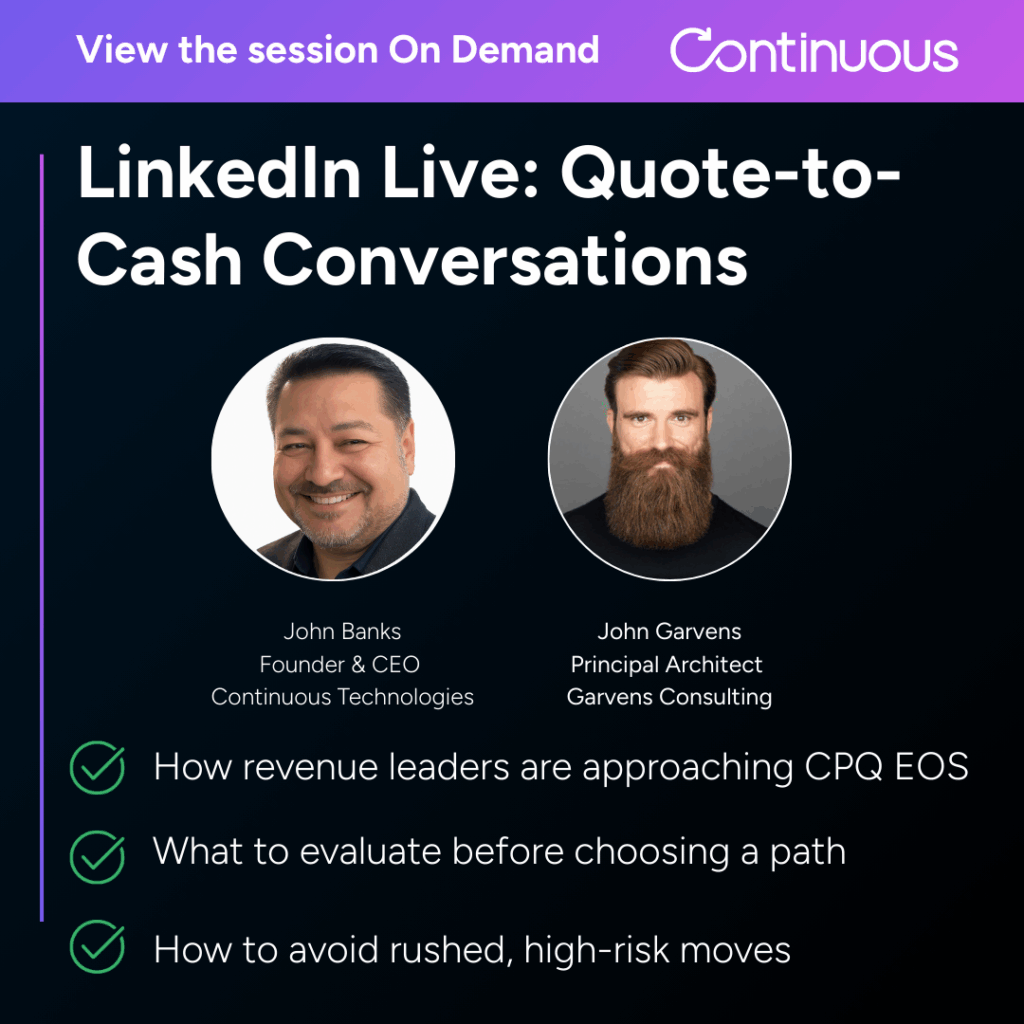
To explore what CPQ EOS really means in practice, and how revenue teams should be thinking about next steps, John Banks, CEO and Founder of Continuous, sat down with John Garvens, Salesforce Revenue Cloud expert and Principal Architect at Garvens Consulting, for a live Quote-to-Cash Conversations discussion moderated by Rachel Bruce, VP of Marketing at Continuous.

Rather than fueling alarm, the conversation surfaced a more grounded reality. CPQ end-of-sale is not a cliff. It’s a runway. CPQ is still supported, the lights are not turning off tomorrow, and most teams have more time than they think. What has changed is the urgency to plan with intention.

Modern revenue models are putting new pressure on legacy quote-to-cash architectures. Hybrid pricing, credits, commitments, and usage-based monetization are no longer edge cases. They are rapidly becoming the default. If your business wants to experiment, launch, or scale those models, the real question is not simply what product comes next, but whether your quote-to-cash foundation is ready for where revenue is headed.

Quote to Cash Conversations with John Banks and John Garvens

▶ Watch the full recording

What follows is a curated recap of the most relevant insights from the conversation, focused on the choices revenue teams are weighing and what those choices mean in practice.


CPQ EOS is not a crisis, but it is a forcing function

End-of-sale does not mean end-of-life. CPQ is not disappearing overnight. The real risk is letting uncertainty turn into inertia, then finding yourself forced into a rushed decision later.

This period is best used as a planning window. It’s a chance to understand what actually lives inside your Salesforce org, how much of your revenue process relies on custom workarounds, and where friction has quietly turned into tech debt. Even teams that plan to stay on CPQ for several more years benefit from doing this work now, because preparation creates options.

Most companies are choosing one of three paths

While every environment is different, most teams navigating CPQ EOS tend to fall into one of three scenarios.

1. Stay on CPQ for now.
Some teams will remain on CPQ for a period of time because budget, bandwidth, or organizational readiness make a near-term change unrealistic.

2. Start fresh in a contained scope.
Others will implement newer tooling for a new product line, a new business unit, or a recent acquisition. This allows progress without disrupting the broader organization.

3. Take a phased bridge approach.
Many teams will modernize incrementally, keeping the business running while gradually transitioning their quote-to-cash architecture.

The important distinction is that moving from CPQ to Revenue Cloud Advanced is not an upgrade. It’s a reimplementation with a different operating model, fewer guardrails, and a much higher premium on process clarity and architectural discipline. Treating it like a lift-and-shift is where teams tend to get into trouble.

Fragmentation is the fastest path to future pain

One of the strongest warnings that emerged from the conversation was around fragmentation. When teams try to test consumption or usage-based pricing by bolting on a separate billing system “just for a pilot,” the complexity rarely stays contained.

Over time, those experiments often create a second customer record, a second product catalog, and a second transaction engine. Reconciliation becomes manual. Reporting becomes unreliable. The quote-to-cash model slowly loses coherence.

If the goal is to introduce credits, commitments, usage, or hybrid pricing, the safer long-term approach is to extend what you already have without breaking the integrity of your architecture. That means protecting a single customer view, a single source of product truth, and clean lifecycle management even as monetization evolves.

The bridge matters because revenue cannot stop

A useful analogy surfaced during the discussion. Moving from CPQ to ARM requires a merge lane. Most companies cannot pause quoting, selling, amending, and invoicing while they rebuild their revenue stack. Continuity is not optional.

A phased transition allows teams to modernize transactionally, reduce risk, and avoid a single high-stakes cutover. When done well, migration becomes a controlled progression rather than a disruptive reset.

ARM success depends on people as much as product

While there is real excitement around ARM, the conversation was candid about where implementations can stall. The platform is evolving quickly, which creates opportunity but also risk for enterprise teams that need stability and governance.

Projects tend to struggle when teams build against the product’s intent, compensating with custom workarounds that become permanent. Over time, those decisions compound complexity instead of reducing it.

The implication for RevOps and Product leaders is clear. Domain expertise matters. Successful teams have experienced quote-to-cash practitioners in the room who understand not just what is possible, but what should be avoided. Being able to push back on requirements is often as important as delivering them.

A realistic planning window for CPQ EOS transitions

For many organizations, a six- to twelve-month preparation window is realistic, especially once remediation, catalog cleanup, process clarity, and cross-functional alignment are factored in. That time is not about delay. It’s about laying the groundwork that prevents expensive mistakes later.

Measured planning now leads to faster, more predictable outcomes when change does happen.

Final Thought

CPQ EOS does not demand immediate action, but it does reward intentional planning. Teams that use this period to clarify their processes, clean up their architecture, and modernize thoughtfully will have far more flexibility when the next decision arrives.


Want to go deeper?

  • Watch the full Quote-to-Cash Conversations recording to hear the complete discussion on CPQ EOS, ARM readiness, and modern revenue models, including real-world examples and audience Q&A.
  • Not sure what CPQ EOS means for your quote-to-cash architecture?
    Take the Salesforce CPQ EOS Assessment to understand your current state, evaluate your options, and identify the safest next steps based on your revenue model, quote-to-cash architecture, and timeline.

Whether you’re planning to extend CPQ, phase into Revenue Cloud Advanced, or explore alternatives, the right path starts with clarity.

▶ Watch the full recording
🧭 Take the CPQ EOS Assessment


CPQ EOS: Common Questions Revenue Leaders Are Asking

Do we need to replace Salesforce CPQ now that it’s end-of-sale?
No. End-of-sale means CPQ is no longer sold to new customers—not that it stops working. Existing customers will continue to receive support, giving teams time to plan instead of reacting under pressure.

Is moving from CPQ to ARM an upgrade?
No. ARM introduces a different operating model with fewer guardrails and greater architectural responsibility. Treating it as a lift-and-shift often leads to delays, rework, and avoidable complexity.

What happens if we wait too long to plan for CPQ EOS?
Teams that delay planning often face rushed decisions, fragmented architectures, and higher implementation risk once timelines compress. Early planning creates options—even if the decision is to stay on CPQ longer.

Can we experiment with usage or consumption pricing without breaking our architecture?
Yes—but only if experimentation happens within a unified quote-to-cash model. Adding separate billing or usage tools for pilots frequently leads to duplicate data, manual reconciliation, and reporting gaps.

How long should teams plan for a CPQ EOS transition?
For most organizations, six to twelve months of preparation is realistic. That time includes catalog cleanup, process alignment, cross-functional readiness, and architectural planning—not just implementation.


About Continuous

Continuous helps companies modernize and future-proof their quote-to-cash process directly inside Salesforce and NetSuite. By embedding pricing, usage, and credit models into the platforms teams already use, Continuous eliminates the need for another system, portal, or integration layer.

With Continuous, Sales can quote and close faster, Finance gains confidence in forecasts and compliance, and Product can launch new pricing and packaging strategies without bottlenecks. 

The Year Companies Finally Fix Quote-to-Cash: 9 Predictions for 2026

Embedded Revenue Infrastructure

Nine predictions for finance, RevOps, and systems leaders on how quote-to-cash becomes core infrastructure as hybrid revenue models redefine operations in 2026.

TL;DR
- In 2026, quote-to-cash becomes core business infrastructure, not a system you rebuild every year.
- Hybrid revenue models expose the cracks between Salesforce and NetSuite faster than teams can patch them.
- Embedded revenue logic replaces stacked tools, fragile integrations, and constant reimplementation.
- Companies that connect revenue end-to-end will price faster, bill cleaner, and scale with confidence.


The next year will redefine how companies manage quote-to-cash across Sales, Finance, Product, and Pricing. With hybrid and consumption-based models now the standard, it’s clear that most organizations weren’t built to support them. 2026 is about closing that gap.

The focus will shift to making these models operational, whether by modernizing legacy systems or building new architectures designed for what’s next. And success will depend on keeping everything connected through a single source of truth. That means keeping Sales in Salesforce, Finance in NetSuite, and revenue data perfectly aligned between them.

When that alignment doesn’t exist, the cracks show up fast. Usage, credits, commitments, and multi-year deals expose the gaps between CRM and ERP, forcing teams into custom code, spreadsheets, or one-off billing pilots just to keep deals moving and invoices accurate.

Continuous exists to solve that problem. We run directly inside Salesforce and NetSuite, providing a shared revenue layer that keeps pricing, lifecycle changes, usage, and financial impact connected end to end, whether a company is extending what it has today or preparing for what comes next. Here’s what we see coming in 2026.

1. Quote-to-Cash Becomes Essential Business Infrastructure

In 2026, companies will stop treating quote-to-cash as a project and start treating it as mission-critical infrastructure. The 12 to 18 month rebuild cycle can’t keep up with how fast pricing and go to market strategies evolve, and teams are tired of redoing the same work every year.

This is the year revenue logic moves inside the systems that already run the business, Salesforce and NetSuite, instead of relying on disconnected tools and fragile integrations. When pricing, product, and revenue logic live inside the core systems, companies can evolve how they sell and bill without breaking downstream finance every time monetization changes.

The most resilient companies will take this approach, eliminating the middleware tax that has slowed transformation for years.

2. Companies Stop Adding Revenue Systems and Embed Revenue Logic Instead

In 2026, companies will stop trying to solve quote-to-cash complexity by adding more systems. Years of layering CPQ, billing, usage tools, and reporting platforms have created duplication everywhere. Change one thing in pricing or packaging, and suddenly CRM, billing, revenue recognition, and reporting all need to be updated separately.

That approach won’t hold. Leading teams will focus on aligning how Salesforce and NetSuite handle pricing, usage, entitlements, and lifecycle events instead of expanding the stack. This alignment becomes critical as businesses introduce more hybrid, consumption, and commitment-based models.

This shift gives rise to embedded revenue infrastructure. Rather than introducing another standalone billing or monetization platform, companies will embed revenue logic directly into the systems they already run. The result is a shared revenue foundation that supports complex quote-to-cash without duplication, constant rework, or fragile integrations.

3. Hybrid Revenue Models Become Table Stakes

In 2026, hybrid revenue models will no longer be a competitive advantage. They will be the baseline. Subscriptions, usage, credits, commitments, and overages will coexist inside the same customer relationship, and companies will be expected to support all of them at once.

The difference will be execution. Leading companies will design their quote-to-cash architecture to handle multiple revenue motions simultaneously instead of optimizing for a single model. Teams that can operationalize this complexity will forecast more accurately, bill with fewer exceptions, and give customers clear visibility into what they’ve bought and consumed.

Companies that can’t will feel the impact quickly, not in pricing strategy debates, but in broken billing, unreliable forecasts, and frustrated customers.

4. Entitlements Become the Glue Between Sales, Product, and Finance

In 2026, entitlements become the new source of truth. Companies will be forced to reconcile what customers actually bought with what they actually have. Entitlements evolve into the connective tissue linking quoting, provisioning, billing, and renewals.

If your entitlement data is wrong, every downstream motion is wrong. The most effective teams will treat entitlements as infrastructure, not afterthoughts, keeping sales, product, and finance in sync and every renewal accurate. Clean entitlements mean clean revenue.

5. Finance Moves Upstream and Sets the Guardrails for Quote-to-Cash Design and Architecture

As revenue models become more complex, informal rules and downstream cleanup no longer scale. Pricing logic, usage handling, entitlements, and lifecycle changes carry immediate billing and revenue recognition implications. When those rules live in spreadsheets, custom code, or disconnected systems, finance is left reacting after problems appear.

In 2026, companies respond by formalizing quote-to-cash rules inside the systems that run the business. Pricing, usage, entitlements, and lifecycle constraints are embedded and enforceable, applied consistently from deal design through financial reporting. This shift makes governance possible upstream instead of downstream.

As a result, finance is no longer brought in after deals are designed. It is involved upfront, setting the constraints that quote-to-cash solutions must meet. Sales and RevOps still design deals, but they do so within guardrails that ensure billing, revenue recognition, and audit requirements are met by default.

6. Cleanup Beats Quote-to-Cash Reimplementation

Salesforce CPQ’s end-of-sale will tempt teams to blow everything up. In 2026, the smartest companies will resist that urge. Instead of launching massive quote-to-cash reimplementation projects, they will improve what they already have.

These teams will modernize in steps: clean the catalog, return to out-of-the-box where possible, embed the right logic, and move to Revenue Cloud Advanced when they are ready. Companies that attempt giant, multi-year reimplementations will spend 2026 managing risk and overruns instead of delivering business value.

Cleanup beats reimplementation every time.

7. The 60-Second Rule: Data Transparency Defines the Next Market Leaders

In 2026, data trust becomes the ultimate differentiator. Boards, investors, and executives will expect revenue answers on demand, not after days of reconciliation. The companies that can trace every deal from quote to contract to invoice to revenue in under 60 seconds will earn the confidence of their boards, investors, and markets alike.

Clean revenue lineage evolves from operational hygiene to strategic foresight. Teams will stop treating traceability as a reporting exercise and start designing for it upfront. With connected data architectures uniting bookings, billings, and revenue, finance shifts from proving what happened to driving what comes next, anchored in truth rather than assumptions.

8. The Rise of the Revenue Architect

A new role is emerging inside scaling organizations: the Revenue Architect. Equal parts business analyst, systems thinker, and finance translator, these leaders will bridge the gap between CRM and ERP, guiding architecture decisions that last. In 2026, companies that empower this role will build cleaner systems and scale faster than those that do not.

9. Companies That Rapidly Innovate Pricing Will Dominate and Grow

In 2026, pricing agility becomes the new growth lever. The fastest teams will stop treating pricing changes like mini transformations and start shipping new models continuously: commits, credits, outcomes, and more, all without breaking quoting or billing.

Companies that can do this will outpace competitors and compound growth. If you can’t change pricing fast, you won’t compete with companies that can.

What This Means for 2026

In 2026, companies that treat quote-to-cash as connective infrastructure will move faster, price more creatively, and operate with confidence across sales and finance. Those that continue to rely on fragmented systems, manual workarounds, and downstream cleanup will struggle to keep up.

Continuous helps leading organizations operationalize complex revenue models by embedding the revenue infrastructure that connects Salesforce and NetSuite, so change is possible without breaking billing, revenue, or trust.

____________________________________________________________________________

About Continuous

Continuous helps B2B companies modernize and future-proof quote-to-cash directly inside Salesforce and NetSuite. By embedding pricing, usage, and credit models into the core systems of record, Continuous creates a single, shared source of truth across sales and finance.

With Continuous, companies can support complex revenue models without adding new systems, breaking downstream finance, or re-implementing quote-to-cash every time the business changes. The result is faster monetization, cleaner revenue, and confidence that what sales sells can actually be billed, recognized, and reported accurately.

Is Your Business ARM Ready? 5 [NEW] Questions to Ask Before Making the Leap

Revenue Cloud Advanced

A readiness guide for Salesforce and NetSuite leaders on what Revenue Cloud Advanced (ARM) exposes, why it’s a reimplementation, and how to prepare without rebuilding twice.

TL;DR
- Revenue Cloud Advanced (ARM) is a full reimplementation that exposes every weakness in your quote-to-cash foundation.
- Poor product catalogs, unreliable usage data, and manual lifecycle events break customer trust and slow revenue.
- ARM amplifies fragmentation between Salesforce and NetSuite instead of fixing it.
- Teams that clean up and standardize first adopt ARM faster—without rebuilding twice.


The Reality Check: RCA/ARM Isn’t an Upgrade — It’s a Reimplementation

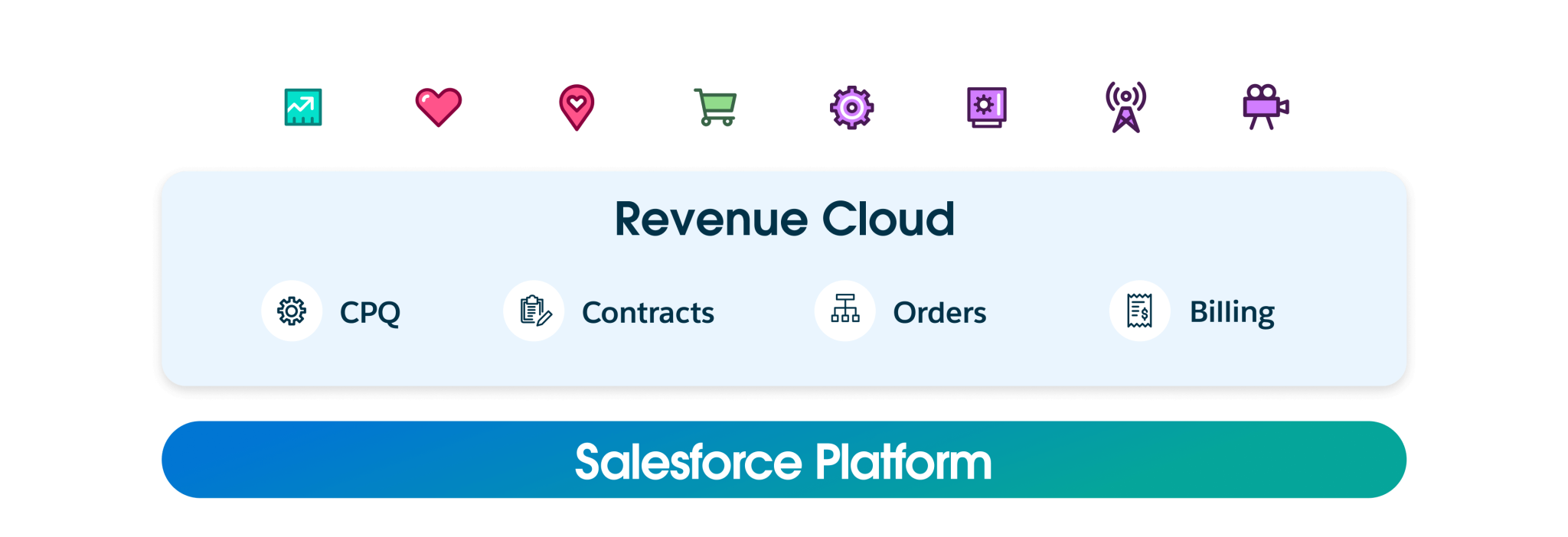
Salesforce’s Revenue Cloud Advanced (RCA), now Agentforce Revenue Management (ARM) modernizes Salesforce’s revenue engine and fundamentally changes how Salesforce and NetSuite must work together across pricing, orders, usage, and revenue events. RCA/ARM is built on a modern, component-based architecture designed to support complex pricing, contracts, and order orchestration across the full quote-to-cash lifecycle.

For companies already running complex quote-to-cash processes, this isn’t a version update. It’s a full reimplementation. One that will expose every inefficiency, integration gap, and data weakness in your current architecture.

At Continuous, we help companies enter this new era Revenue Ready, modernizing their revenue stack without the cost or disruption of a rebuild. We fix quote-to-cash for Salesforce and NetSuite enterprises so they can extend their existing systems into the future, instead of starting over.


What We’re Seeing in the Market: Success Meets Operational Reality

At Continuous, we work with companies that are deep into CPQ and Billing, and five patterns consistently emerge.

1. Your Customer Experience Shouldn’t Depend on Support Tickets

Most customers can’t see their usage, credit balances, or contract details, so they open support tickets for basic questions. This reactive model frustrates users, burdens internal teams, and erodes trust, especially in usage-based models where real-time visibility is expected.

2. When SKUs Don’t Map to Value, Trust Breaks Down

Workarounds that helped get CPQ live or bring a new product to market, like placeholder SKUs or loosely defined product hierarchies create quoting confusion and billing disconnects. The result? Customers are unsure of what they purchased or why they were charged.

3. Governance Gaps and Swivel-Chair Handoffs Create a Loop of Rework and Risk

What began as flexible CPQ configuration has evolved into a patchwork of overrides, manual workarounds, and uncontrolled customizations.  Even after deals are signed, corrections are often required before revenue can be recognized. The outcome: delayed deals, inconsistent data, and ongoing rework across Sales, RevOps, and Finance.

4. Unstructured or Manual Consumption Data

As businesses move toward monetizing usage, the supporting data often isn’t ready. Usage data may be captured inconsistently, defined differently across products, or manually tracked in spreadsheets, if it’s tracked at all. Sales teams miss upsell signals, Finance can’t reconcile revenue, and customers lack visibility, limiting both growth and trust.

5. Fragmented, Disconnected Lifecycle Events Derail Growth

Renewals, amendments, and cancellations are often managed through manual workarounds or outside systems (i.e spreadsheets, net-new quotes, or support tickets). This leads to duplicate records, conflicting contract data, customer confusion, and unreliable revenue and renewal reporting.

____________________________________________________________________________

If these issues sound familiar, you’re not alone. They’re exactly what RCA/ARM will expose, and amplify, if left unaddressed.

That’s why readiness matters. Before you start your RCA/ARM reimplementation, ask yourself these five questions to see whether your foundation is ready for the new architecture.

Is Your Business RCA/ARM Ready?

RCA/ARM assumes a strong foundation, but that’s where many teams struggle. Before diving in, ask yourself:

  1. Is our product catalog standardized and enforceable?
  2. Do our SKUs map to value — for us and our customers?
  3. Is our usage data reliable and available in real time?
  4. Are renewals, amendments, and cancellations governed and aligned?
  5. Can Sales, Finance, and Customers all see the same thing?

Without that foundation, even the best RCA/ARM implementation can fall short of expectations.


How Continuous Helps You Get Revenue Ready

At Continuous, we help Salesforce and NetSuite enterprises prepare for RCA/ARM by fixing what’s underneath, the quote-to-cash foundations that everything depends on.

Continuous enables Salesforce customers to modernize their revenue stack, Revenue Cloud or ARM, without the cost or disruption of a rebuild. We extend Salesforce with flexible pricing, rating, and ERP-ready billing logic that works across both current and next-generation architectures.

With Continuous, teams can:

  • Add modern pricing, usage, and credit models directly within Salesforce — no new platform required.
  • Connect Salesforce quoting and billing to NetSuite or other ERPs with real-time data flow and reconciliation.
  • Evaluate ARM readiness and move on their own timeline — adopting RCA/ARM when they’re ready, without business disruption.

Continuous runs natively across Salesforce and NetSuite, giving you an embedded revenue infrastructure that’s built for the RCA/ARM era.


Final Word

RCA/ARM is changing how Salesforce handles revenue, but it doesn’t have to change everything about how you operate. Companies that clean up now and build the right foundation will move faster, scale smarter, and avoid the pain of rebuilding twice.

Continuous fixed quote-to-cash for companies running Salesforce and NetSuite, so you can enter the RCA/ARM era confident, connected, and Revenue Ready.

Learn how Continuous fixed quote-to-cash in Salesforce and NetSuite. Request a demo today or reach out for a RCA/ARM readiness audit. 


This blog is an update to Part 3 of the RCA Series originally published in April 2025. View all three posts from the series here: