Category: Company News

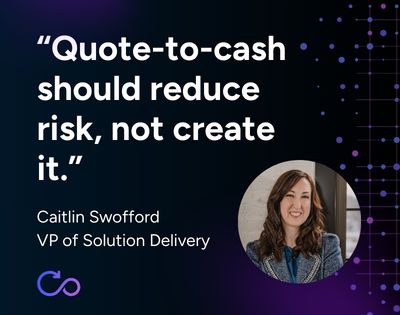
Making NetSuite Work for Modern Finance Teams: A Q&A with Caitlin Swofford

Continuous Insights_ Quote-to-Cash conversation with Caitlin Swofford, VP of Solution Delivery

A Q&A for finance and RevOps leaders on delivery, embedded revenue infrastructure, and how to fix quote-to-cash in NetSuite without adding risk or new systems.

TL;DR
- Quote-to-cash breaks when finance teams are forced to manage complexity across disconnected systems.
- Adding another billing or monetization platform increases delivery risk instead of reducing it.
- Embedded revenue infrastructure keeps Salesforce and NetSuite aligned without spreadsheets or manual handoffs.
- Continuous helps finance teams support modern pricing models while maintaining control, auditability, and trust in the numbers.


Continuous is scaling its NetSuite presence and strengthening delivery to match. Caitlin Swofford, VP of Solution Delivery at Continuous, brings deep experience spanning NetSuite administration, Salesforce, enterprise applications, consulting, and engineering leadership.

Her focus is simple. Help finance teams make quote-to-cash work as pricing models grow more complex, without adding more systems, risk, or spreadsheet-driven workarounds.

We sat down with Caitlin to talk about what drew her to Continuous, how she approaches delivery as a strategic lever, and what it really takes to make NetSuite work for modern finance teams.

You’ve had a unique path into NetSuite. What led you here?

I didn’t start in finance or ERP. I started in marketing operations and marketing technologies, working with tools like Marketo, Eloqua, and even Siebel CRM early on. My first exposure to NetSuite came in a high-growth environment, and the more I saw it, the more intrigued I became. It was powerful, configurable, and deeply connected to how the business actually runs.

When an opportunity opened up to step into a NetSuite administrator role, I jumped at it. From there, I expanded into owning broader enterprise applications, including NetSuite and Salesforce, with a strong focus on compliance, change management, SDLC, and segregation of duties. Later, I shifted into consulting and services, partnering directly with customers to implement and optimize NetSuite in real-world environments.

That mix of being both a system owner and a services partner really shapes how I think about delivery today.

What made Continuous the right next step?

Two things stood out to me. The people and the product.

Culture matters a lot to me, especially as a remote worker. I want to feel like I’m part of a team moving in the same direction and building something meaningful. Continuous gave me that feeling from day one.

The product mission was equally compelling. I’ve seen how often quote-to-cash becomes a bottleneck as pricing models evolve. What stood out is that Continuous is not about adding another system. It is about improving how the systems finance teams already rely on work together.

How do you explain Continuous Revenue Fabric to finance leaders dealing with complexity across Salesforce and NetSuite?

I think of Revenue Fabric as something that embeds into your existing tools and helps them work together the way they were meant to.

If sales is quoting in Salesforce and finance is managing orders, billing, and revenue in NetSuite, those systems often don’t speak the same language, especially with usage-based or hybrid pricing. Continuous Revenue Fabric enables that flow end to end so sales can stay in Salesforce, finance can stay in NetSuite, and the handoffs actually work without forcing teams into a third standalone system.

Why does embedded revenue infrastructure matter from a delivery perspective?

From a delivery standpoint, the biggest risk I see is introducing more complexity in the name of solving complexity.

Standalone billing platforms often introduce a separate operating layer with their own logic, workflows, and reconciliation processes. Even when data syncs back to Salesforce or NetSuite, teams still end up managing pricing rules, billing behavior, and exceptions outside the systems they rely on day to day. That fragmentation is where delivery risk shows up.

Embedded infrastructure keeps the flow where it belongs, between the systems finance and sales already trust. That leads to cleaner implementations, fewer points of failure, and more confidence in the numbers downstream.

Where do you most often see misalignment between sales and finance?

Sales and finance are working on the same deal, but with very different objectives. Sales needs speed and flexibility to support the customer and close the deal. Finance needs clean, auditable data they can rely on to bill, recognize revenue, and close the books.

Misalignment shows up when processes force extra work. Fields that exist just because, manual handoffs, or one-off steps that don’t reflect how the business actually sells. The fix is treating quote-to-cash as one continuous motion so both teams get what they need without unnecessary workarounds.

As VP of Solution Delivery, what are you focused on building right now?

My focus is on helping customers be successful with Continuous, not just at go-live, but over the long term.

That means partnering closely with customers to understand how they actually use NetSuite and Salesforce, making sure implementations reduce risk instead of adding it, and helping teams build a foundation they can scale as their business evolves. Success looks like trust in the system and confidence in the data.

What excites you most about the opportunity ahead for Continuous?

There are so many companies running on NetSuite and Salesforce that still struggle to make quote-to-cash work smoothly, and that complexity is only increasing.

Continuous has a real opportunity to help finance teams simplify that reality through cleaner handoffs, less manual work, and a more connected view of revenue. Helping customers build that foundation and grow on top of it is what excites me most.

Finally, outside of work, what’s something people would be surprised to learn about you?

I recently became certified as a Maine Master Naturalist, a ten-month program focused on nature education. I volunteer with a wildlife rehabilitation center, and my areas of focus are birds and mammal tracking. It’s what I spend a lot of my nights and weekends doing.


As Continuous continues to grow in the NetSuite ecosystem, Caitlin is helping shape how the company shows up for finance teams that need more than another system. Her focus is clear. Make NetSuite work the way modern finance teams need it to work. Reduce risk in delivery. Simplify quote-to-cash. And build a foundation that supports scale as revenue models evolve.

It’s a delivery-first approach grounded in real-world experience, and one that reflects Continuous’ broader commitment to helping finance teams move from managing complexity to driving confidence and growth.

Connect with Caitlin on LinkedIn.

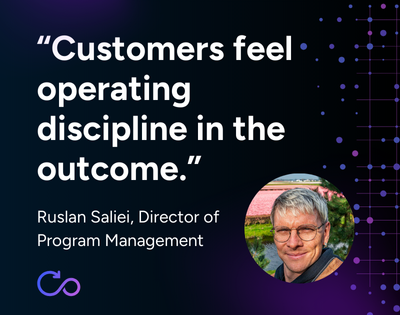
How Continuous Scales Without Slowing Down: A Q&A with Ruslan Saliei

Continuous Insights_ Quote-to-Cash conversation with Ruslan Saliei, Director of Program Management

A Q&A for product, delivery, and operations leaders on how Continuous builds operating discipline, predictable delivery, and scalable execution as the company grows.

TL;DR
- Continuous is deliberately building internal delivery rails that keep product development and customer delivery work moving in sync. - Strong program management improves visibility, prioritization, and time to production as complexity increases. - Customers experience this as faster execution, clearer communication, and predictable delivery—even as Continuous scales.

____________________________________________________________________________

Scaling a company is not just about what you build. It’s about how you build it.

As Continuous grows, building strong operating rhythms behind the scenes becomes just as important as the products delivered to customers. That is where Ruslan Saliei, Continuous’ Director of Program Management, comes in.

Ruslan has built his career at the intersection of technical delivery, program management, and operational leadership. From leading scaled Agile teams in a high-growth e-commerce environment across Southeast Asia to running a revenue-driving delivery practice at a B2B commerce integration firm, he has repeatedly helped teams move faster with more clarity and less chaos.

At Continuous, Ruslan is focused on building the internal operating rails that help product and delivery move in sync, improve visibility and prioritization, and ultimately shorten the path from idea to production.

We sat down with Ruslan to talk about his background, what drew him to Continuous, and how strong program management translates into a better customer experience.

Tell us about your background. How did you build your career across program management, product, and technical delivery?

I’ve worked in IT management since graduating from university. I have a master’s degree in computer science, and early on I thought I would become a software engineer. I quickly realized that while I understand technology, my real strength is working with people and systems — building teams and improving how work gets done.

I started my career in ad agencies in Ukraine, delivering full-cycle work for large brands. That experience gave me a strong foundation in how businesses operate and how cross-functional teams collaborate. From there, I moved to Southeast Asia to join Lazada, part of Alibaba Group, which was building an Amazon-like platform for the region.

At Lazada, I led an engineering and QA organization of more than 100 people responsible for the web experience. Operating at that scale required strong delivery practices and operating models, especially with many dependent teams moving in parallel.

Later, I joined Zaelab, a B2B commerce integration firm, where I progressed from delivery management into portfolio leadership and eventually led the company’s largest revenue-driving practice. That experience reinforced a core belief of mine: high performance and predictable delivery don’t happen by accident — they’re built through intentional operating discipline.

What brought you to Continuous, and why was now the right time?

I’d previously worked with Jon Pora, now Vice President of Professional Services at Continuous, and as the company entered a new phase of growth, it was clear there was an opportunity for my background in scaled delivery and operating cadence to add value.

I was looking for a new challenge. I missed the energy of building in a startup environment, where you are inventing ways of operating, not just following an established playbook. Continuous has that energy. It is a growing company, a new domain for me, and the team quality really stood out.

People are a huge value metric for me. When the company is full of great people aiming for success, I want to be part of that.

What is your role as Director of Program Management, and what will you focus on first?

My main focus is improving time to production and strengthening the internal operational processes that help teams deliver consistently.

Continuous is moving fast, and my job is to make sure our operating cadence keeps pace so teams stay aligned and delivery stays predictable. That means creating clearer operating patterns and reusable flows, so teams have more alignment, less distraction, and clearer execution.

I will be working across product and customer projects, because much of what I do is internal operations, and improvements there benefit both. My role is not primarily client-facing. It is about being the glue internally so teams collaborate more effectively and delivery becomes more consistent.

I will also be working closely with the professional services organization to improve how product and delivery move together as we scale.

How does better program management translate into a better customer experience?

Improving visibility, traceability, and predictability across delivery translates directly into customer value.

When teams have a clearer view of requirements, priorities, and progress, customers experience more reliable timelines, clearer communication, and fewer surprises. Stronger operating rhythms allow us to plan, forecast, and manage change more effectively, which shortens the path from idea to production.

It also reduces the day-to-day burden on delivery teams by removing unnecessary manual work and ambiguity, allowing them to stay focused on execution. The result is a smoother delivery experience.

Where do you see the biggest opportunities to improve how Continuous scales product development and delivery at the same time?

One big opportunity is building clearer criteria and flows for how work created for a customer becomes part of the core product.

As we grow, we need a more transparent and scalable approach so decision-making stays consistent even as the volume of work increases.

Another priority is strengthening how we prioritize work across product investment and customer-driven initiatives so engineering has one clear operating cadence and teams spend less time context switching.

You’re based in Spain. How does that shape the way you support a global team?

Being based in Europe gives me a strong perspective on how global teams collaborate. I naturally sit between regions, which helps with continuity and communication across teams working in different time zones.

More importantly, it reinforces my focus on fundamentals. Regardless of geography, strong operating rhythms, clear processes, and good communication are what allow teams to move quickly and stay aligned.

What are you most excited about in this next chapter at Continuous?

I’m excited about growth and about learning a new domain. I have touched CPQ in previous work, and I see how important flexibility is becoming for companies. I also find modern billing models interesting, because so many companies want to be more flexible in how they package and price what they sell.

Most of all, I’m excited about the people. I’ve met strong individuals and personalities across the company, and that makes me want to commit fully and focus on making the team’s work easier and more effective.

Outside of work, what’s something people would be surprised to learn about you?

I do motorcycle racing on superbikes. I’m also a certified rescue scuba diver. I do photography, play beach volleyball, and I’ve traveled to more than 50 countries. I spent several years living in Southeast Asia, including Thailand and Vietnam, and I still love that part of the world.


As Continuous grows, the difference between moving fast and scaling well is execution. Ruslan’s focus is on strengthening the operating discipline, cadence, and cross-team collaboration that allow product and delivery to keep pace with customer demand.

It’s the kind of intentional rigor that customers feel in the outcomes: faster time to production, clearer communication, and more predictable delivery, all built on a foundation that scales with the business.

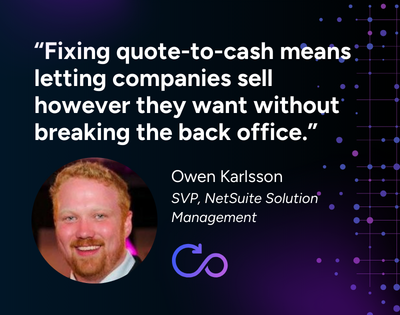
Scaling Smarter: A Q&A with Owen Karlsson on Joining Continuous

Continuous Insights_Quote-to-Cash Conversation with Owen Karlsson, SVP NetSuite Solution Management

A Q&A for finance, RevOps, and systems leaders on Owen Karlsson joining Continuous, scaling NetSuite revenue operations, and fixing quote-to-cash across Salesforce and NetSuite.

TL;DR
Owen Karlsson joins Continuous as SVP of NetSuite Solution Management.
- He brings deep NetSuite and ARM expertise, including leading ASC 606 conversions.
- His focus is scaling revenue operations and connecting Salesforce and NetSuite.
- Continuous aims to close the gap between sales creativity and finance execution.

____________________________________________________________________________

Owen Karlsson, Senior Vice President of NetSuite Solution Management, joins Continuous with more than a decade in the NetSuite ecosystem, spanning operations, professional services leadership, and hands-on revenue management. He was the first person globally certified on NetSuite Advanced Revenue Management (ARM) and has led dozens of revenue conversion and optimization projects for software companies.

At Continuous, he will help advance the company’s mission to fix quote-to-cash in Salesforce and NetSuite, bridging two of the most critical systems in modern revenue operations.

What does your new role at Continuous entail, and where will you focus first?

The title is Senior Vice President, NetSuite Solution Management. In the short term, I’m bringing a group of NetSuite customers I’ve supported for years into the Continuous family and making their transition smooth: same responsiveness, same results.

From there, I’ll focus on three things. First, building strong NetSuite relationships, navigating Oracle’s partner ecosystem and keeping efforts aligned. Second, supporting sales and credibility by joining customer conversations where deep finance knowledge helps move things forward. And third, shaping product direction, especially around revenue management. 

We’re solving business-critical problems today and expanding the number we can solve tomorrow, and that’s how you scale impact.

Give us the quick version of your path into NetSuite.

I first got to know NetSuite at Rapid7 in 2012, where it ran both CRM and ERP in a complex, heavily customized setup. I started as a user, moved into an admin role, and was there when the company went public. Later I joined Zone & Co as one of the first hires. We grew from a small services firm into a product-led company after customers asked us to tackle usage and variable billing. I led professional services, operations, and later built out the knowledge and training side of the business. That experience taught me that the best users are the ones who can self-educate, and if you don’t build for that, you’ll never have power users.

Most recently I founded OK Consulting, and through ongoing work with Avalara, I met John Banks and the Continuous team.

Fun fact: I was the first person globally certified on NetSuite Advanced Revenue Management (ARM) and led around 50 ASC 606 revenue conversion projects, mostly for software companies.

How does your experience scaling operations and leading professional services inform how you’ll approach this new role?

At Zone, I helped grow the services organization and then built a team to implement a new billing product while keeping traditional NetSuite projects healthy. Later, as Chief Knowledge Officer, I focused on customer enablement, building a public knowledge base and training program so people could solve problems faster.

That mix of delivery discipline, enablement, and scalable processes is how I’ll operate here. The goal is always the same: build solutions that scale as fast as the business does.

What attracted you to Continuous and this next chapter in your career?

Honestly, it was John Banks and the team. I wasn’t looking to make a move, but the way John talked about the company, the culture, and the opportunity really stood out.

Continuous brings together deep Salesforce and NetSuite expertise. It felt like a natural fit, a team that thinks big, moves fast, and loves building. Salesforce and NetSuite are the two giants of the cloud, and Continuous sits right between them. Fixing quote-to-cash across those systems isn’t just the goal, it’s the mission.

Continuous’ mission is to fix quote-to-cash in Salesforce and NetSuite. Why is this challenge so important right now, and what makes Continuous uniquely positioned to solve it?

Sales creativity always outpaces systems. Every few years, there’s a new sales motion like subscriptions, usage, credits, or consumption, and sales can start selling it long before finance can operationalize it. That gap is where the friction lives. The companies that win are the ones whose systems evolve just as fast as their go-to-market.

Continuous was built to close that gap, to fix quote-to-cash in Salesforce and NetSuite so companies can sell however they want without breaking the back office. We already handle prepaid and credit models really well, and we’re expanding into more complex revenue motions without adding unnecessary complexity. The more flexible we make quote-to-cash, the more confidently our customers can grow.

You’ve worked across every phase of the NetSuite lifecycle. What are the biggest opportunities for improvement you see in how companies manage finance and revenue today?

Most companies still have too many disconnected processes between sales and finance. Every manual step, rekeying data, duplicating orders, or reconciling invoices, adds friction and limits scale. The big opportunity is to build connected, auditable systems that keep up with how the business actually sells. When that happens, revenue operations stop reacting and start driving growth.

AI is reshaping every step of quote-to-cash, from forecasting and pricing to billing and revenue recognition. Where do you see the biggest potential for automation and intelligence to create real business value?

The biggest shift will come from AI-driven consumption models, where credits or usage for AI features become billable SKUs. That changes how companies price, forecast, and even pay commissions.  I’m optimistic about AI as a productivity multiplier, but cautious about unchecked automation in finance. The key is systems that support new pricing models safely, accelerating innovation without sacrificing accuracy.

Finally, when you’re not thinking about finance and optimization, how do you like to spend your time?

Sports, golf, family, and my dog. I’m a lifelong New York sports fan, Yankees, Giants, Knicks, Rangers, and a proud uncle to five nieces and nephews. That’s my favorite title, honestly.


Owen’s deep NetSuite experience, operational discipline, and product vision strengthen Continuous’ mission to fix quote-to-cash in Salesforce and NetSuite, helping companies scale revenue operations with confidence.

As he puts it, sales creativity always outpaces systems, and Continuous exists to close that gap.

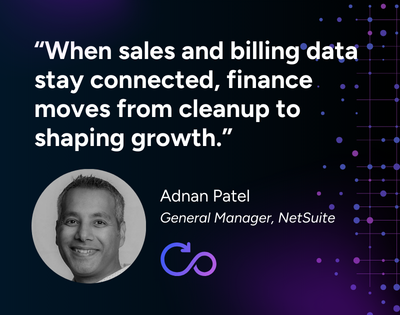
Quote-to-Cash in NetSuite, a Q&A with Adnan Patel

Continuous Insights_Quote-to-Cash Conversation with Adnan Patel, General Manager

A Q&A for finance, RevOps, and systems leaders on simplifying quote-to-cash in NetSuite, embedding revenue infrastructure, and making finance a true growth partner.

TL;DR
- Quote-to-cash breaks when sales and finance operate on disconnected systems.
- NetSuite customers need a single, connected view of revenue, not more tools.
- Embedded revenue infrastructure handles complex subscriptions, usage, and consumption without replicating data.
- When revenue stays connected, finance moves from cleanup to strategic growth.


Continuous is entering its next phase of growth in the NetSuite ecosystem, and leading that charge is Adnan Patel, General Manager of the NetSuite business. With years of experience helping companies modernize financial operations and connect NetSuite to the broader revenue lifecycle, Adnan brings both deep technical expertise and a practical vision for what’s next. As pricing models evolve and intelligent systems reshape how sales and finance work together, he is focused on helping NetSuite customers simplify quote-to-cash, fix what’s broken, and make finance a true growth partner. 

We sat down with him to talk about what drew him to Continuous, how the company is simplifying revenue infrastructure and outcomes for clients, and what’s ahead for Continuous’ NetSuite business.

Can you share a bit about your experience in the NetSuite ecosystem and what drew you to this space originally?

My background has always been rooted in helping companies use technology to solve complex business problems. Early in my career, I worked with enterprise CRM systems like Siebel, helping global organizations drive success with their implementations. Over time, I realized that many companies, especially outside the Fortune 500, needed the same caliber of expertise but with solutions that better fit their size and speed (faster). That’s what led me to NetSuite. I was drawn to its promise of “one system, no limits,” a platform that unifies CRM, ERP, and financials in a single application. That vision of end-to-end connection is what first brought me in, and it’s what has kept me engaged in this ecosystem ever since. Most recently, I led the global NetSuite practice at Crowe, where I was responsible for building and scaling a 100-person team delivering NetSuite implementations and revenue operations services for multinational companies.

What made joining Continuous the right next step for you, and how do you define your role as General Manager?

For me, Continuous represents the next evolution of what companies like ours have been trying to solve for years: the friction between CRM and ERP, between how companies sell and how they account for that revenue. Having implemented countless quote-to-cash processes using Salesforce and NetSuite, I’ve seen firsthand how complex billing and revenue models slow down transformation. Continuous’ approach, which simplifies that complexity while keeping data connected and consistent, made immediate sense to me as both a technologist and consultant. As General Manager, my role is to expand our NetSuite business, build strategic partnerships, and ensure that every customer and partner in the ecosystem understands the value Continuous brings. It’s about driving awareness, scale, and consistency in how companies adopt this new model of connected revenue operations.

How do you describe Continuous to someone new to the brand?

I describe Continuous as the engine that powers sales growth and modern revenue operations. It’s built to handle the hardest part of quote-to-cash – the complex math behind subscriptions, usage, and consumption billing – so companies don’t have to. Rather than trying to replace CRM or ERP systems, Continuous strengthens them. It reads the contract data and usage activity, performs the complex and high-volume calculations, and passes the rated charges to NetSuite or Salesforce for billing and revenue recognition. It’s simple in concept but powerful in impact because it lets companies sell however they want without breaking their systems or creating new silos.

From your perspective, what makes Continuous different from other players in the Salesforce and NetSuite space?

Continuous takes an approach we call Embedded Revenue Infrastructure, and what we mean by that is an engine that operates within your existing systems to do the complex work of processing billing data and revenue calculation. Unlike stand alone billing tools that replicate data or sit outside your core architecture, Continuous embeds directly into your CRM and ERP environment. It’s headless, API-first, and designed to scale. That means it can calculate at volume, support any mix of pricing or monetization models, and pass clean, auditable data back to NetSuite for invoicing and revenue recognition. It’s a new kind of infrastructure, lightweight but deeply embedded, that gives companies both flexibility and control.

The NetSuite market is evolving quickly. What changes are you seeing in how customers approach revenue operations?

Customers are getting much more strategic about monetization. For years, the challenge was shifting to subscription or usage-based models. Now the focus is on operationalizing those models effectively and efficiently, whether that’s within the systems they already rely on or through a hybrid of new and existing tools. Success today comes from creating a single, connected view of revenue that aligns sales and finance without forcing teams to change how they work. That’s where Continuous really shines.

Continuous talks a lot about “fixing quote-to-cash” and making finance strategic. What does that mean to you in the context of the NetSuite business?

Fixing quote-to-cash means eliminating the gaps that create friction between how a company sells and how it books and recognizes revenue. For finance teams, that’s about more than automation—it’s about visibility. When the sales and billing data stay connected, finance no longer has to manually reconcile spreadsheets or patch over disconnected systems. They can see, in real time, which pricing models are performing, what’s driving margin, and where to optimize. That’s what makes finance truly strategic. It moves from reporting results to shaping them.

What types of customers or challenges are you most eager to take on?

We’re focused on helping growth-minded companies, those that are either expanding globally, introducing new billing models, or looking to bring order to complex revenue streams. That includes high-tech, SaaS, and services companies, but also industries like wholesale distribution and manufacturing that are embracing recurring or consumption-based pricing. Anywhere there’s complexity in how revenue is earned, billed, or recognized, Continuous adds clarity.

You’re coming in at a time of significant momentum. What are your top priorities in your first few months leading the NetSuite business?

My first priority is awareness. The NetSuite ecosystem is full of strong partners and customers who need exactly what Continuous offers, they just may not know who to turn to yet. Once that awareness builds, everything else follows: market penetration, partnerships, and customer growth. I’m also focused on building a world-class partner network that shares our approach to thoughtful, customer-first delivery. Whether a company works with our professional services team or one of our partners, they should have the same consistent experience: a smooth implementation, faster time to value, and long-term scalability.

For companies looking to modernize their revenue stack, where should they start? What advice would you give to finance or RevOps leaders who are feeling the pain of disconnected systems?

Start with strategy, not software. Too often, companies jump straight to buying tools without clearly defining their monetization strategy – how they want to charge, what models their customers expect, and what data needs to flow across the process. Quote-to-cash is one continuous motion, not a set of disconnected steps. Once you understand your pricing and revenue strategy, then you can determine the right systems and structure to support it. That’s where Continuous helps bridge the gap.

Looking ahead, what excites you most about the next 12 months for Continuous and the customers you’ll serve?

I’m excited about where the market is heading. AI-driven services and hybrid pricing models are pushing companies to think differently about how they sell and monetize their offerings. That creates enormous opportunity but also complexity. Continuous is uniquely positioned to help companies manage that complexity in a scalable, intelligent way. And beyond technology, what excites me most is the chance to work with a team that helped define this space—people who saw the problems firsthand and built something better.

Finally, tell us something personal. What do you do for fun outside of work?

I love to cook and travel, and I’m a big basketball fan. My kids all played growing up, so that became a big part of our lives. I also like to build things, whether that’s software tools, Legos, or even advising other startups focused on solving some really interesting problems. There’s something satisfying about taking something complex, working through it piece by piece, and seeing it come to life, which honestly isn’t that different from what we do at Continuous.

____________________________________________________________________________

As Continuous moves into its next chapter of growth, Adnan is helping shape what that story looks like for NetSuite customers. His focus is clear: simplify complexity, empower finance, and bring sales and finance together around a single, connected view of revenue. It’s a vision that mirrors Continuous itself, practical, forward-looking, and built to help companies fix quote-to-cash and grow smarter with every evolution of their business.