Tag: NetSuite

Beyond Billing: How Finance Leaders Are Revolutionizing NetSuite Revenue Operations

Continuous and NetSuite

For finance and RevOps teams using NetSuite, this article explains how embedding revenue operations into sales processes helps automate pricing, billing, and revenue without adding standalone billing tools.

TL;DR
- NetSuite customers are often pushed to add standalone billing tools to handle complex pricing and revenue workflows.
- Embedding revenue operations earlier in the sales cycle aligns quoting, billing, and revenue recognition inside NetSuite.
- Automated pricing, rating, billing, and credit tracking reduce manual work and compliance risk.
- A unified revenue operations approach gives finance real-time visibility without duplications or integrations.

You invested heavily in NetSuite, so why are you constantly pressured to add yet another specialized billing or revenue tool? Imagine if NetSuite could effortlessly handle any pricing, rating, billing, and revenue scenario without complicated integrations, duplicated workflows, or restrictions on your sales team’s flexibility.

Achieving this requires finance teams to proactively embed revenue operations directly into your sales processes from the outset, while also enhancing NetSuite’s capabilities to handle advanced rating and calculations not supported natively. Here’s exactly what you can do to strategically transform your NetSuite revenue operations:

Quote-to-Cash Alignment and Control

1. Proactively Embed Revenue Operations at the Start of the Sales Cycle

Integrate finance directly into your sales channels—including Salesforce and partner channels—to unify financial controls and streamline your end-to-end revenue operations.

Impact: Reduce manual tasks, simplify integration handoffs, minimize errors, and ensure consistency from quoting to billing.

2. Align Revenue Recognition Directly with Sales Contracts

Integrate revenue recognition rules from Salesforce or other CRM systems directly into NetSuite, automating and simplifying compliance with ASC 606 and IFRS 15.

Impact: Reduce compliance risks, simplify audits, and streamline financial reporting processes.

Automated Pricing, Rating, and Billing Efficiency

3. Replace Specialized Usage-Based Billing Vendors and Manual Rating with Embedded Automation

Implement scalable, automated usage-rating capabilities directly within NetSuite to translate complex pricing models seamlessly into accurate billing processes.

Impact: Simplify rating processes, reduce manual errors, and focus finance resources on strategic growth initiatives.

4. Fully Automate Revenue Processes to Accelerate Cash Flow

Eliminate manual invoicing, prorations, and billing adjustments by embedding automated processes directly within NetSuite.

Impact: Accelerate billing cycles, improve cash flow, and increase productivity and accuracy within your finance operations.

Real-Time Financial Visibility and Insights

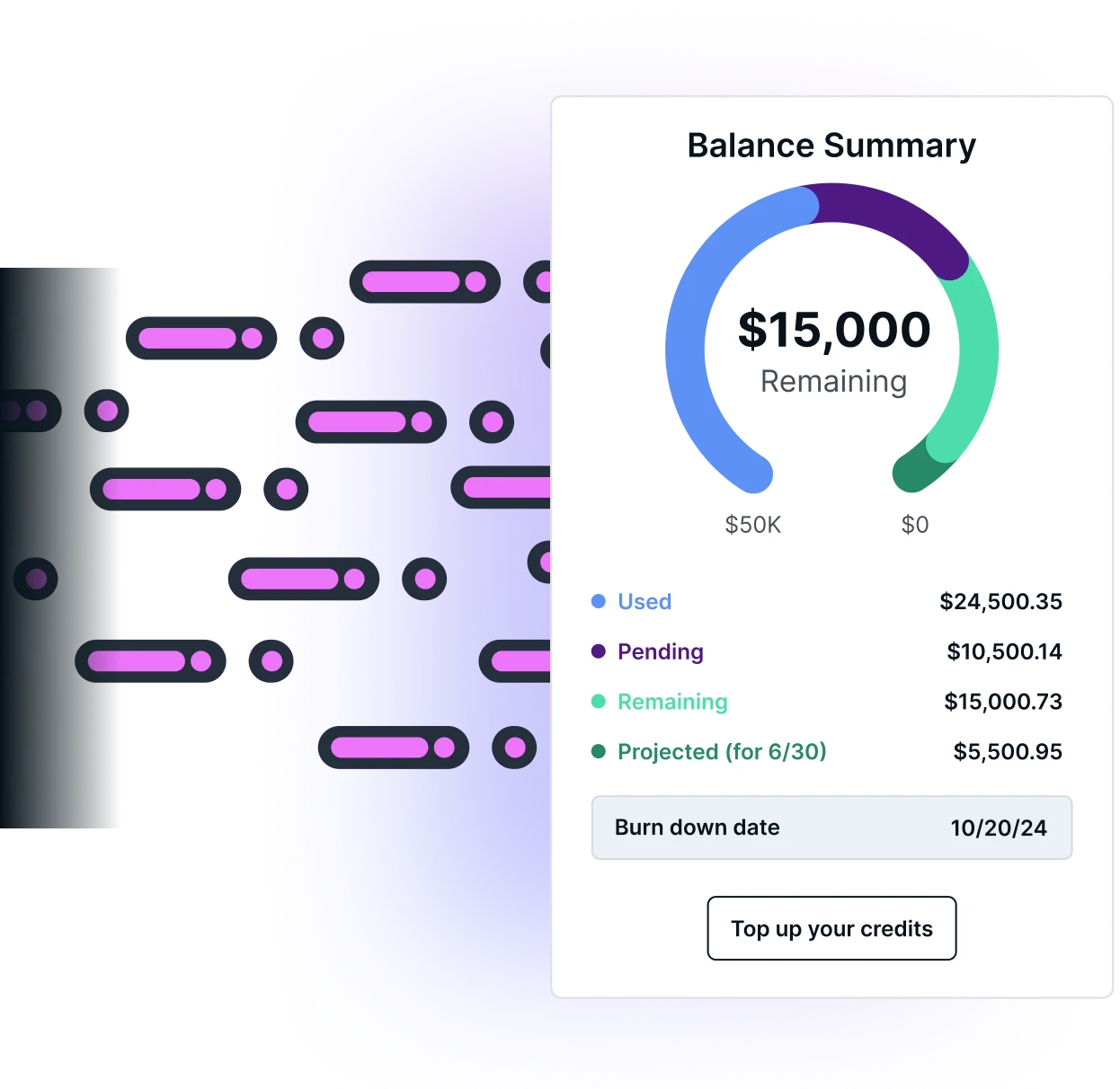
5. Establish Real-Time Tracking of Prepaid Credits

Transition away from manual spreadsheet tracking by embedding real-time credit balance management within NetSuite, providing precise and reliable financial insights. Bonus: Ensure sales and customer success teams have real-time access to credit balances, enabling proactive management and customer engagement.

Impact: Ensure accurate credit management, eliminate revenue leakage, and enhance financial transparency.

6. Integrate Real-Time Revenue Analytics into Your Dashboards

Embed comprehensive analytics within NetSuite dashboards to deliver actionable insights into customer behaviors, usage trends, and overall revenue performance.Impact: Make informed, rapid decisions that proactively drive revenue growth and strengthen customer retention.

Future-Proof Your Revenue Stack with Continuous

Traditionally, achieving these revenue operations improvements required substantial investments in customizations, complex integrations, and ongoing maintenance. Continuous, however, uniquely addresses this challenge as the world’s first embedded revenue infrastructure offering. Our embedded technology within Salesforce and NetSuite delivers precisely what standalone SaaS recurring billing vendors have promised but struggled to deliver: seamless integration, simplified revenue management, and genuine flexibility.

Ready to simplify your NetSuite revenue processes immediately? Schedule a personalized demo today and see exactly how Continuous transforms your capabilities, enhances data consistency, and delivers immediate value.

Continuous empowers your finance team to automate complex processes, achieve seamless integration, and gain actionable, real-time insights—all without standalone billing systems.

Take control, simplify operations, and strategically position your finance team to lead growth with embedded revenue infrastructure.
Strengthening Our NetSuite Strategy: Welcoming Adnan Patel as Strategic Advisor

Adnan Patel, Strategic Advisor

For NetSuite customers and partners, this announcement explains why Adnan Patel joined Continuous as a strategic advisor and how his experience strengthens our NetSuite and ERP strategy.

TL;DR
- Continuous welcomed Adnan Patel as a strategic advisor focused on NetSuite and ERP.
- Adnan brings more than 18 years of NetSuite experience and leadership across 1,200 plus implementations.
- His guidance strengthens how Continuous supports embedded revenue infrastructure inside NetSuite.
- Customers and partners benefit from deeper NetSuite expertise and practitioner-led strategy..

At Continuous, we’re known for our innovations in recurring revenue. We’ve helped leading companies shift from subscriptions to usage, from custom billing to embedded revenue infrastructure, always with a focus on making Salesforce work better for Sales, RevOps, and Finance teams.

Today, we’re excited to share that Adnan Patel is joining Continuous as a Strategic Advisor, focused on NetSuite and ERP.

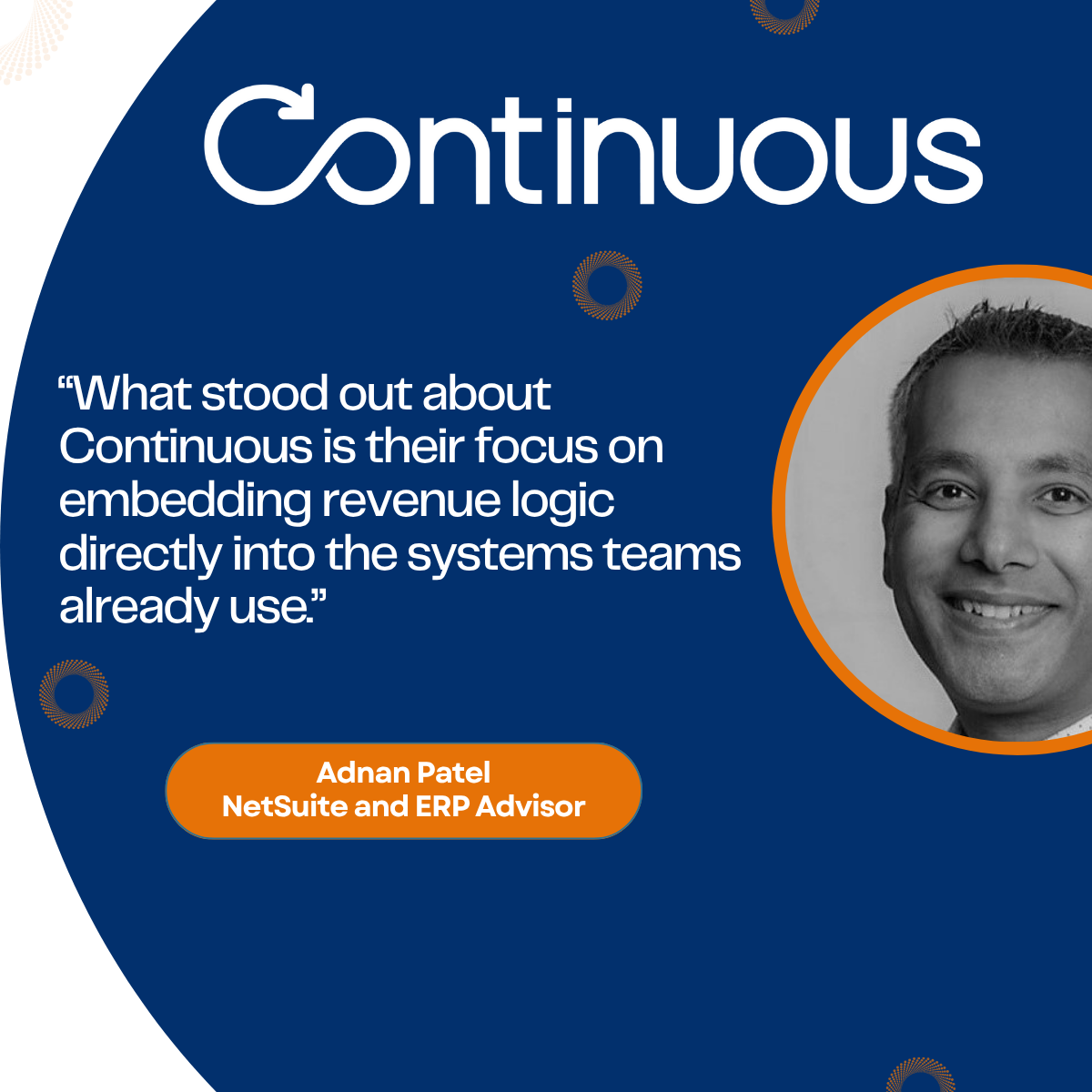
“I’ve spent my career helping companies get more out of NetSuite,” said Adnan Patel. “What stood out about Continuous is their focus on embedding revenue logic directly into the systems teams already use. It’s a smarter way to simplify complexity without adding another tool.”

A Recognized Leader in the NetSuite Ecosystem

Adnan has had a massive impact on the NetSuite ecosystem. He’s the founder of Sixred, an eight-time NetSuite 5-Star Award winner and one of NetSuite’s most respected Solution Providers. Over the course of 18+ years, his team has led more than 1,200 NetSuite implementations across industries, helping organizations scale smarter with cloud ERP.

When Sixred was acquired by Crowe LLP, Adnan took on the role of Principal, where he led Crowe’s global NetSuite practice, built industry accelerators, mentored NetSuite consultants, and helped clients modernize finance and operations with confidence. He’s a familiar face at SuiteWorld and other Oracle NetSuite events, where he’s shared insights on scaling ERP practices and driving successful cloud transformations.

“Adnan understands what works best with scaling ERP systems for growing companies,” said John Banks, Founder and CEO of Continuous. “His applied experience with thousands of NetSuite projects offers a practical, tested perspective as we expand our footprint and continue supporting Salesforce and NetSuite users.”

Building the Bridge Between CRM and ERP

Continuous has always taken a different approach to billing and revenue infrastructure. Our mission is to prove that the most scalable model isn’t a third-party system, but one that extends the CRM and ERP platforms customers already use.

With Salesforce, that means embedding deeply into the Revenue Cloud Advanced experience. Now, with Adnan’s guidance, we’re doing the same within the NetSuite ecosystem.

Whether customers use NetSuite Advanced Financials or SuiteBilling, the goal is the same:
Make usage-based pricing, credit drawdowns, revenue accounting and reporting easier by embedding logic where it belongs.

We see a future where NetSuite customers can manage usage, rating, and billing scenarios without introducing yet another standalone billing system. With Adnan’s experience, we’re building that future on a strong foundation.

What This Means for Our Customers and Partners

Adnan’s involvement will accelerate product development on NetSuite and strengthen how we support system integrators, NetSuite sellers, and implementation partners. It also ensures we’re learning from the best—bringing a practitioner’s lens to every step we take.

If you’re a NetSuite customer exploring usage-based pricing, or a partner helping clients operationalize complex billing models, we’d love to connect. With Adnan on board, we’re more ready than ever to support your success.

Want to learn more about how Continuous supports Salesforce and NetSuite customers?

Get a tailored review of your current architecture and personalized insights on where Continuous can drive the most value.

👉 Fill out this quick form and one of our experts will follow up with your survey—no pressure, no commitment.

The End of Subscriptions: Why Prepaid Usage Models Are Replacing Traditional SaaS Pricing

For SaaS leaders rethinking subscriptions, this article explains why prepaid usage pricing is replacing traditional models, and how credits and commitments better align revenue with product consumption.

TL;DR
- Traditional SaaS subscriptions no longer align well with how customers consume modern software.
- Pure usage-based pricing improves fairness but creates forecasting and budgeting challenges.
- Prepaid usage models combine flexibility for customers with predictability for vendors.
- Turning prepaid commitments into revenue requires visibility into credits, usage, and adoption.

The Shift That Broke the Subscription Model

For years, SaaS companies relied on subscriptions. Predictable pricing, recurring invoices, and standardized contracts became the default.

But that’s starting to change.

Today’s most successful tech companies—like Snowflake, AWS, and Databricks—are shifting to prepaid usage models: savings plans, credit pools, and enterprise commitments that tie revenue to actual product consumption.

This isn’t just a new pricing option. It’s a deeper change in how revenue is created, recognized, and managed. And it’s quickly becoming the standard for modern B2B software.


Subscriptions Worked—Until They Didn’t

The subscription model had a good run. It gave SaaS companies predictable revenue and simplified customer onboarding. But it was never really aligned with how customers use software. You committed to a package, paid every month or year, and hoped you got value out of it.

The result? A lot of shelfware. Unused seats. Over-provisioned tiers. Products collecting dust while the meter keeps running.

That misalignment was tolerated when usage was steady and predictable. Subscriptions were a step forward from perpetual licensing—but they never fully lived up to the SaaS promise of aligning pricing with value. As companies began consuming APIs, infrastructure, and services with highly variable demand, the cracks in the model became harder to ignore.

Customers wanted flexibility. Finance teams wanted efficiency. Vendors needed a better way to show value.

That’s when usage-based pricing entered the picture.

But going fully usage-based creates its own problems. It’s hard to forecast. Hard to budget. And it gives vendors no guarantee of revenue; even if the product is delivering real value.

That’s why the smartest companies aren’t choosing between subscriptions and usage—they’re adopting prepaid usage models that offer the best of both.

They’re not selling subscriptions. They’re not selling pure usage. They’re selling prepaid usage commitments: enterprise savings plans, credit pools, or drawdowns tied to forecasted demand. Customers lock in value. Vendors lock in a commitment. Revenue recognition starts when usage begins.

Why Pure Usage-Based Pricing Isn’t the Endgame

Moving from subscriptions to usage-based pricing was a big step forward. It aligned cost with value. If a customer uses more, they pay more. If they use less, they pay less. That feels fair—and for a while, it looked like the future.

But for both vendors and customers, pay-as-you-go has real limitations.

On the vendor side, usage volatility makes revenue hard to predict. Sales teams have less leverage to drive large deals. Finance teams can’t model growth with confidence.

On the customer side, it’s hard to budget. CFOs hate open-ended invoices. Procurement teams want predictability. Even if the pricing is fair, it feels risky.

That’s why most leading companies didn’t stop at usage-based pricing. They layered on prepaid usage models—enterprise savings plans, committed spend, or flex credits. These offer volume-based discounts in exchange for upfront commitments. Customers get flexibility. Vendors get predictability.

It’s not just about pricing differently. It’s about changing how both sides think about value and commitment.

Snowflake: The Playbook for Prepaid Usage at Scale

No company has popularized prepaid usage models more than Snowflake.

Snowflake doesn’t sell subscriptions or push seat-based packages. Instead, Snowflake sells usage commitments—enterprise contracts where customers prepay for credits they can draw down over time. It’s flexible for the customer and predictable for Snowflake. And it shows up in one powerful number: Remaining Performance Obligations (RPO).

As of their latest earnings, Snowflake reported $6.7 billion in RPO, up 34% year-over-year.

That number is huge. But here’s the part most people miss:

RPO isn’t recognized revenue. It’s just a committed contract. The revenue only lands when customers actually use the credits.

This is the heart of the prepaid usage model. You lock in a deal up front, but the real success depends on customer adoption. If usage lags, revenue recognition stalls. If usage spikes, revenue accelerates.

From the outside, it looks like Snowflake has cracked the code. In reality, they’ve built the infrastructure to make this model work—usage visibility, alignment across sales and success, and real-time data that ties consumption to value.

Most companies fall short. They adopt prepaid models but don’t operationalize them. Credit balances live in billing systems or spreadsheets. Customer-facing teams don’t know what’s been used. Finance can’t forecast. Sales can’t spot expansion.

The result? RPO just sits on the books instead of turning into revenue.

You Can’t Drive Revenue If You Can’t See the Credits

When revenue depends on prepaid commitments, credit visibility isn’t just a back-office metric. It’s a growth lever.

But in most companies, credit data is buried—tucked away in billing systems, or hidden in finance-owned spreadsheets. By the time someone realizes a customer hasn’t touched their credits, it’s too late to act.

That’s a problem:

  • If usage is lagging, it’s a customer success issue
  • If there’s a pile of unused credits, it’s a sales opportunity
  • If finance can’t see burn rates, it’s a forecasting risk

Yet almost no one surfaces this data in the tools where people actually work.

CSMs are in Salesforce. So are account execs. But the data they need to drive adoption, expansion, and renewals is stuck elsewhere. The result? Slower growth. Lower retention. Missed revenue.

The solution isn’t more reporting. It’s embedding credit visibility—balances, burn rates, usage trends—directly into CRM and ERP.

That’s how you align sales, success, and finance around what’s been committed, what’s been used, and what’s left to earn.

Embedded Revenue Infrastructure: Built for the Prepaid Era

Most billing systems weren’t built for prepaid usage. Legacy vendors assumed static subscriptions and monthly renewals.

In response, a wave of new usage-based billing vendors emerged. Many handle ingestion and rating well—but that’s only part of the equation. But they’re usually standalone systems, disconnected from the tools teams actually use.

They solve for calculation—but not for adoption, visibility, or execution.

That’s where Continuous is different.

We’re a usage-based billing platform, too—but we’re built to work within your core systems. We don’t just calculate usage. We make it visible and actionable in Salesforce, NetSuite, and other platforms you already rely on.

Sales teams can see credit consumption on the customer record. Finance can forecast based on real-time usage. Customer success can intervene before credits go unused.

This is Embedded Revenue Infrastructure.

It’s not just billing. It’s infrastructure that helps teams turn prepaid commitments into recognized revenue—without another system to log into, and without another silo to manage.

Ready to Turn Prepaid Commitments Into Revenue?

Our Rapid Technical Assessment helps B2B teams understand what’s working, what’s not, and how to operationalize prepaid usage inside Salesforce and NetSuite.

We’ll review your current architecture, identify blockers, and map out how to unlock usage-based revenue—without adding another standalone system.

Request your free Revenue Operations Assessment
Get a tailored review of your current architecture and personalized insights on where Continuous can drive the most value.

👉 Fill out this quick form and one of our experts will follow up with your survey—no pressure, no commitment.

Embedded Revenue Infrastructure: The End of Standalone Billing

Continuous Billing Workflows for Salesforce and NetSuite

For RevOps, sales, and finance teams, this article explains why embedded revenue infrastructure is replacing standalone billing, and how embedding monetization into CRM and ERP simplifies scale.

TL;DR
- Standalone billing platforms create duplication, reconciliation, and slow pricing changes.
- Embedded Revenue Infrastructure places pricing and billing logic directly inside Salesforce and NetSuite workflows.
- This approach supports subscriptions, usage, prepaid credits, and hybrid pricing models.
- Embedding monetization simplifies operations, improves visibility, and keeps teams aligned.


Editor’s note: This post builds on Part 1 of our Embedded Revenue Infrastructure series, where we explored how SaaS billing evolved from subscription simplicity to usage-based complexity—and why traditional billing platforms can’t keep up.

In Part 2, we define the new approach: Embedded Revenue Infrastructure—and explain why it’s replacing standalone billing for modern B2B teams.

It’s time for a new approach.

For years, the promise of recurring billing platforms was simplicity. Standardize pricing. Automate invoices. Get paid faster.

But somewhere along the way, things got more complicated. Today, many B2B companies find themselves stuck between their CRM and ERP, trying to make a third system—the billing platform—play nice with everything else.

That third system often becomes a bottleneck. Teams waste time reconciling data, rebuilding product catalogs, and explaining invoices to confused customers. Pricing innovation slows to a crawl. The tools that were meant to streamline revenue operations now stand in the way.

Embedded Revenue Infrastructure means monetization isn’t handled in a separate system. It’s woven into your core processes—from quoting to invoicing to revenue recognition.

This isn’t just a technical shift—it’s a philosophical one:

Billing should extend your existing workflows, not require an entirely new one.


The Three Principles of Embedded Revenue Infrastructure

1. Revenue Logic Embedded in Sales and Finance Workflows

Standalone billing platforms treat monetization as a separate domain. That leads to duplicated product catalogs, contract terms, and customer hierarchies.

Embedded Revenue Infrastructure eliminates that duplication by placing pricing and billing logic directly inside your CRM and ERP.
Salesforce handles quoting. NetSuite handles invoicing. APIs connect to your usage data. Everyone works in the tools they already know.

Fewer integrations. Faster changes. Teams that stay in sync.


2. Flexible for Any Pricing Model

Modern businesses don’t just sell subscriptions. They sell prepaid credits, usage tiers, annual commitments, and complex hybrid models.

Most billing systems force you to contort your pricing strategy to fit their data model. Embedded Revenue Infrastructure flips that:

You define the pricing model. The system adapts.

That flexibility means faster time to market, better enterprise deal support, and less time rebuilding your stack with every pricing change.


3. Real-Time, Accurate, and Efficient

Traditional billing platforms rely on syncing data across systems. That leads to delays, mismatches, and costly reconciliation.

Embedded Revenue Infrastructure avoids all of that. Because revenue logic lives inside your workflows, your data stays accurate and real-time—without middleware or batch jobs.

Finance gets clean invoices. Sales sees real-time balances. Customers stop disputing bills. Everyone saves time.

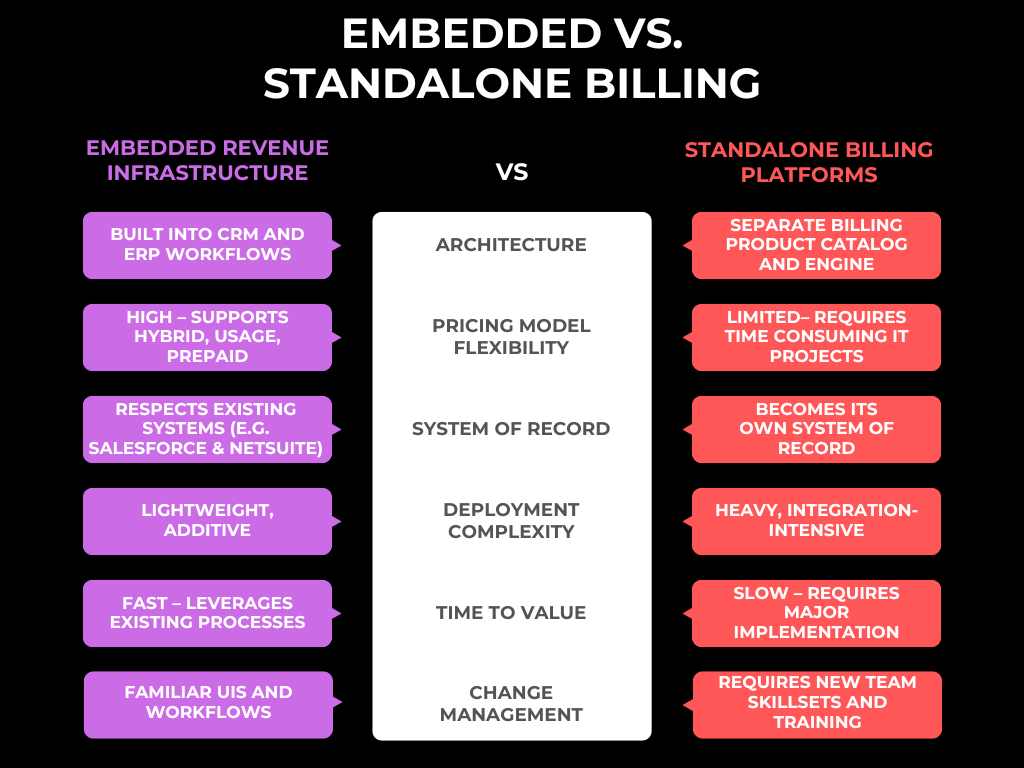
Embedded vs. Standalone Billing: A Quick Comparison

Table comparing Embedded Revenue Infrastructure vs. Standalone Billing Platforms across architecture, pricing flexibility, system of record, deployment complexity, time to value, and change management.

Stop Comparing the Wrong Things

One of the biggest traps companies fall into is comparing billing platforms like commodity software. Who has the best quoting UI? Who supports more revenue recognition scenarios? Who automates more?

It’s not that those questions are wrong—they’re just based on the wrong assumption:
That billing needs to be a separate system at all.

Standalone vendors benefit from this thinking. It lets them justify rebuilding parts of your CRM and ERP. It turns them into the system of record for your most critical financial logic. And it locks you into a platform that wasn’t built to work with your stack—but to replace it.

A Different Starting Point

At Continuous, we started from a different place.
We asked:

What do our customers already have in place?
What’s already working?

Instead of building a “sticky” platform that replaces your core systems, we built a flexible layer that embeds into them—whether that’s Salesforce, NetSuite, or internal usage systems. This approach became Embedded Revenue Infrastructure. And it requires a different way of evaluating solutions.

The New Evaluation Criteria

Instead of asking who checks the most feature boxes, ask:

  • Will this solution extend or replace our CRM and ERP?
  • Can it embed into our existing quote-to-cash process—without starting over?
  • Is it flexible enough to meet us where we are and grow with us?

We Don’t Have a One-Size-Fits-All Answer

The truth is, we don’t know exactly how Continuous should be embedded in your stack until we understand your current architecture. That’s the point.

We believe architecture should follow your business—not the other way around.

Some customers use Salesforce CPQ and NetSuite Advanced Financials. Others use Revenue Cloud Advanced, Stripe, or homegrown metering. What they have in common is that Continuous fits into their existing stack—not the other way around.

That’s the real difference. And it’s why we believe Embedded Revenue Infrastructure is the future.

Ready to Simplify Sales and Finance?

Stop juggling disconnected systems and painful integrations.
Continuous helps unify your sales and finance processes by embedding directly into the platforms you already trust.

Request your free Revenue Operations Assessment
Get a tailored review of your current architecture and personalized insights on where Continuous can drive the most value.

👉 Fill out this quick form and one of our experts will follow up with your survey—no pressure, no commitment.

You Don’t Need Another Billing System—You Need a Better Approach

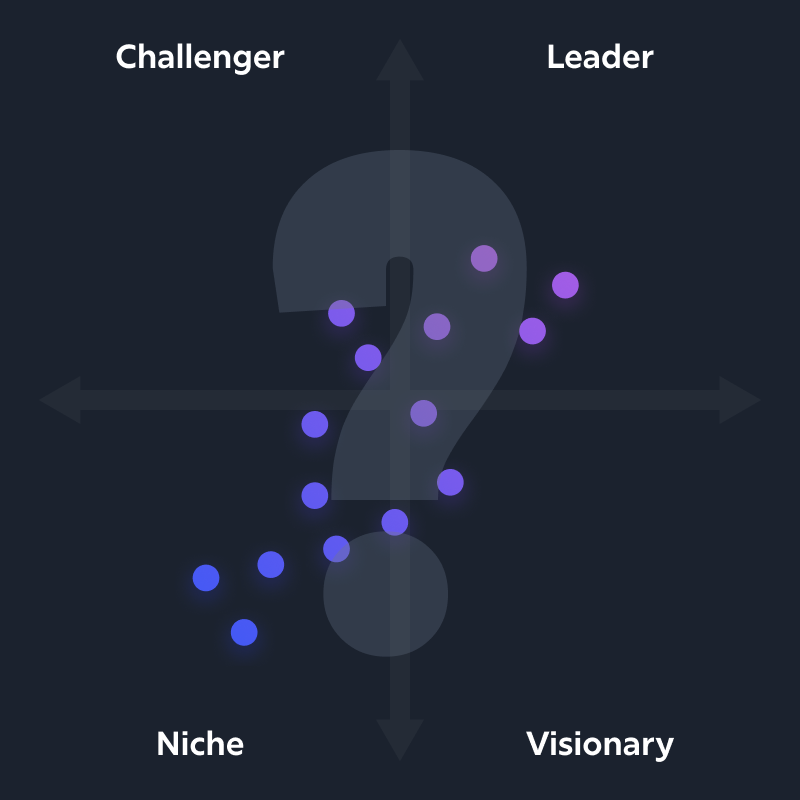
Quadrant Graph with Question Mark

For RevOps, sales, and finance teams, this article explains why standalone billing systems fail at scale, and how Embedded Revenue Infrastructure offers a better approach.

TL;DR
- Standalone billing systems emerged to fill gaps when CRM and ERP lacked recurring revenue support.
- Modern pricing complexity exposes the limits of third-system billing architectures.
- Disconnected product catalogs and integrations create errors, delays, and revenue leakage.
- Continuous Embedded Revenue Infrastructure unifies CRM, ERP, and front-office systems into a single approach.

Recurring billing vendors promised simplicity. As businesses shifted toward what became known as the “Subscription Economy,” CRM, ERP, and customer-facing (front-office) systems lacked native support for recurring revenue models, creating operational gaps that gave rise to specialized vendors—”SaaS Recurring Billing“—to bridge the divide.

Today, customer expectations have evolved dramatically. Businesses now face greater complexity as customers demand flexible, personalized options for consuming and paying for products and services. This complexity significantly impacts front-office sales processes and drives downstream billing and reporting challenges.

While CRM and ERP platforms like Salesforce and NetSuite have responded to these evolving demands by continually innovating and enhancing their capabilities, the standalone billing vendors—both legacy providers and new entrants—have largely failed to keep pace. Instead of true innovation, these vendors have continued promoting a “third cloud” model that positions standalone platforms between CRM, ERP, and front-office systems. This outdated approach results in operational fragmentation and duplicated efforts, rather than genuine improvement.

Before exploring why standalone billing platforms inherently struggle, we must first clearly understand the essential pillars of every modern B2B organization’s revenue infrastructure:

CRM, ERP, and Front-Office Systems: Essential Pillars of Revenue Infrastructure
Effective revenue operations depend on three interconnected core platforms:

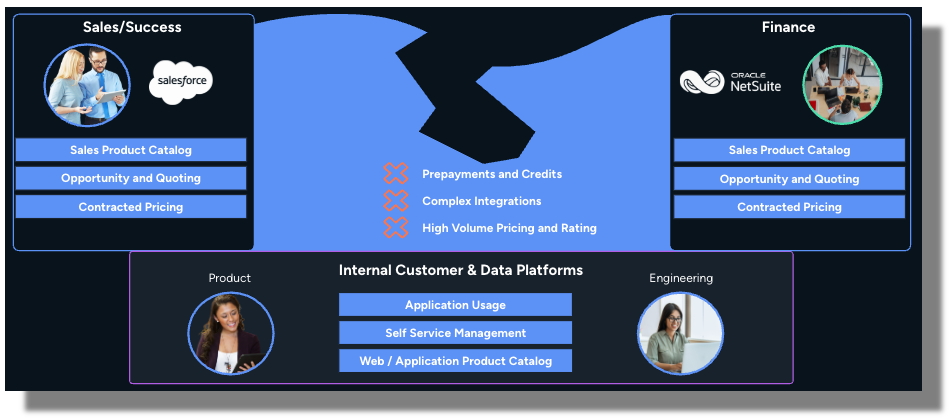
Infographic Showing CRM, ERP, and Front-Office Systems

CRM Systems: Excel in managing customer relationships, deal structuring, quoting, and flexible pricing management. Salesforce provides robust examples of integrated quoting and subscription management directly within CRM workflows.

ERP Systems: Focused on financial accuracy, compliance, revenue recognition, and accounts receivable. Platforms like NetSuite integrate comprehensive financial management aligned closely with accounting processes.

Customer/Front-Office Systems: Include platforms such as e-commerce, self-service portals, and internal product systems that manage customer engagement, subscriptions, credits, and prepayments, capturing the precise usage data critical for billing and monetization.

Additionally, specialized capabilities such as tax calculation engines, payment gateways, and specialized usage management systems can provide significant value if effectively connected to the core revenue stack. For companies already invested in specialized usage management solutions, leveraging these systems within a unified revenue infrastructure is crucial to ensure seamless interoperability and to avoid redundant or fragmented processes.

Together, these core systems should form a cohesive and unified revenue infrastructure. Effective monetization solutions must complement and enhance these systems—not duplicate or disrupt them.

Why Standalone Billing Platforms Fail to Deliver

Standalone billing platforms typically fall into three categories, each with inherent limitations and a critical shared flaw:

Quote-to-Revenue Platforms: While these newer entrants accurately recognize the importance of cohesive front-to-back-office collaboration, their strategy of replicating pricing, configuration, quoting, billing, revenue recognition, and collections capabilities within a single solution proves impractical at scale. Inevitably, they cannot match the depth and flexibility of dedicated CRM and ERP systems.

Legacy Subscription Management Solutions: Initially built for simple subscription models, these systems struggle significantly with complex usage-based or hybrid monetization strategies. Attempting to address complexity, many legacy vendors developed their own CPQ tools around their proprietary billing catalogs, which are inherently limited compared to modern CPQ systems.

Usage-Based Billing Platforms: These specialized platforms excel at usage rating but struggle to clearly define how their capabilities seamlessly integrate into broader CRM, ERP, and front-office ecosystems, often resulting in redundant configurations and operational friction.

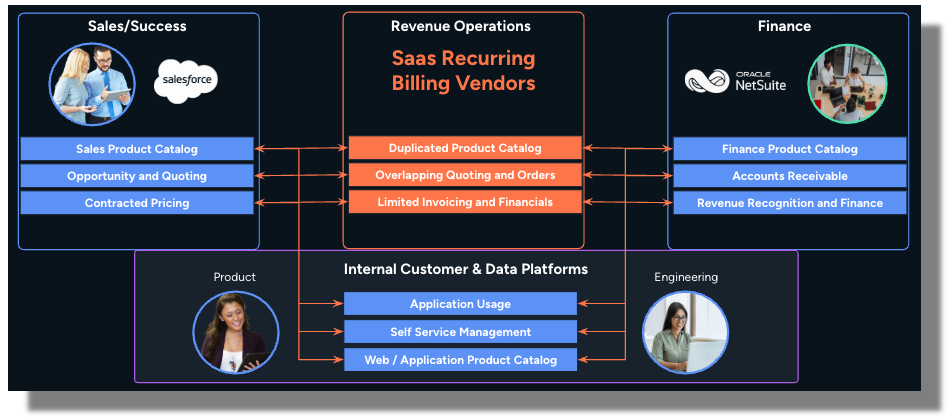
The fundamental flaw shared by these SaaS Recurring Billers is their reliance on multiple disconnected product catalogs. Defining sales rules in CRM and separately redefining them in billing systems inevitably introduces complexity, data discrepancies, and costly integration challenges.

Infographic Showing SaaS Recurring Billing Vendor Challenges

Symptoms Your Revenue Infrastructure Is Breaking Down

How do you know if your revenue infrastructure is failing to support your business effectively? Look for these recognizable symptoms:

  • Forced Manual Handoffs: Sales and finance teams repeatedly re-enter or manually adjust data because your sales and billing systems don’t talk to each other efficiently.
  • Slow Pricing and Packaging Changes: Launching new pricing strategies or monetization models requires extensive IT projects and lengthy configurations.
  • Billing Inaccuracies and Revenue Leakage: Persistent discrepancies between quoted prices and billed amounts cause customer frustration and lost revenue.
  • Internal Team Frustration: Sales, finance, and revenue operations teams are misaligned, each blaming the other for process inefficiencies and delays.
  • Engineering and IT Overload: Significant resources are spent maintaining fragile custom integrations and resolving data conflicts rather than focusing on strategic initiatives.

These symptoms aren’t just operational headaches—they’re clear indicators that your revenue infrastructure needs immediate attention.businesses to build complex integrations, making it harder to achieve a seamless sales-to-finance workflow.

The Future: Introducing Embedded Revenue Infrastructure

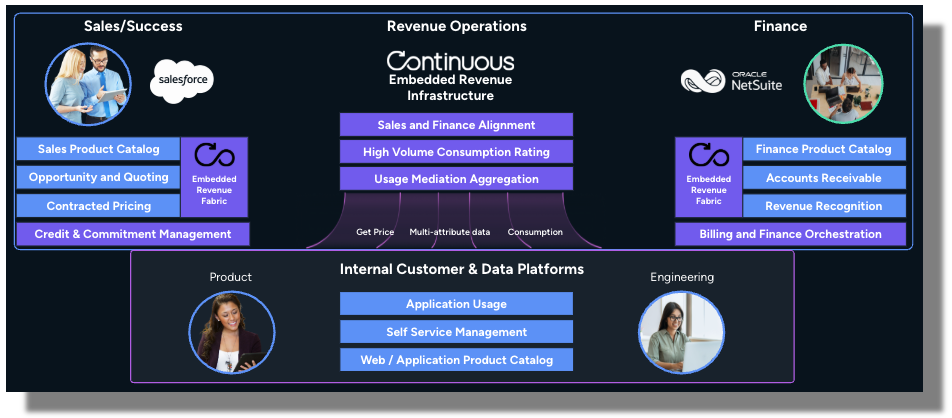
Infographic Showing Continuous Revenue Infrastructure and a Seamless Workflow

The true issue is not any single billing solution but the outdated concept of a standalone “third cloud.” Originally necessary when CRM, ERP, and front-office systems were immature, this approach now struggles under modern monetization demands.

The future of revenue management demands Embedded Revenue Infrastructure—an innovative model that integrates advanced pricing, usage tracking, billing, and revenue logic directly into existing CRM, ERP, and front-office systems. This approach eliminates redundant catalogs and complex integrations, creating a unified, agile, and scalable foundation for revenue operations.

In our next blog, we’ll dive deeper into Embedded Revenue Infrastructure, explore its transformative potential, and show precisely how it addresses these critical operational challenges.

Ready to simplify your sales and finance processes?

Stop juggling fragmented systems and costly integrations. At Continuous, we unify your sales and finance workflows by building on the trusted CRM and ERP platforms you already use.

Request your free Revenue Operations Assessment from Continuous and get expert insights tailored specifically to your business—no cost, no commitment. Simply fill out this quick form, and one of our experts will reach out with your assessment survey.

Continuous and AscribeIT Partner to Streamline Revenue Operations for Salesforce and NetSuite

Continuous and AscribeIT Partner

For Salesforce and NetSuite teams, this announcement explains how Continuous and AscribeIT partner to streamline revenue operations and support advanced pricing without standalone billing systems.

TL;DR
- Continuous and AscribeIT partnered to help enterprises modernize revenue operations.
- The collaboration supports usage-based, prepaid, and hybrid pricing models.
- Customers benefit from embedded monetization inside Salesforce and NetSuite.
- The partnership combines implementation expertise with scalable revenue infrastructure.

Continuous, the first embedded pricing and revenue solution purpose-built for Salesforce and NetSuite, is excited to announce a strategic partnership with AscribeIT, specialists in CPQ, billing automation, early adopters of outcome-based pricing, and revenue operations excellence. This collaboration empowers enterprises to efficiently deploy and optimize advanced pricing and monetization models directly within their CRM and ERP environments, eliminating the typical headaches of standalone billing systems.

Better Together

Companies today face increasing pressure to deploy sophisticated monetization strategies—including hybrid subscription plans, usage-based pricing, and innovative credit management models. However, traditional billing solutions often complicate rather than streamline these processes, creating unnecessary friction between Sales, Finance, and IT teams.

Continuous seamlessly integrates powerful pricing, rating, and credit management capabilities directly into Salesforce and NetSuite, allowing businesses to leverage their existing systems without costly integrations or silos. AscribeIT uses Continuous as a complement to core applications by providing expert implementation and strategic guidance around Salesforce solutions like Revenue Cloud Advanced, ensuring smooth adoption and rapid operational improvements.

Together, Continuous and AscribeIT enable customers to:

  • Rapidly deploy and scale innovative pricing strategies directly within Salesforce and ERP solutions including NetSuite, Intacct, and others
  • Align sales, finance, and IT processes into a single, cohesive ecosystem.
  • Automate and simplify revenue operations, significantly reducing manual effort and error rates.

A Collaborative Approach to Revenue Operations

AscribeIT brings deep expertise in configuring and optimizing CPQ and billing solutions, helping customers align technology with business processes effectively. Continuous enhances these implementations by embedding sophisticated rating and monetization capabilities directly into Salesforce and NetSuite, eliminating the limitations of traditional standalone billing systems. This approach enables specific use cases including prepaid credit management, advanced usage-based billing scenarios, consumption-based pricing models, and hybrid monetization strategies.

Perspectives from Our Leadership

“We’re excited to partner with AscribeIT,” said Sean Joyce, Co-founder and Head of Alliances at Continuous. “Their proven expertise in CPQ and billing automation perfectly complements our embedded monetization approach. Together, we’re making complex revenue operations simpler and more efficient, allowing enterprises to quickly implement innovative pricing strategies.”

“Continuous solves a critical challenge for our customers by providing robust, real-time pricing and rating capabilities directly inside their existing systems,” said Avinash Boyana, Partner Alliance Director at AscribeIT. “Our combined solutions simplify and accelerate complex monetization scenarios, enabling our customers to streamline operations and rapidly scale their revenue strategies.”

Looking Ahead

This strategic partnership between Continuous and AscribeIT positions both companies to deliver immediate and sustainable value to customers aiming to modernize their revenue operations. By combining best-in-class embedded revenue technology with expert implementation services, customers can confidently transition to sophisticated monetization models while maintaining seamless operational alignment.

To explore how Continuous and AscribeIT can streamline your revenue operations, please contact us or visit our partnership page for more information.


About Continuous

Continuous provides the first embedded pricing and revenue platform specifically designed to enhance Salesforce and NetSuite, enabling enterprises to quickly launch and scale complex usage, credit, and hybrid monetization models without standalone billing systems. By leveraging existing CRM and ERP investments, Continuous delivers unmatched flexibility, scalability, and speed to market. Learn more.

About AscribeIT

AscribeIT has a combined experience of more than 30 years delivering RevOps solutions across all market segments, being the ultimate choice to transform revenue operations. Learn more.