Author: Sean Joyce

Reclaim Your Roadmap: Why In-House Usage Rating & Billing Logic Might Be Stalling Product Innovation

Usage and Prepayments

Intro

Customers choose your product for the value your features deliver—not for the billing engine under the hood. While building usage rating and billing logic can initially offer control and flexibility, as complexity grows and new pricing models are introduced, engineering teams often find themselves burdened by ongoing maintenance of credit logic and billing rules.

After all, who knows your usage better than you? It seems logical to leverage that insight internally, especially when usage data also supports analytics, operations, and customer insights.

But what often starts as a well-intentioned and logical choice to maintain control can, as your business scales and product offerings evolve, introduce hidden complexity. Prepaid credits, tiered pricing, and sophisticated overage rules can turn initial flexibility into a significant drain on engineering time, focus, and resources, pulling them away from the innovations that truly set your product apart.

Tuning Your Custom Usage Rating and Billing Engine

For companies who’ve already invested in in-house rating and billing, the goal isn’t always a full rip-and-replace. It’s about optimizing your investment and strategically shifting additional complexity from your core product so you can scale more easily, move faster, and free engineers to build the capabilities that differentiate you.

Even well-built, custom usage rating and billing logic often encounters increasing friction as businesses scale and innovate:

  • Expertise Shortfall: Accurate usage-rating, billing, and revenue recognition rely on nuanced finance rules, tax regulations, and compliance standards. As new tiers or credit models emerge, keeping up with edge cases (proration, true-ups, audit trails) can become a specialist’s job, not a feature team’s.
  • On-Going Maintenance: Every pricing tweak—new discount tier, updated overage rate, expired credit pool—translates into code changes and QA cycles. That steady upkeep can quietly consume cycles meant for customer-facing innovation.
  • Fragile Integrations: Custom connections to Salesforce, NetSuite, or your own analytics stack can break when data models or schemas shift—leading to mismatches that require urgent fixes.
  • Performance Degradation: Running core revenue logic inside your application can introduce additional CPU, I/O, or network calls—potentially adding latency to user transactions and affecting overall system responsiveness, impacting the very experience your product aims to deliver.
  • Growing Technical Debt: Quick-win patches for one-off pricing or usage rules often become permanent fixtures. Over time, those patches form a web of interdependencies that slows every release, making your codebase harder to manage and evolve.
  • Roadmap Slowdown: When usage and billing logic is deeply embedded in your product, every update carries the risk of unintended side effects on rating or billing. This can significantly drag down feature velocity and delay crucial product roadmap items.
  • Audit & Compliance Overhead: Ensuring every transaction and revenue event is auditable and compliant with financial regulations (like SOX) requires complex logging and reconciliation, pulling engineers into non-feature work.

The good news? For many, the path forward isn’t necessarily a full rip-and-replace of existing systems. Instead, it’s about strategically offloading the operational complexities that slow you down, allowing you to optimize your current investment while reclaiming valuable engineering cycles.

Unlock Agility with Embedded Revenue Infrastructure

Instead of grappling with operational complexity in your product, shift it into a specialized layer that seamlessly plugs into the tools your teams already use. Embedded Revenue Infrastructure empowers you to:

  • Centralize metering and rating in a purpose-built service, keeping complex usage rating and billing logic out of your product code 
  • Configure pricing models via UI, empowering non-technical teams to add or tweak usage tiers, prepaid credits, and rate plans without a single line of code.
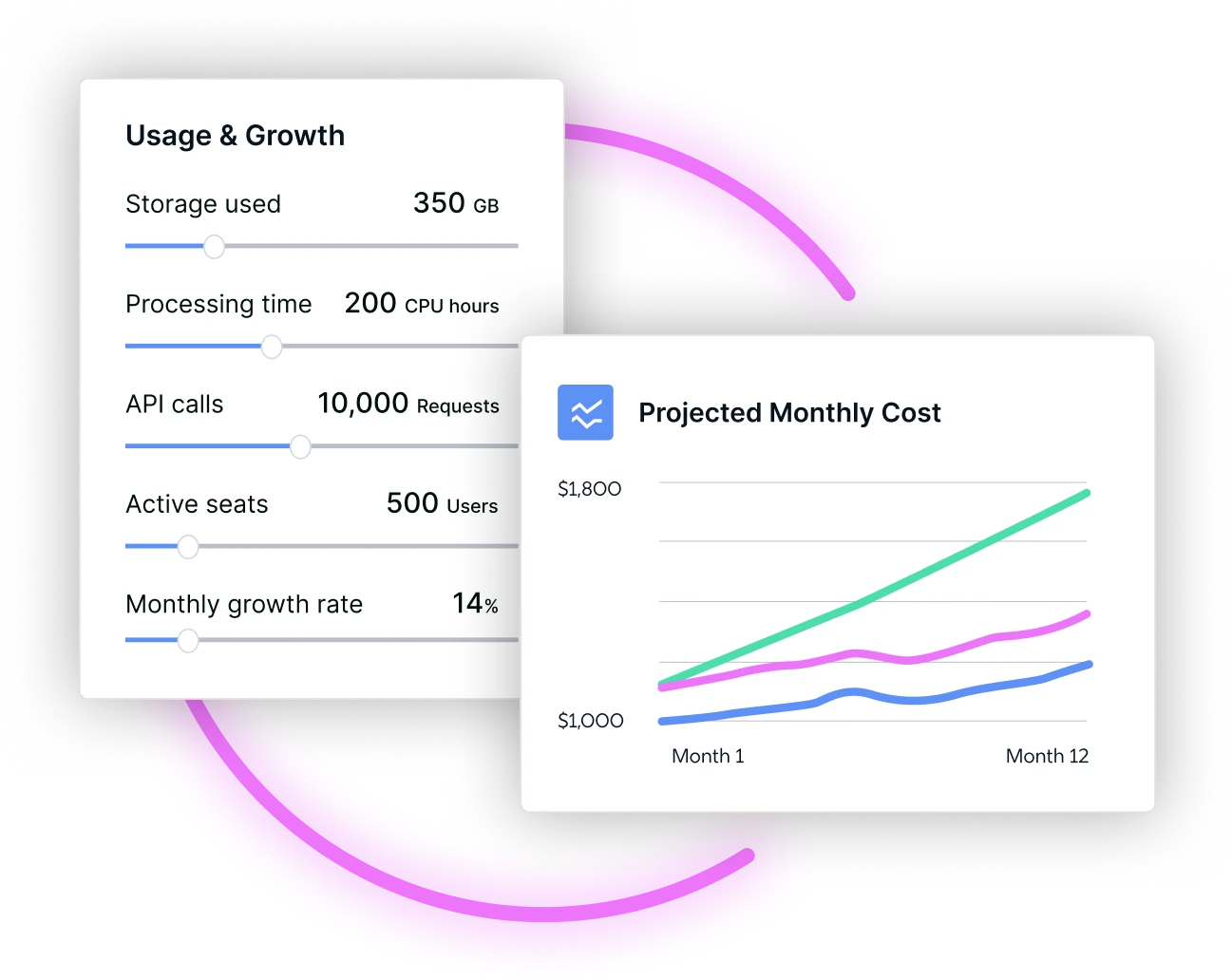
  • Surface real-time usage insights directly in Salesforce, eliminating manual exports, custom integrations, and the delays of spreadsheet gymnastics.
  • Automate credit burn and revenue events through APIs, moving beyond manual scripts and batch jobs to ensure accuracy and efficiency.
  • Free engineers to focus on shipping features that truly propel your product forward and delight customers.

By strategically moving this logic out of your product codebase, you accelerate feature delivery, scale reliably, and eliminate the hidden costs of managing homegrown billing and rating.

Modern usage rating, billing, and overage management should always accelerate product velocity, not stall it. When facing complex pricing models—like prepaid credits, hybrid plans, or multi-phase commitments—the critical question for Product and Engineering leadership becomes: What logic is truly strategic to our core product, and what is operational infrastructure that pulls engineers away from building differentiating features? Your engineers need to focus on delivering that core innovation, not patching metering pipelines or maintaining invoicing scripts.

Ready to reclaim engineering time and scale without revenue headaches? 

Schedule a personalized demo today and see exactly how Continuous transforms your capabilities, enhances data consistency, and delivers immediate value.
Beyond Billing: How Finance Leaders Are Revolutionizing NetSuite Revenue Operations

Continuous and NetSuite

You invested heavily in NetSuite, so why are you constantly pressured to add yet another specialized billing or revenue tool? Imagine if NetSuite could effortlessly handle any pricing, rating, billing, and revenue scenario without complicated integrations, duplicated workflows, or restrictions on your sales team’s flexibility.

Achieving this requires finance teams to proactively embed revenue operations directly into your sales processes from the outset, while also enhancing NetSuite’s capabilities to handle advanced rating and calculations not supported natively. Here’s exactly what you can do to strategically transform your NetSuite revenue operations:

Quote-to-Cash Alignment and Control

1. Proactively Embed Revenue Operations at the Start of the Sales Cycle

Integrate finance directly into your sales channels—including Salesforce and partner channels—to unify financial controls and streamline your end-to-end revenue operations.

Impact: Reduce manual tasks, simplify integration handoffs, minimize errors, and ensure consistency from quoting to billing.

2. Align Revenue Recognition Directly with Sales Contracts

Integrate revenue recognition rules from Salesforce or other CRM systems directly into NetSuite, automating and simplifying compliance with ASC 606 and IFRS 15.

Impact: Reduce compliance risks, simplify audits, and streamline financial reporting processes.

Automated Pricing, Rating, and Billing Efficiency

3. Replace Specialized Usage-Based Billing Vendors and Manual Rating with Embedded Automation

Implement scalable, automated usage-rating capabilities directly within NetSuite to translate complex pricing models seamlessly into accurate billing processes.

Impact: Simplify rating processes, reduce manual errors, and focus finance resources on strategic growth initiatives.

4. Fully Automate Revenue Processes to Accelerate Cash Flow

Eliminate manual invoicing, prorations, and billing adjustments by embedding automated processes directly within NetSuite.

Impact: Accelerate billing cycles, improve cash flow, and increase productivity and accuracy within your finance operations.

Real-Time Financial Visibility and Insights

5. Establish Real-Time Tracking of Prepaid Credits

Transition away from manual spreadsheet tracking by embedding real-time credit balance management within NetSuite, providing precise and reliable financial insights. Bonus: Ensure sales and customer success teams have real-time access to credit balances, enabling proactive management and customer engagement.

Impact: Ensure accurate credit management, eliminate revenue leakage, and enhance financial transparency.

6. Integrate Real-Time Revenue Analytics into Your Dashboards

Embed comprehensive analytics within NetSuite dashboards to deliver actionable insights into customer behaviors, usage trends, and overall revenue performance.Impact: Make informed, rapid decisions that proactively drive revenue growth and strengthen customer retention.

Future-Proof Your Revenue Stack with Continuous

Traditionally, achieving these revenue operations improvements required substantial investments in customizations, complex integrations, and ongoing maintenance. Continuous, however, uniquely addresses this challenge as the world’s first embedded revenue infrastructure offering. Our embedded technology within Salesforce and NetSuite delivers precisely what standalone SaaS recurring billing vendors have promised but struggled to deliver: seamless integration, simplified revenue management, and genuine flexibility.

Ready to simplify your NetSuite revenue processes immediately? Schedule a personalized demo today and see exactly how Continuous transforms your capabilities, enhances data consistency, and delivers immediate value.
Continuous empowers your finance team to automate complex processes, achieve seamless integration, and gain actionable, real-time insights—all without standalone billing systems.

Take control, simplify operations, and strategically position your finance team to lead growth with embedded revenue infrastructure.

Make Every Day a Selling Event: Unlock Expansion Revenue with Usage & Prepaid Metrics

Tailored Enterprise Pricing and Rating

How many upsells slipped through because your reps never saw the signal? As prepaid usage models become the SaaS standard, that blind spot costs quota and growth.

Every day, customers signal buying intent through usage spikes, burned-down credits, and feature engagement. But if your reps can’t see those signals, they can’t act. And that’s revenue left on the table.

Reps Can’t Sell What They Can’t See

Sales teams live in Salesforce, but usage and prepaid credit data usually doesn’t. It’s scattered across billing systems, siloed in finance-owned spreadsheets, or buried in your product, far from where selling happens.

Without visibility:

  • Reps miss the exact moment to expand or renew
  • Deals become harder to land, renewals get riskier, and churn risk rises
  • Customers get blindsided by surprise overages, eroding trust

When sales can’t see the signals, growth stalls.
Reps chase new logos while existing customers go untapped. Acquisition costs rise. Forecasts get shaky. And what should be low-effort expansions turn into missed quarters.

Usage & Prepaid Metrics Are Your Expansion Pipeline

Your next wave of pipeline isn’t in marketing leads—it’s hiding in product activity and prepaid consumption. Every usage spike or credit drawdown is a trigger for upsell. Every under-utilized plan is a retention warning.

Key signals include:

  • Usage spikes or growth trends signaling immediate need.
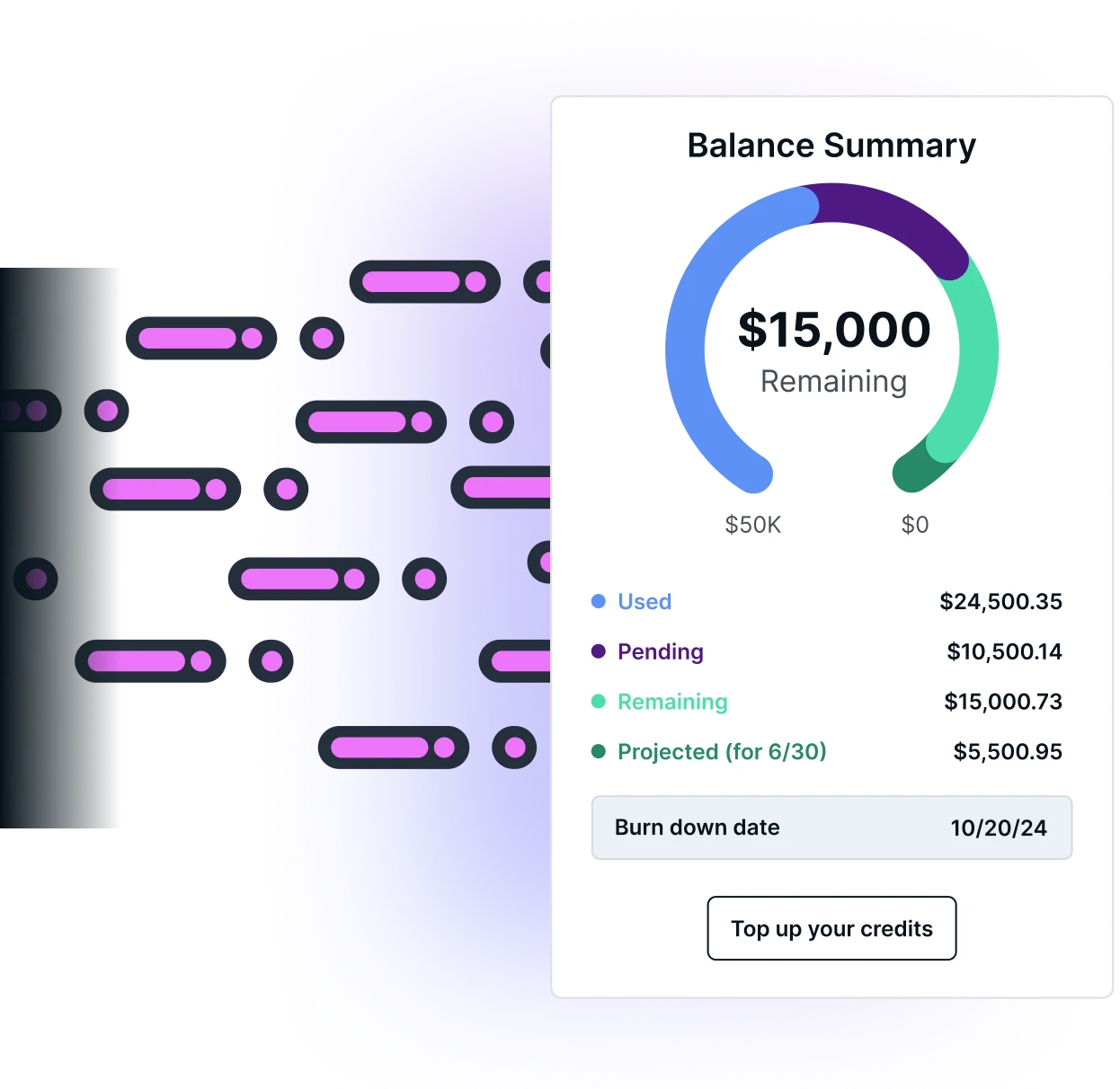
  • Low credit balances approaching zero, indicating an upsell window before overages occur.
  • Balances nearing expiration on prepaid commitments—prime time for renewal or upsell conversations.
  • Feature adoption patterns that hint at cross-sell opportunities.

These aren’t just health metrics, they’re daily, high-value selling signals.

Continuous Puts the Signals Where Sales Works

What if every buying signal showed up in Salesforce as it happens—usage spikes, low credit balances, looming expirations, and under-utilized features?
No external reports. No manual data hunts. Just timely, high-value signals delivered where reps already work.

Continuous brings usage and credit data into Salesforce with no extra systems and no added steps. Just the signals that matter into the tools you already use so sales teams can stop reacting and start anticipating. 

Ready to See What Your Reps Are Missing?

Get a free Revenue Operations Assessment from our team. We’ll identify the biggest revenue signals hiding in your usage and prepaid data—and show you how to surface them in Salesforce, where your reps already work.

No cost, no commitment. Just insights. Request yours now, and one of our experts will reach out.

Strengthening Our NetSuite Strategy: Welcoming Adnan Patel as Strategic Advisor

Adnan Patel, Strategic Advisor

At Continuous, we’re known for our innovations in recurring revenue. We’ve helped leading companies shift from subscriptions to usage, from custom billing to embedded revenue infrastructure, always with a focus on making Salesforce work better for Sales, RevOps, and Finance teams.

Today, we’re excited to share that Adnan Patel is joining Continuous as a Strategic Advisor, focused on NetSuite and ERP.

“I’ve spent my career helping companies get more out of NetSuite,” said Adnan Patel. “What stood out about Continuous is their focus on embedding revenue logic directly into the systems teams already use. It’s a smarter way to simplify complexity without adding another tool.”

A Recognized Leader in the NetSuite Ecosystem

Adnan has had a massive impact on the NetSuite ecosystem. He’s the founder of Sixred, an eight-time NetSuite 5-Star Award winner and one of NetSuite’s most respected Solution Providers. Over the course of 18+ years, his team has led more than 1,200 NetSuite implementations across industries, helping organizations scale smarter with cloud ERP.

When Sixred was acquired by Crowe LLP, Adnan took on the role of Principal, where he led Crowe’s global NetSuite practice, built industry accelerators, mentored NetSuite consultants, and helped clients modernize finance and operations with confidence. He’s a familiar face at SuiteWorld and other Oracle NetSuite events, where he’s shared insights on scaling ERP practices and driving successful cloud transformations.

“Adnan understands what works best with scaling ERP systems for growing companies,” said John Banks, Founder and CEO of Continuous. “His applied experience with thousands of NetSuite projects offers a practical, tested perspective as we expand our footprint and continue supporting Salesforce and NetSuite users.”

Building the Bridge Between CRM and ERP

Continuous has always taken a different approach to billing and revenue infrastructure. Our mission is to prove that the most scalable model isn’t a third-party system, but one that extends the CRM and ERP platforms customers already use.

With Salesforce, that means embedding deeply into the Revenue Cloud Advanced experience. Now, with Adnan’s guidance, we’re doing the same within the NetSuite ecosystem.

Whether customers use NetSuite Advanced Financials or SuiteBilling, the goal is the same:
Make usage-based pricing, credit drawdowns, revenue accounting and reporting easier by embedding logic where it belongs.

We see a future where NetSuite customers can manage usage, rating, and billing scenarios without introducing yet another standalone billing system. With Adnan’s experience, we’re building that future on a strong foundation.

What This Means for Our Customers and Partners

Adnan’s involvement will accelerate product development on NetSuite and strengthen how we support system integrators, NetSuite sellers, and implementation partners. It also ensures we’re learning from the best—bringing a practitioner’s lens to every step we take.

If you’re a NetSuite customer exploring usage-based pricing, or a partner helping clients operationalize complex billing models, we’d love to connect. With Adnan on board, we’re more ready than ever to support your success.

Want to learn more about how Continuous supports Salesforce and NetSuite customers?

Get a tailored review of your current architecture and personalized insights on where Continuous can drive the most value.

👉 Fill out this quick form and one of our experts will follow up with your survey—no pressure, no commitment.

The End of Subscriptions: Why Prepaid Usage Models Are Replacing Traditional SaaS Pricing

The Shift That Broke the Subscription Model

For years, SaaS companies relied on subscriptions. Predictable pricing, recurring invoices, and standardized contracts became the default.

But that’s starting to change.

Today’s most successful tech companies—like Snowflake, AWS, and Databricks—are shifting to prepaid usage models: savings plans, credit pools, and enterprise commitments that tie revenue to actual product consumption.

This isn’t just a new pricing option. It’s a deeper change in how revenue is created, recognized, and managed. And it’s quickly becoming the standard for modern B2B software.


Subscriptions Worked—Until They Didn’t

The subscription model had a good run. It gave SaaS companies predictable revenue and simplified customer onboarding. But it was never really aligned with how customers use software. You committed to a package, paid every month or year, and hoped you got value out of it.

The result? A lot of shelfware. Unused seats. Over-provisioned tiers. Products collecting dust while the meter keeps running.

That misalignment was tolerated when usage was steady and predictable. Subscriptions were a step forward from perpetual licensing—but they never fully lived up to the SaaS promise of aligning pricing with value. As companies began consuming APIs, infrastructure, and services with highly variable demand, the cracks in the model became harder to ignore.

Customers wanted flexibility. Finance teams wanted efficiency. Vendors needed a better way to show value.

That’s when usage-based pricing entered the picture.

But going fully usage-based creates its own problems. It’s hard to forecast. Hard to budget. And it gives vendors no guarantee of revenue; even if the product is delivering real value.

That’s why the smartest companies aren’t choosing between subscriptions and usage—they’re adopting prepaid usage models that offer the best of both.

They’re not selling subscriptions. They’re not selling pure usage. They’re selling prepaid usage commitments: enterprise savings plans, credit pools, or drawdowns tied to forecasted demand. Customers lock in value. Vendors lock in a commitment. Revenue recognition starts when usage begins.

Why Pure Usage-Based Pricing Isn’t the Endgame

Moving from subscriptions to usage-based pricing was a big step forward. It aligned cost with value. If a customer uses more, they pay more. If they use less, they pay less. That feels fair—and for a while, it looked like the future.

But for both vendors and customers, pay-as-you-go has real limitations.

On the vendor side, usage volatility makes revenue hard to predict. Sales teams have less leverage to drive large deals. Finance teams can’t model growth with confidence.

On the customer side, it’s hard to budget. CFOs hate open-ended invoices. Procurement teams want predictability. Even if the pricing is fair, it feels risky.

That’s why most leading companies didn’t stop at usage-based pricing. They layered on prepaid usage models—enterprise savings plans, committed spend, or flex credits. These offer volume-based discounts in exchange for upfront commitments. Customers get flexibility. Vendors get predictability.

It’s not just about pricing differently. It’s about changing how both sides think about value and commitment.

Snowflake: The Playbook for Prepaid Usage at Scale

No company has popularized prepaid usage models more than Snowflake.

Snowflake doesn’t sell subscriptions or push seat-based packages. Instead, Snowflake sells usage commitments—enterprise contracts where customers prepay for credits they can draw down over time. It’s flexible for the customer and predictable for Snowflake. And it shows up in one powerful number: Remaining Performance Obligations (RPO).

As of their latest earnings, Snowflake reported $6.7 billion in RPO, up 34% year-over-year.

That number is huge. But here’s the part most people miss:

RPO isn’t recognized revenue. It’s just a committed contract. The revenue only lands when customers actually use the credits.

This is the heart of the prepaid usage model. You lock in a deal up front, but the real success depends on customer adoption. If usage lags, revenue recognition stalls. If usage spikes, revenue accelerates.

From the outside, it looks like Snowflake has cracked the code. In reality, they’ve built the infrastructure to make this model work—usage visibility, alignment across sales and success, and real-time data that ties consumption to value.

Most companies fall short. They adopt prepaid models but don’t operationalize them. Credit balances live in billing systems or spreadsheets. Customer-facing teams don’t know what’s been used. Finance can’t forecast. Sales can’t spot expansion.

The result? RPO just sits on the books instead of turning into revenue.

You Can’t Drive Revenue If You Can’t See the Credits

When revenue depends on prepaid commitments, credit visibility isn’t just a back-office metric. It’s a growth lever.

But in most companies, credit data is buried—tucked away in billing systems, or hidden in finance-owned spreadsheets. By the time someone realizes a customer hasn’t touched their credits, it’s too late to act.

That’s a problem:

  • If usage is lagging, it’s a customer success issue
  • If there’s a pile of unused credits, it’s a sales opportunity
  • If finance can’t see burn rates, it’s a forecasting risk

Yet almost no one surfaces this data in the tools where people actually work.

CSMs are in Salesforce. So are account execs. But the data they need to drive adoption, expansion, and renewals is stuck elsewhere. The result? Slower growth. Lower retention. Missed revenue.

The solution isn’t more reporting. It’s embedding credit visibility—balances, burn rates, usage trends—directly into CRM and ERP.

That’s how you align sales, success, and finance around what’s been committed, what’s been used, and what’s left to earn.

Embedded Revenue Infrastructure: Built for the Prepaid Era

Most billing systems weren’t built for prepaid usage. Legacy vendors assumed static subscriptions and monthly renewals.

In response, a wave of new usage-based billing vendors emerged. Many handle ingestion and rating well—but that’s only part of the equation. But they’re usually standalone systems, disconnected from the tools teams actually use.

They solve for calculation—but not for adoption, visibility, or execution.

That’s where Continuous is different.

We’re a usage-based billing platform, too—but we’re built to work within your core systems. We don’t just calculate usage. We make it visible and actionable in Salesforce, NetSuite, and other platforms you already rely on.

Sales teams can see credit consumption on the customer record. Finance can forecast based on real-time usage. Customer success can intervene before credits go unused.

This is Embedded Revenue Infrastructure.

It’s not just billing. It’s infrastructure that helps teams turn prepaid commitments into recognized revenue—without another system to log into, and without another silo to manage.

Ready to Turn Prepaid Commitments Into Revenue?

Our Rapid Technical Assessment helps B2B teams understand what’s working, what’s not, and how to operationalize prepaid usage inside Salesforce and NetSuite.

We’ll review your current architecture, identify blockers, and map out how to unlock usage-based revenue—without adding another standalone system.

Request your free Revenue Operations Assessment
Get a tailored review of your current architecture and personalized insights on where Continuous can drive the most value.

👉 Fill out this quick form and one of our experts will follow up with your survey—no pressure, no commitment.

Continuous and FULLPRESS Partner to Accelerate Salesforce Revenue Cloud Advanced Deployments

Continuous and FULLPRESS Partner

Continuous, the embedded revenue platform purpose-built for Salesforce and NetSuite, has partnered with FULLPRESS, a Salesforce consultancy focused exclusively on Revenue Cloud Advanced (RCA). Together, we’re helping customers operationalize complex pricing models—usage-based billing, prepaid credits, subscriptions, and more—natively in Salesforce while ensuring finance teams maintain visibility and control in their ERP.

“Salesforce Revenue Cloud Advanced is a major leap forward for RevOps teams,” said Sean Joyce, Co-founder and Head of Alliances at Continuous. “FULLPRESS is helping customers get the most out of RCA—and Continuous fits naturally into that story. We embed pricing, usage, and credit logic inside Salesforce, while still allowing finance teams to manage financials in their system of record. It’s about making Salesforce even stronger in the enterprise.”

Why This Partnership Matters

FULLPRESS has emerged as a leading partner in the RCA ecosystem, helping customers implement scalable, flexible quote-to-cash processes entirely within Salesforce. Their approach closely aligns with Salesforce’s long-term product vision—and Continuous is proud to complement that vision with embedded revenue infrastructure.

“We’re deeply aligned with Salesforce’s vision for Revenue Cloud,” said Joe Taylor, CEO and Co-Founder of FULLPRESS. “RCA brings a huge amount of power to the sales process. Continuous allows us to take that one step further—helping customers operationalize complex pricing models like usage and credits, without disrupting finance workflows. It’s the kind of flexibility enterprise teams expect.”

What We Enable Together

By combining the RCA deployment expertise of FULLPRESS with the embedded revenue capabilities of Continuous, we make it easier for Salesforce customers to:

  • Quote any pricing model directly in Salesforce, including usage-based, hybrid, and prepaid credits
  • Track credits and balances in real time using native Salesforce logic
  • Process high volumes of usage data and automate pricing and rating
  • Deliver bill-ready data to ERP systems like NetSuite for invoicing and revenue recognition
  • Avoid the complexity of introducing standalone billing systems or duplicating product catalogs

“We’ve designed our approach to make RCA deployments enterprise-ready,” said Keenan Wojnicz, Co-Founder and Chief Architect at FULLPRESS. “With Continuous, we’re able to support advanced pricing and usage scenarios inside Salesforce while keeping financial controls where they belong—in ERP. That’s a huge win for our customers.”

Supporting Salesforce’s Vision—With Operational Flexibility

Continuous and FULLPRESS share a belief in the power of Salesforce to drive end-to-end revenue operations. But we also understand the reality: many enterprise finance teams rely on ERPs like NetSuite for critical financial workflows. By embedding revenue infrastructure into Salesforce and integrating cleanly with ERP, we give sales, RevOps, and finance teams a shared foundation—without forcing compromises.

“This is what modern revenue architecture looks like,” said Sean Joyce. “Sales and finance can finally work in sync, with no need to rip and replace what’s already working. Continuous makes that possible—FULLPRESS makes it real.”

Learn More

If you’re deploying Salesforce Revenue Cloud Advanced and want to support advanced pricing and billing models without complexity, let’s talk. 

🔗 Explore Continuous for Salesforce Revenue Cloud
🔗 Visit FULLPRESS
🔗 Salesforce Revenue Cloud Advanced Overview