Continuous Control

Control Quote-to-Cash from Salesforce to NetSuite

Struggling with Salesforce CPQ or ARM (RCA) not speaking directly to NetSuite? Continuous Control fixes that.

Continuous Control is a native application in both Salesforce and NetSuite that connects Salesforce selling to NetSuite invoicing and revenue — out of the box.

Finance-ready billing and revenue in NetSuite, out of the box...
No matter how Sales sells.

Continuous Control was purpose built to fix Quote-to-Cash. Translate Salesforce commercial activity into finance-correct NetSuite actions, so native invoicing and revenue recognition work reliably, even as contracts and pricing change over time. Launch new monetization models, structure creative deals, process orders and financial actions with ease.

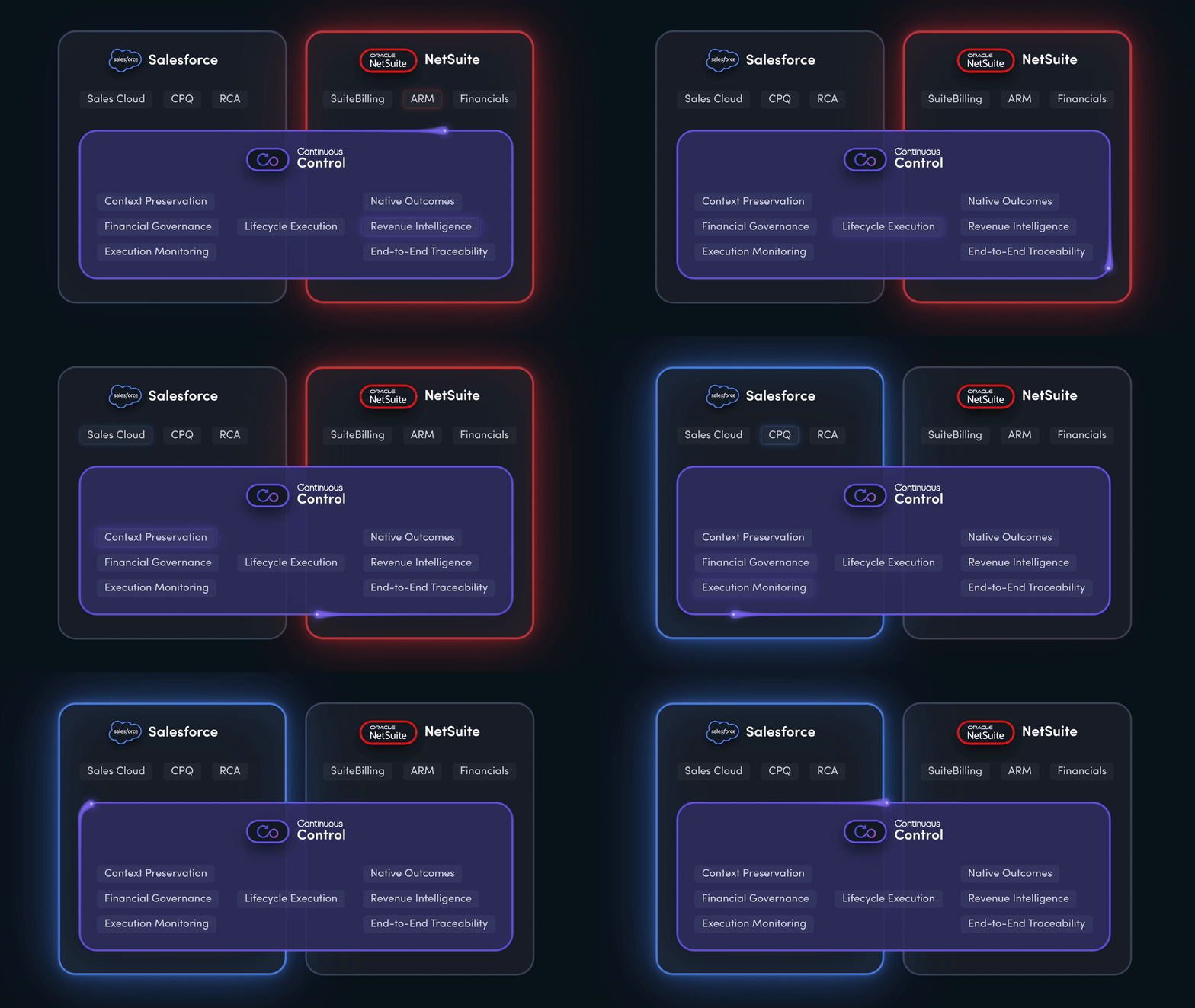
As a revenue execution layer — embedded in Salesforce and NetSuite — Continuous Control works without custom code, integrations, or manual workarounds. Continuous Control is not a standalone CPQ, billing system, or middleware, it is a finance-aware execution layer that translates sales intent into precise NetSuite instructions as a native application within Salesforce.

Continuous Control

Control doesn’t just sync transactions. It governs execution.

The Problem

Bookings to Billings to Revenue Don't Match

Quote-to-Cash merges two different worlds CRM & ERP.

Salesforce is where selling happens.
NetSuite is where the financial truth lives.

Both systems work exactly as designed until customers upgrade, cancel, renew early, or change terms mid-cycle. Lifecycle changes lose financial context as they move from CRM to ERP. What starts as sales intent turns into manual fixes, billing corrections, revenue rework, and audit risk for Finance creating “the Messy Middle”.

What is The Messy Middle?

  • Deals change, but execution breaks
  • Sales intent loses financial context
  • Finance absorbs the fallout at close

The missing piece is governed execution between CRM & ERP.

The Solution

A Finance-Aware Execution Layer

Achieve the promise of Quote-to-Cash excellence so bookings, billings, and revenue can be traced without manual reconciliation or clean-up at close.

Continuous Control governs how commercial activity becomes financial execution so you can let your CRM & ERP do their jobs. Salesforce enables commercial agility. NetSuite remains the system of record for invoicing and revenue recognition.

  • Billing and revenue recognition work as designed
  • Fewer manual corrections at close
  • Lower audit risk from lifecycle changes
  • Finance trusts the numbers, even as deals change
How It Works

Extend Salesforce and NetSuite for finance-ready revenue execution.

Salesforce handles selling reality.

Salesforce can move fast without breaking NetSuite. Lifecycle changes work as expected, no manual clean-up, fewer escalations, fewer exceptions, more revenue in the door.

NetSuite handles financial reality.

Predictable invoicing and revenue outcomes—no surprises at close. Reduced revenue leakage, manual corrections, and audit risk, trust the numbers even as deals change.

Continuous Control preserves the context between them.

Productized, prebuilt lifecycle execution so amendments, renewals, proration, and revenue alignment work out of the box, in NetSuite.

With Continuous, finance stopped looking backward and became a true thought partner in driving growth.Keeping NetSuite at the center was critical. Continuous let us make NetSuite the source of truth and leverage it more fully.

Steve Finley

Chief Financial Officer

Make Salesforce & NetSuite work together —
the way Finance expects.

See how ACI did it in days (not months), without custom code, and built to scale.

Core Capabilities

Simplify the complex and remove the messy middle from the revenue process. Leverage Continuous Control to manage the lifecycle complexity, preserve context, and translate sales intent into finance outcomes from CRM to ERP.

Continuous Event Framework

Turn lifecycle changes into governed, traceable execution from Salesforce to NetSuite.

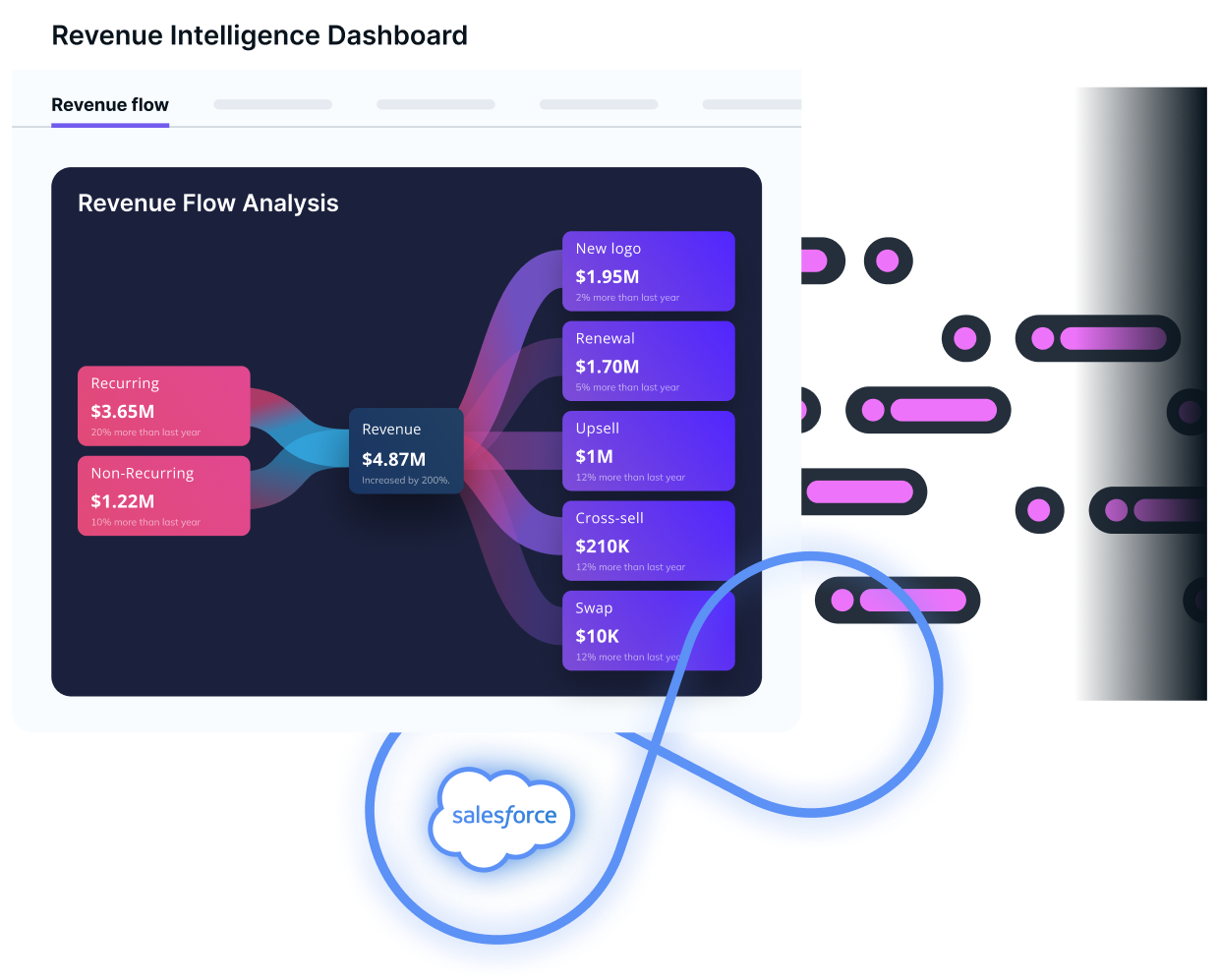
Revenue Intelligence Dashboard

Provide Finance trusted lifecycle insights across bookings, billings, and revenue as a dashboard in NetSuite.

NetSuite Native Outcomes

Drive invoicing from the sales order and recognize revenue with NetSuite ARM, using native capabilities.

Monitoring & Control Dashboards

Operational visibility into execution including issues or errors like exception handling, retries, and traceability. No more black box.

Gain Control.
Grow without replatforming.

Each edition includes all capabilities of the previous edition. NetSuite remains the system of record for invoicing and revenue recognition.

Control Essentials

Finance-Ready Execution

Key Capabilities

  • Make sure Salesforce deals create correct NetSuite sales orders
  • Flexibility to govern how Salesforce orders are executed into NetSuite sales orders and invoices
  • Execute standard order lifecycle actions in line with NetSuite revenue recognition rules
  • Manage retries and completion of failed executions
  • Monitor execution status and exceptions in real time
Control Enhanced

Adds Advanced Lifecycle Governance

Key Capabilities

  • Execute mid-term contract changes against existing NetSuite sales orders
  • Apply Salesforce proration, amendments, and early renewals using governed execution patterns
  • Execute multi-entity and multi currency transactions from Salesforce into NetSuite 
  • Control invoice generation from a single NetSuite sales order across multiple billing outputs
  • Maintain deferred revenue continuity with traceability across Salesforce orders and NetSuite sales orders
Control Enterprise

Adds Complex Revenue Models

Key Capabilities

  • Support hybrid monetization models across a single customer lifecycle
  • Execute compliant usage-driven revenue in NetSuite 
  • Maintain end-to-end traceability from usage activity to NetSuite revenue records
  • Execute commitments, credits, and consumption into NetSuite billing and revenue outcomes without manual intervention
  • Support accurate execution of advanced revenue recognition using Advanced Revenue Management (Revenue Allocation)
Continuous Control Editions

Determine which edition is right for you.

Finance-grade execution from simple subscriptions to advanced revenue models.

Continuous Control Essentials edition was built for companies leveraging one-time or flat subscription revenue models along with linear contract lifecycles actions, including, new, renew, and/or cancel.


Tech Stack:

  • NetSuite, NetSuite Advanced Billing, or SuiteBilling with or without NetSuite ARM Essentials
  • Salesforce Sales Cloud, Salesforce CPQ, Salesforce ARM (Salesforce RCA)

Continuous Control Enhanced edition was built for companies leveraging scaled subscriptions such as multi-year and ramped deals. Built for dynamic contract lifecycles, handling everything from new sales and renewals to early renewals, term extensions, mid-term amendments, proration, and partial cancellations.


Companies that require dynamic invoicing capabilities and invoice grouping by billing attributes fit here.


Tech Stack:

  • NetSuite Advanced Billing or SuiteBilling with NetSuite ARM (Essentials)
  • Salesforce CPQ, Salesforce ARM (Salesforce RCA)

Continuous Control Enterprise edition was built for companies leveraging usage, credits, commitments, and/or hybrid revenue models along with complex, event-driven contract lifecycles.


Companies that require seamless invoicing of usage, commitments, and/or visibility of credit burndown fit here.


Tech Stack:

  • NetSuite Advanced Billing or SuiteBilling with NetSuite ARM (Essentials) or NetSuite ARM (Revenue Allocation)
  • Salesforce CPQ, Salesforce ARM (Salesforce RCA)
    *Continuous Core is required

The only NetSuite-certified partner connecting CPQ and ARM (RCA) to NetSuite for usage-based revenue.

Frequently Asked Questions

From Teams Simplifying Quote-to-Cash

Is Continuous Control a CPQ or billing system?

Continuous Control is not a standalone CPQ, billing system, or middleware, it is an embedded execution layer native to both Salesforce and NetSuite.
The execution layer is the part of a system that takes decisions, rules, or intent and instructs them reliably, at scale, in real time. This is the layer that does the work.
Continuous Control makes sure Salesforce deals show up correctly in NetSuite — without adding another billing system or building a custom integration.

What problem does Continuous Control solve?

Control's role is to govern what happens in between Salesforce and NetSuite, so lifecycle changes don’t break NetSuite native invoicing or rev rec.
Sales books the deal in Salesforce. NetSuite handles invoicing and revenue. Both systems work as designed, but changes to deals now seamlessly transition from Salesforce to NetSuite sales orders and invoices.
Upgrades, cancellations, and other mid-term changes no longer turn into manual work, audit risk, and revenue cleanup for Finance.

How long does it take to implement Continuous Control?

Continuous Control is a pre-built, productized execution layer designed to go live quickly. Native to both Salesforce and NetSuite execution logic pre-configured.
Most customers can implement Continuous Control in weeks, not months, depending on which edition they start with, the complexity of their current Salesforce and NetSuite configuration, and/or the lifecycle scenarios they want to support at launch.
Because Continuous Control uses standardized execution patterns rather than custom code or bespoke integrations, teams can start with their current revenue model and extend capabilities over time without re-implementation.

Who typically owns Continuous Control inside an organization?

Continuous Control is typically Ops-led with Finance accountability.
It removes execution burden from IT, eliminates manual cleanup for Finance, and provides shared visibility into execution health and outcomes.

Is Continuous Control only for complex or enterprise revenue models?

No. Continuous Control scales with complexity.
Teams can start with simple subscriptions and extend execution capabilities as revenue models evolve without replatforming or changing systems. Control Essentials, Enhanced, and Enterprise editions align execution depth to business complexity.

Continuous Insights

Demo Control